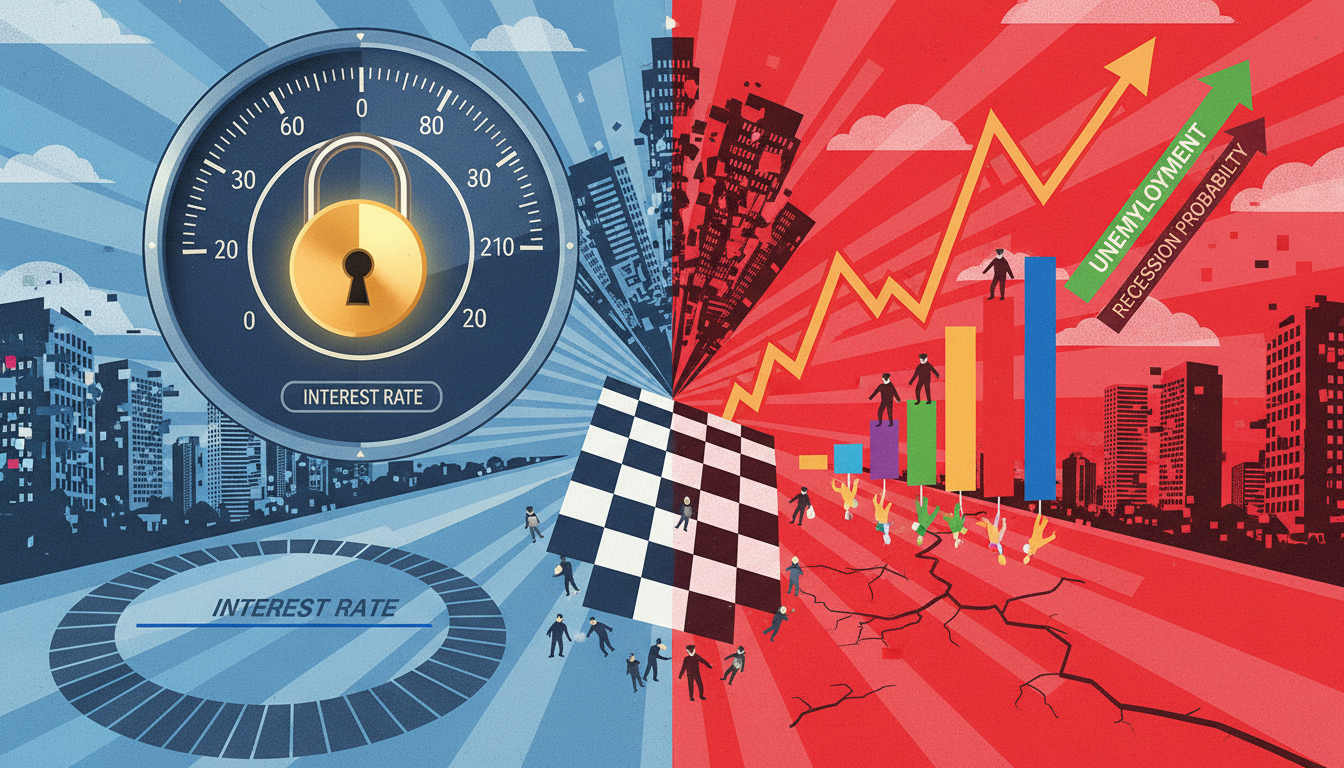
In March 2026, one of the core temperature gauges of the American economy began to cool: The final value of the S&P Global US Services PMI fell below 50 to 49.8, re-entering the contraction zone for the first time since January 2023. At the same time, the Composite PMI final value was only 50.3, significantly lower than the market expectation of 51.4, barely standing above the breakeven line, indicating an "almost stagnant" state. The slowdown in service activity combined with weakening overall expansion momentum, while cost and price pressures have not simultaneously eased, keeps the shadow of inflation looming behind the data—economic slowdown coexists with stubborn inflation, writing a new constraint for global asset pricing.
Warning of Service Industry Contraction After Fourteen Months
The drop of the Services PMI to 49.8 carries a strong signal: this means that service activity in the US has, for the first time since January 2023, fallen back into contraction territory, ending an expansion period that lasted over a year. The design logic of the PMI is that 50 is the breakeven line; falling below 50 indicates more companies are reporting a contraction in activity rather than expansion. This shift occurs in the service industry, which has long been viewed as the "ballast stone" of the US economy, carrying far more warning significance than mere monthly fluctuations.
This reality stands in stark contrast to the previous market expectation of 51.1. The final value dropped from a slight expansion expectation to a contraction at 49.8, a decline that, while not dramatic, is enough to disrupt the narrative built by investors around a "soft landing." The gap between expectations and results is directly reflected in sentiment: companies report weakening demand, and the financial markets need to reassess the previously priced-in resilience of growth.
More importantly, the structure of the US economy gives weight to this reading. The service industry accounts for about around 80% of US GDP; once this sector shifts from expansion to contraction, its drag on overall growth is not comparable to fluctuations in individual industries. 49.8 is not only a technical boundary but also raises a new round of questioning about "how long can the American growth story continue."
Implied Signals of the Composite PMI Hovering at the Edge of 50
If the fall of the Services PMI below 50 is a local brake, then the Composite PMI final value of 50.3 presents a picture of the whole vehicle slowing down. Compared to market expectations of 51.4, 50.3 is significantly weaker, indicating that the expansion momentum of combined manufacturing and service activity has notably weakened, barely maintaining itself above the breakeven line. A small numerical step represents, in trend, another move toward "stalling."
According to estimates provided by some studies, the current Composite PMI level corresponds to a US economic annualized growth rate of about 0.5% (single source), already very close to a zero growth state. In other words, the current data outlines a situation that is "not yet turning downward but has moved far from potential growth"; any new shock—whether coming from tightening financial conditions or escalating external conflicts—could push the economy toward substantial stagnation or even mild recession.
On the industry level, financial and tech services have been flagged as significantly weakening sectors. On one hand, market concerns about the interest rate path continue to resurface, and uncertainty around interest rates is suppressing trading activity, investment and financing, and demand for capital market-related services; on the other hand, the tech sector, faced with high valuations and increased volatility, has become cautious with project investments and outsourcing demands. These two sectors, which had contributed high growth and profitability to the US economy over the past few years, have naturally slowed down, dragging overall activity and creating a downward effect on the Composite PMI.
Cost Pressures Rising: Companies Forced to Pass Risks to End Consumers
Amid a slowdown in growth, cost curves are rising. S&P Global's survey shows that more companies are indicating that they are "more inclined to pass costs onto end consumers in the coming months" (dual sources), meaning that cost pressures have not been absorbed internally by companies but are rather preparing to transmit through price increases to consumers and downstream customers. This is a friction-laden chain for already price-sensitive end demand.
One of the most direct drivers behind this is the sudden rise in energy prices. Higher oil and gas prices not only increase companies' input costs (like raw materials, logistics, heating, and electricity) but also drive prices up on the sales side to maintain profit margins. The cost-price transmission path is particularly evident in the service industry: from aviation, logistics to professional services, when facing accounting pressures, companies often choose to raise fees to pass some of the impacts into a broader pricing system, providing new support for inflation.
Based on market feedback from a single source, in this round of decline, the drop in consumer-facing services is described as "one of the largest since 2009, excluding pandemic lockdowns". Although this description comes from a single source, it reveals a significant characteristic worth noting: it is precisely those service segments directly linked to residents' consumption expenditures that have undergone relatively severe adjustments under dual pressures of demand marginalization and cost inflation. This "weak demand side + supply side price increase" combination often marks the eve of slowly forming stagflation risks.
How Middle East Tensions Ignite the US Price Chain
The current pressures from energy and costs do not arise from nowhere but are closely linked to the escalation of geopolitical conflicts in the Middle East. The uncertainties brought by the conflict regarding production, risks of supply disruptions, coupled with tight shipping channels and rising insurance costs, have raised international energy benchmark prices and disrupted the global rhythm of commodity and intermediate goods transportation. Although the US has some self-sufficiency in energy, it remains deeply embedded in the global system in terms of pricing and supply chains, making it hard to maintain isolation.
When energy and transportation costs are high, the shock does not stop at the industrial sector but permeates into the service industry through multiple links: logistics and warehousing fees rise, the cost base for corporate travel and online services increases, and operating expenses for commercial properties and retail networks grow. All these find reflections in service prices, further driving a "service-led" sticky inflation structure in the broader US pricing system.
Against a backdrop of weakening demand, firms face a situation where: income growth has slowed, but costs continue to rise due to geopolitical conflicts and supply chain frictions. Typical responses include cutting capital expenditures, delaying expansion plans, and making more cautious hiring decisions. Once companies adjust their future profit expectations downward, their willingness to hire and scheduling of work hours may tighten concomitantly, posing secondary shocks to the labor market. The resulting chain reaction forms a long and hidden transmission link from Middle Eastern conflicts to the wallets of American consumers.
The Fed's Dilemma: The Rate Cut Window Continues to Be Pushed Back
In such a macro puzzle, "growth slowdown + stubborn inflation" presents a combinatorial question that the Federal Reserve must confront. The conventional textbook path indicates that as growth cools and unemployment rises, it often opens space for monetary easing; however, when price pressures haven't eased simultaneously, preemptive easing could instead exacerbate uncontrollable inflation expectations, weakening central bank credibility. The current PMI readings turn this dilemma from theoretical discussion into concrete operational constraints.
The fall of the Services PMI into contraction territory and the Composite PMI lingering at the critical level of 50.3 seemingly provides reasoning for the Fed to "cut rates sooner to support growth." However, running parallel to this are signals of companies planning to pass costs to end consumers, energy prices remaining high, and increased price stickiness in services, all forming the concerns for the central bank when making easing decisions: if rates are quickly lowered while cost-push inflation persists, it may reignite asset bubbles and demand-side price pressures.
If market expectations for future inflation paths are pushed higher due to cost pass-throughs, the Fed will have to make even more challenging trade-offs between recession risks and anti-inflation missions. Clinging too firmly to inflation targets may subject the economy to prolonged high-rate suppression amid weak growth; prematurely leaning toward growth could risk a resurgence of inflation and failure of long-term rates to decline. The latest PMI readings are pushing this policy game to a new tension point.
From a PMI Report to a New Narrative in Asset Pricing
In summary, the fall of the Services PMI below the breakeven line of 49.8 combined with the Composite PMI hovering around 50.3 sketches a typical risk profile of "high inflation, low growth": cooling on the demand side has already manifested in activity indicators, while the stickiness of costs and prices makes it hard for inflation to recede quickly. This mismatch itself represents an invitation for a repricing of all risk assets.
In the coming months, the main storyline of market dynamics will likely revolve around two clues: one is whether the economic slowdown will slide from "near stagnation" to "technical recession," and the other is under what combination of data the Fed will adjust its rate path. The stock market needs to find a new balance between downgrading earnings prospects and changing interest rate expectations; the bond market must reshape the yield curve between inflation risk premiums and growth concerns; for cryptographic assets, expectations of dollar liquidity, shifts in risk appetite, and institutional allocation behaviors may subtly change due to this round of macro repricing.
For investors, a PMI report is not the answer but the starting point of questions. Moving forward, key tracking will include: official employment and inflation data, Fed meeting minutes and officials' statements, and S&P Global’s subsequent monthly PMI final values. Only by continuously comparing the evolving paths of these data can the market assess whether this round of slowdown is merely a short-term fluctuation induced by geopolitical conflicts and financial condition disturbances or marks a trend shift indicating the US economy is retreating from high levels, even entering a new cycle of "low growth and high prices."
Join our community to discuss and grow stronger together!
Official Telegram community: https://t.me/aicoincn
AiCoin Chinese Twitter: https://x.com/AiCoinzh
OKX benefits group: https://aicoin.com/link/chat?cid=l61eM4owQ
Binance benefits group: https://aicoin.com/link/chat?cid=ynr7d1P6Z
免责声明:本文章仅代表作者个人观点,不代表本平台的立场和观点。本文章仅供信息分享,不构成对任何人的任何投资建议。用户与作者之间的任何争议,与本平台无关。如网页中刊载的文章或图片涉及侵权,请提供相关的权利证明和身份证明发送邮件到support@aicoin.com,本平台相关工作人员将会进行核查。