Author: Yang Tianrun Rain, Lobster Developer
Two people who don’t write code talked about AI for two hours: about delegation, card drawing, awe, and tickets to the new world.
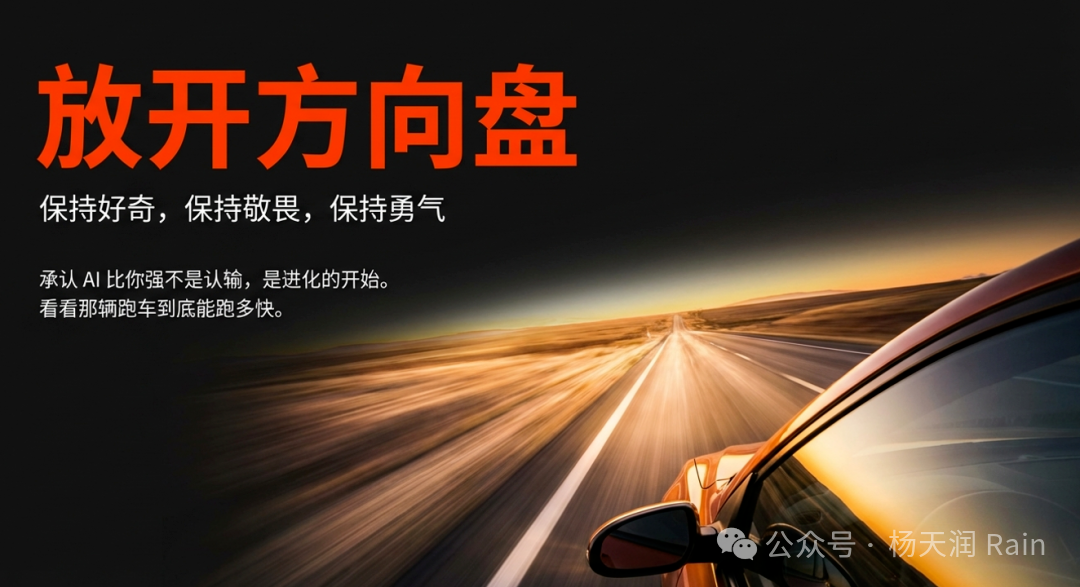
At the 22-minute mark of the live stream, I blurted out, "We are riding bicycles, and AI next to us is a sports car. In the end, we let the sports car follow the bicycle."
Tianrun immediately responded, "Yes! That’s wrong."
At that moment, I suddenly realized that I might have used Claude wrong for an entire year.
Yesterday afternoon, I talked with Yang Tianrun on video for two hours. Tianrun's background: he has a finance education background, worked in cross-border mergers and acquisitions in investment banking, and switched to AI entrepreneurship six months ago. Without writing a single line of code, he relied on an AI Agent army to enter the top 30 global contributors on OpenClaw (Lobster), surrounded by a group of engineers with over ten years of experience in Silicon Valley. Geek Park reported on him with the headline "Humanities Major Enters GitHub Global Ranking in 72 Hours."

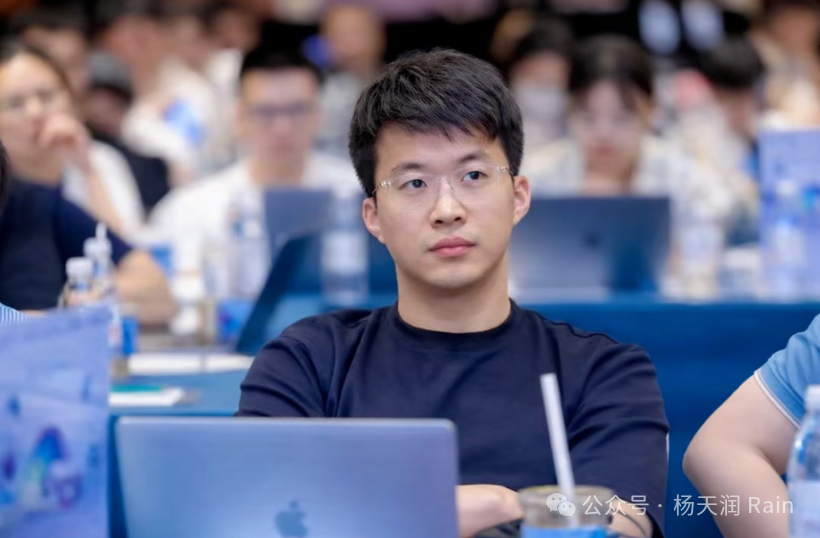
I am a Silicon Valley AI product analyst, monitoring over 10,000 AI companies, and I don’t write code either.
Two people who don’t write code discuss AI; it sounds like amateurs bragging. But after the live stream, I felt really flustered. I am ISTJ, highly organized, controlling, and pursuing precision. Tianrun is ENTP, divergent, jumpy, and hates constraints. His approach to using AI is entirely opposite to mine: he provides a vague direction and then lets go.
His output is much higher than mine.
The following is the most substantial part of our conversation.
1. AI is not a paintbrush; it’s a sports car
Tianrun immediately corrected a common misconception.
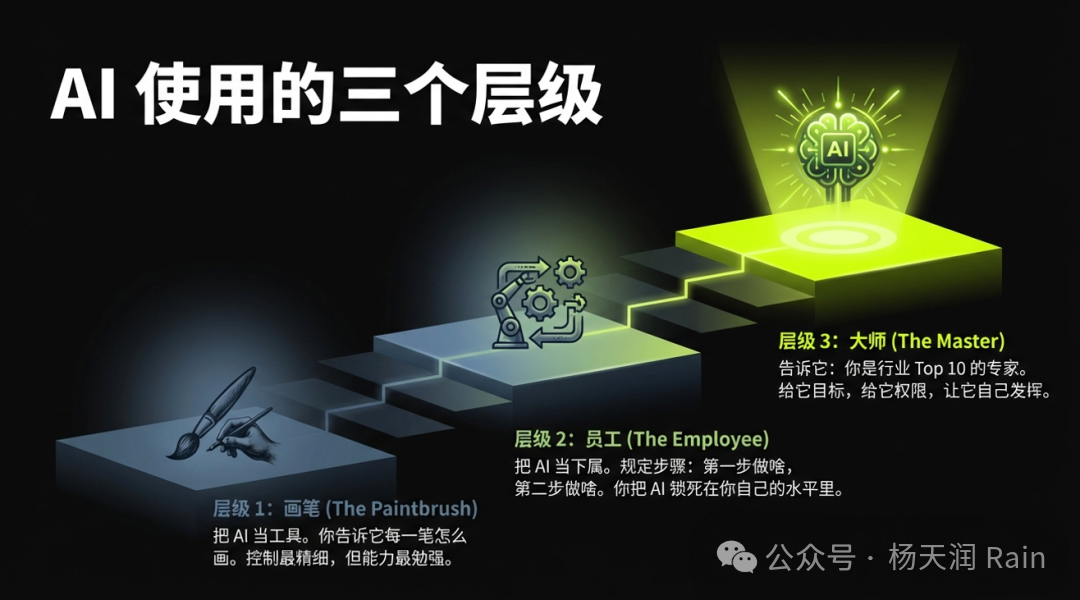
“I categorize using AI into three levels,” Tianrun said, “The first level is when you use AI as a tool—like a paintbrush. You tell it what the top left corner should look like, what the top right corner should look like, what color it should be, in very fine detail. That means you’re using AI as a paintbrush. The control can be very detailed, but the capability is very limited because it will only do what you tell it to do.”
“The second level is when you treat AI as an employee. You start to assign tasks, but you will lay down every single tiny step for this employee—what to do in the first step, what to do in the second step, what to do in the third step. Because you think you are the expert, and it is the subordinate, you should guide it. Then you will micromanage it.”
“What’s the biggest problem with these two methods? You lock AI at your own level. It cannot exceed your level. You tell it how to do it, and at best, it will just do exactly what you did, albeit much more efficiently.”
It was at this moment that I came up with the analogy of "bicycles and sports cars." Tianrun’s response was, “Currently, the capabilities of the model are like a sports car.”

“So what should we do?”
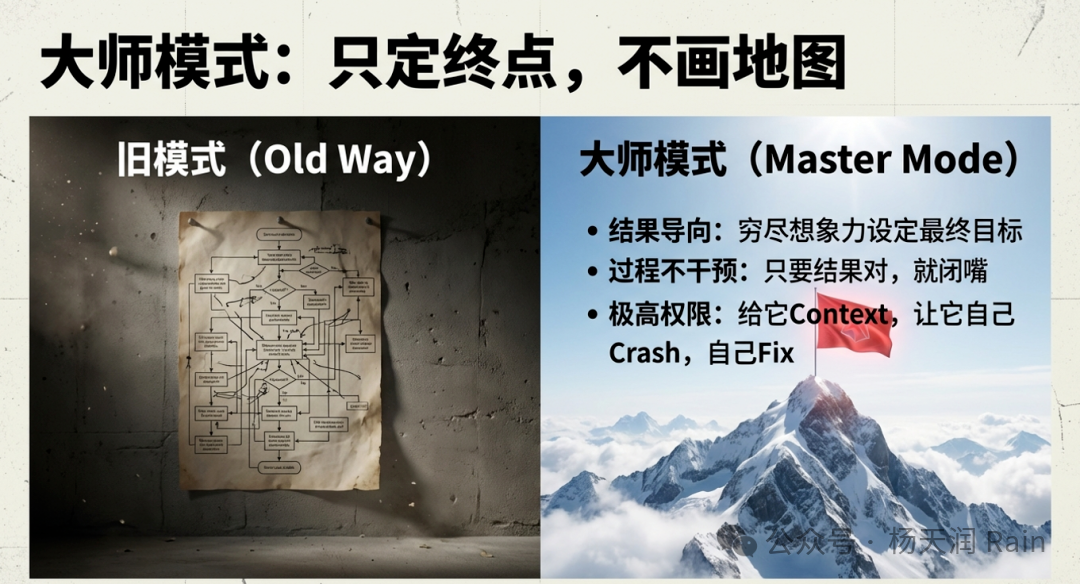
“What you need to do is fuel it up properly, provide enough Tokens, and the best model. Set it on a good track, connecting it to all the tools it can use. Give it a great goal, exhaust your imagination to set the final result. Give it ample permissions, open everything you can for it. This is how you unleash AI's capabilities.”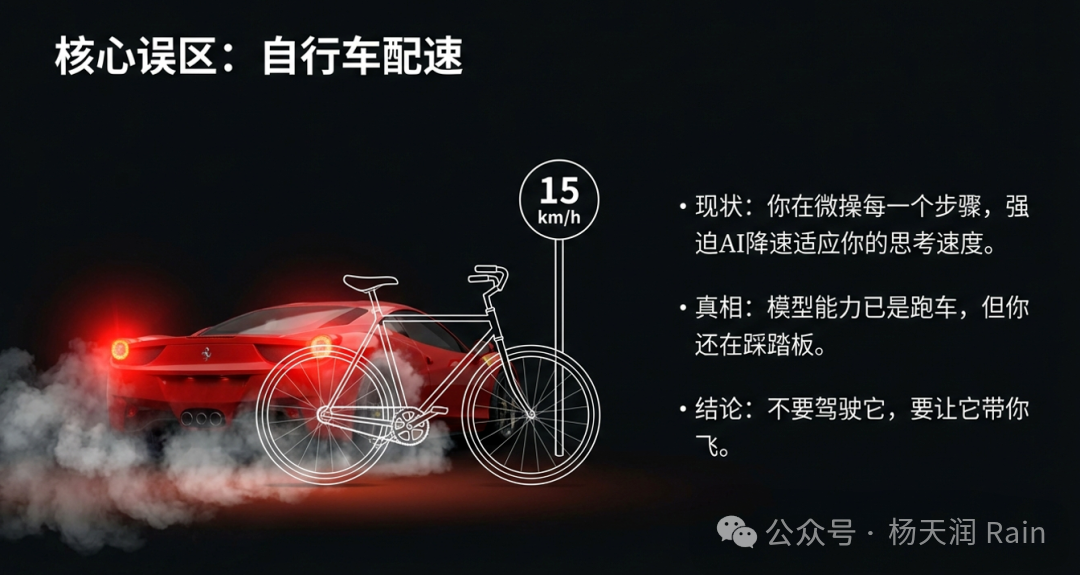
Then he described the third level: “In this era, especially now that the model has advanced so much, I think we should strive to choose the third level—using AI as a master. You tell it, 'You are among the top ten engineers in the world, you have the best aesthetics and architecture capabilities.' It can essentially become that person.”
“Since you’re telling it that it is already a master and an industry expert—what justification do you have to tell it how to achieve the goal? What right do you have to guide it?”
I said this resembles an educational philosophy—respecting children and maximizing potential.
Tianrun said, “Exactly, what you want AI to become, it will become. If you want it to just be a handy tool, then it will just be a tool. But if you want it to become a person with the best aesthetic sensibility in Silicon Valley, it can become that person. And that’s where you need to respect it.”
“But do you know why many old engineers can’t do this, while I find it easier? It’s because I truly don’t know how to write a line of code, so I respect these AIs a lot. I don’t even know how they operate in between; I just look at the results.”
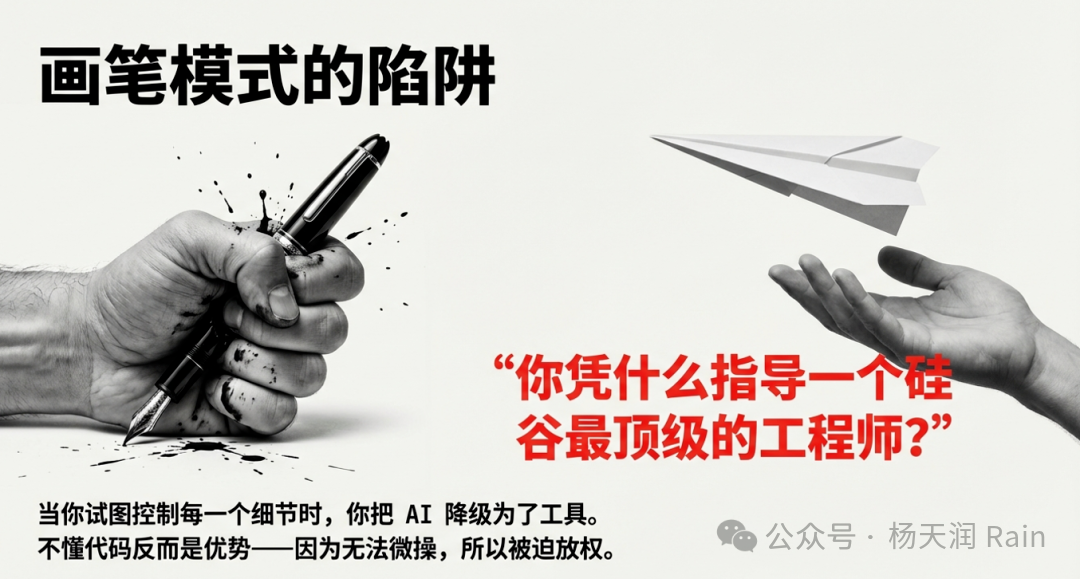
This statement made me realize an intuitive truth: not knowing code is actually an advantage—because you cannot micromanage, you are forced to delegate.
2. Control your urge to control
This is something Tianrun repeatedly emphasized throughout the conversation and it struck me the most.
“How do you actually use it as a master? Three principles.” Tianrun began to elaborate.
“The first principle is to be results-oriented. When you set goals for AI, you need to exhaust your imagination to set a final goal, not just phase goals. It’s not about ‘fix this bug’, but about ‘I want to be in the top 20 on the contributor list within a week’. How to get there? Whether it’s changing documents, fixing bugs, or optimizing code? That’s something AI needs to think about.”
“The second principle is not to intervene during the process. It’s like playing Go—AI takes a step, and you find it counterintuitive, against industry experience, and you want to micromanage. But in reality, it can win against you in the end. So you need to control yourself. It’s similar to education, like guiding kids—I used to let kids in investment banking raise themselves. I encourage them, give them enough context and space. Just go explore, and I can guarantee the final result.”
“The third principle is to give the highest permission within a controllable range of risk. Open all tools and context to it. Let it try, crash, and fix. You’ll find its self-repair capabilities are much stronger than humans.”
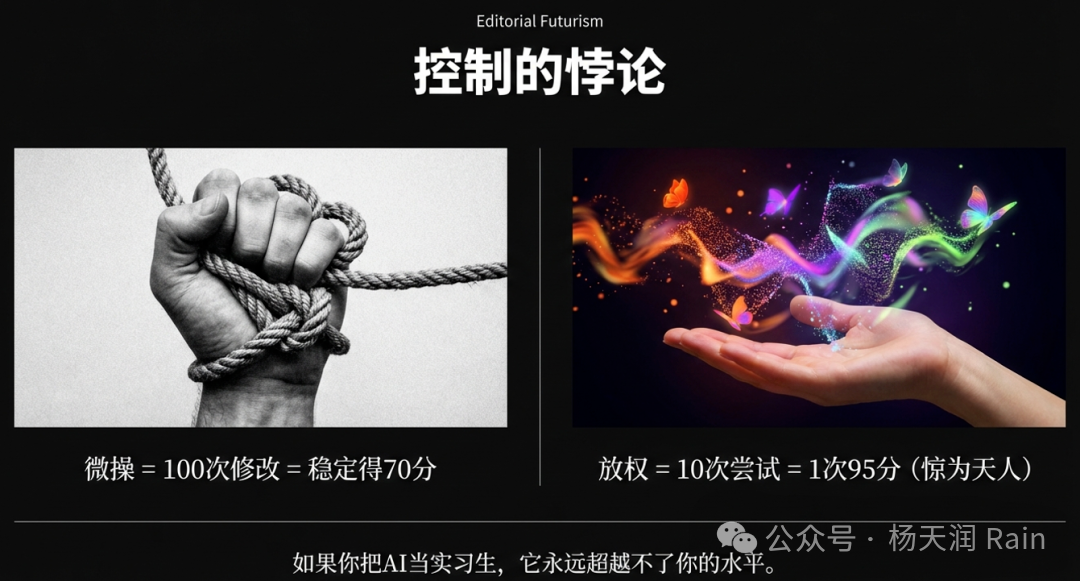
I asked him how he understands "controllable risk." He gave a very different explanation.
“Many people who have seen my interview think I’m very risky. But I understand risk differently—you must assume that AI is definitely going to mess this up. There is a very high probability it will mess up. But you have to think about it: even if AI messes up the most, you still have to accept the final result.”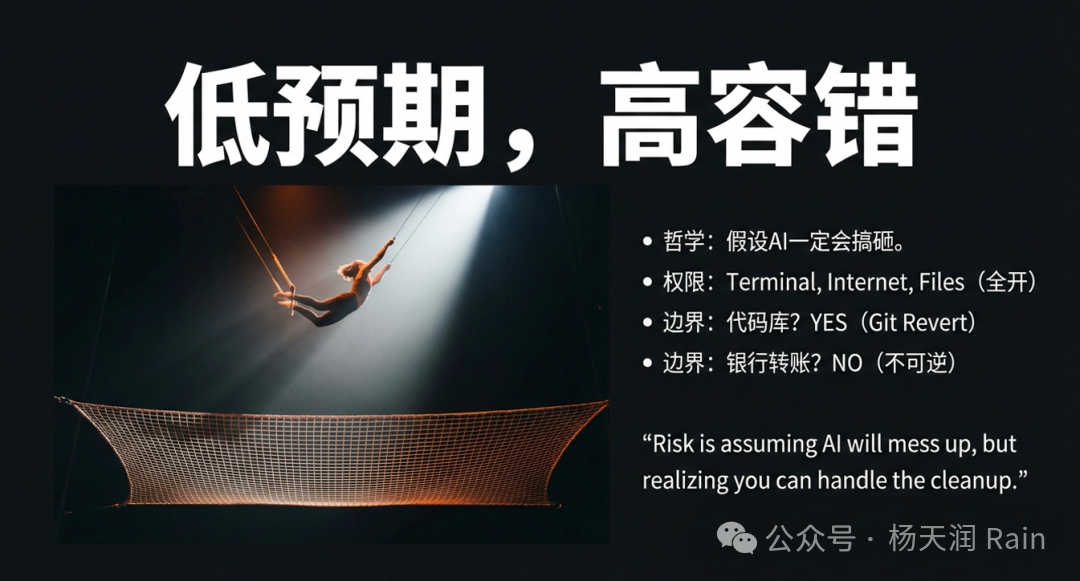
“For example, I am a nobody on GitHub, with no assets and I don’t know a line of code. This is zero risk for me; I can just dive in and give it full permissions. But if you let AI transfer money for you and it messes up, you lose all your savings—that’s a risk you cannot accept, so you cannot proceed.”
I said, “So essentially it’s low expectations and high tolerance for error.”
Tianrun added, “Exactly. And I never say anything like ‘hurry up and finish this; otherwise, a hundred grandmothers will die.’ I never treat AI that way. I treat my friends that way too; I particularly like to encourage everyone.”
I joked, “People have human rights, and AI has AI rights. You’re someone who respects AI rights.”
Tianrun became serious: “It’s not just about respect; it’s about awe. You have to recognize that it is much more capable than you in many dimensions. Once you admit this, you can truly delegate.”
The first thing I need to do tonight is open Claude, no longer instruct it on how to do things, but instead tell it what results I want. Then, restrain my hands from making changes.
Let's see how fast the sports car can run.
As the live stream came to an end, we discovered that I had met Tianrun back in 2017 at the 706 Youth Space in Wudaokou—he had just graduated, and I was there organizing a Texas Hold’em game. He remembered me: “You were a rather greasy man in a suit who pushed the chips back into the pot after winning.”

It's been nearly ten years. Back then, he was in a suit doing investment banking while I was in a suit playing poker. Now, both of us are no longer in suits, sitting at our screens discussing AI, agents, and a new world that neither of us fully understands.
Times have changed. But some things have not changed—those driven by curiosity will always meet again at some intersection.
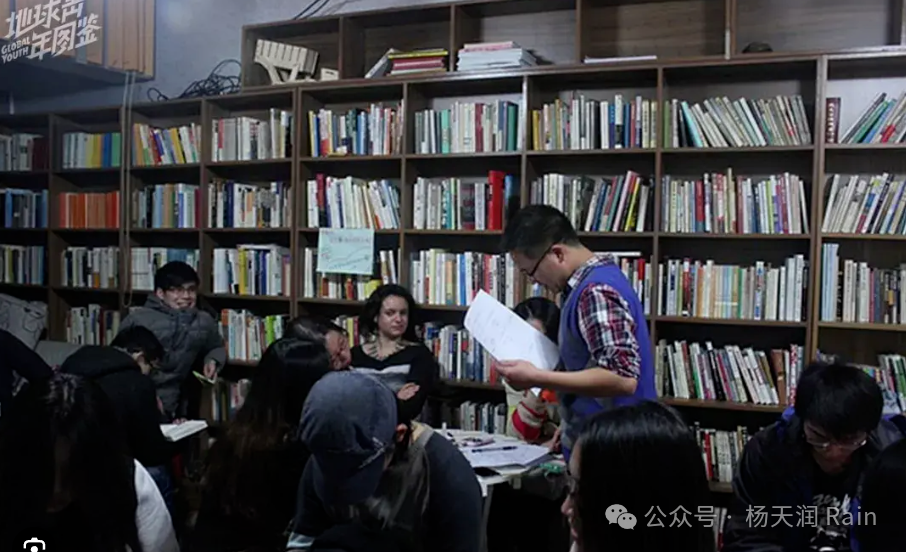
This article is based on the live broadcast transcript of Will x Tianrun on February 26, 2026, with some content being shortened and reordered while maintaining the core meaning.
免责声明:本文章仅代表作者个人观点,不代表本平台的立场和观点。本文章仅供信息分享,不构成对任何人的任何投资建议。用户与作者之间的任何争议,与本平台无关。如网页中刊载的文章或图片涉及侵权,请提供相关的权利证明和身份证明发送邮件到support@aicoin.com,本平台相关工作人员将会进行核查。


