Author: Bootly
The past weekend saw no respite in the cryptocurrency market. Bitcoin continued its narrow fluctuations on Saturday and Sunday, and today, during the European and American trading sessions, it was once again under pressure, briefly falling below the $64,000 mark to a low of $63,924.44, setting a new low since February 6. As of the time of writing, the price has slightly rebounded to around $64,800, with a 24-hour decline of nearly 4%.
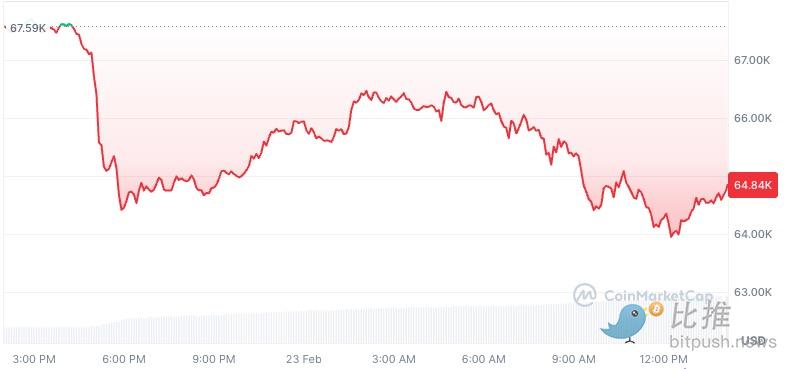
This is a liquidity drought that has lasted for several days. Since February 20, Bitcoin has been in a downward trend for four consecutive trading days, with a cumulative decline of over 7%. Compared to last October's historical high of nearly $127,000, the current price has almost been halved.
Market sentiment has plunged to freezing point amidst continuous fluctuations. The Crypto Fear & Greed Index fell to a single-digit 5 yesterday, remaining in the extreme "fear" zone for three consecutive days: this is the lowest number since the market panic in January of this year.
Macro: Tariff Crisis and the Shaking Narratives of AI
Although last week's U.S. CPI data showed some relief in inflation pressure, the market’s focus has quickly turned to new variables in the global trade situation.
Last Friday, the U.S. Supreme Court rejected Trump's previous method of imposing tariffs based on "emergency powers." Following this, Trump's side indicated that they would advance temporary global tariffs through new legal pathways, with rates potentially increasing from 10% to 15%. The EU immediately responded, demanding that the U.S. adhere to existing trade agreements, which brought the possibility of escalated global trade friction back into the market’s consideration. Additionally, geopolitical uncertainties in the Middle East intensified, with a new round of negotiations between the U.S. and Iran scheduled for the 26th in Geneva, Switzerland.
Risk assets reacted sensitively to this. The U.S. technology sector saw a simultaneous downturn, with software and AI-related companies under pressure.
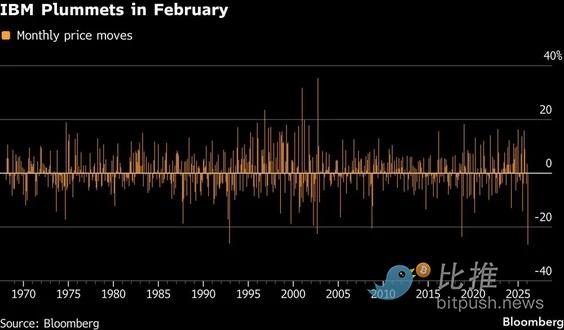
As if this wasn’t enough, during the U.S. market hours on Monday, AI leader IBM saw its stock drop over 11% due to Anthropic’s AI tool automating COBOL language, dragging down technology stocks as a whole. Market analysis firm Ecoinometrics pointed out that Bitcoin is currently extremely sensitive to the downward risks of the U.S. stock market. When U.S. tech stocks confirm a structural downtrend, Bitcoin often follows closely and increases its losses. The previously supportive low volatility structure for Bitcoin has been broken due to deep institutional involvement, shifting to a higher correlation with tech stocks.
Institutions: Funds Transition from "Basis Trading" to Full Risk Aversion
The more critical variable lies in institutional funds.
According to SoSoValue data, as of the week ending February 20, U.S. spot Bitcoin ETFs recorded a net outflow of approximately $316 million; Ethereum ETFs saw a net outflow of about $123 million. This has marked several consecutive weeks of net withdrawals of funds.
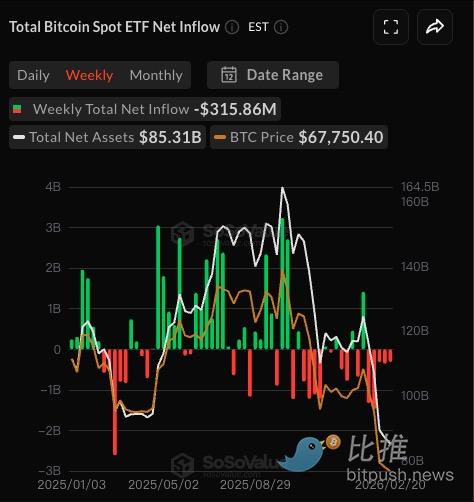
ETF funds were the core marginal increment of the last bull market. Net outflow indicates two things:
First, institutions do not currently view the price as "significantly undervalued";
Second, the price lacks support from passive long-term funds.
The previously popular "basis trading" (buying spot or ETF while shorting futures to lock in price differentials) has become unprofitable as prices have declined. In the absence of sustained ETF inflows, the market relies more on funds from derivatives. Once the macro turns weak, leveraged positions can easily lead to a market scramble.
On-chain: Long-term Holders Slow Down Selling, Miners Sell
Amid the ongoing downward pressure on prices, on-chain data is also showing some subtle signals.
Glassnode noted that recently, the seven-day average net realized profit and loss for investors (short-term holders) has narrowed from -$1.24 billion per day on February 6 to -$480 million per day, indicating that the trend of selling at a loss is weakening, but has not yet ended.
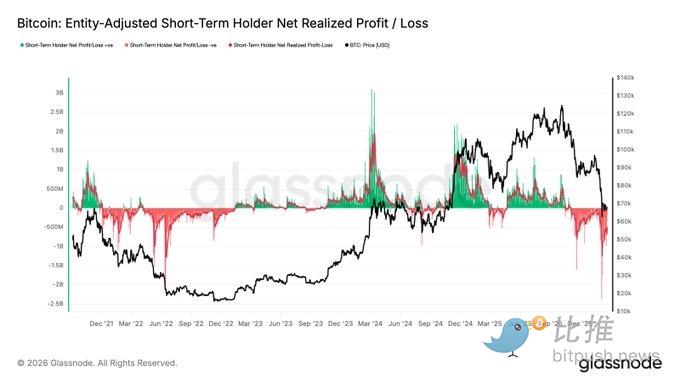
This suggests that the market is currently in a typical "bottom trading period": selling pressure still exists, but the intensity of panic has decreased.
If we layer the market:
Long-term holders have not shown obvious panic;
Short-term funds are still exiting at a loss;
In terms of sentiment indicators, the Crypto Fear & Greed Index has dropped to the "extreme fear" area.
This combination typically corresponds to a consolidation phase, rather than a trend reversal.
Meanwhile, subtle changes are also occurring on the supply side.
Bitdeer disclosed that as of February 20, it has sold all 943 Bitcoin it held, bringing its balance of Bitcoin to zero. They stated that this move was to reserve liquidity for land and data center expansion. In the context of price declines and shrinking mining profits, the sale of reserves by miners may exacerbate short-term selling pressure. Although this is not a widespread behavior in the industry, it can be amplified by the market during times of weak sentiment.
Outlook: NVIDIA Earnings Report May Be a Short-term Turning Point
The market is seeking directional guidance amidst panic. Currently, Bitcoin is struggling at a critical technical support level—the 200-week exponential moving average (EMA) around $68,350 has been breached.
Analyst Tom McClellan warned that while "smart money" in CME futures is rapidly reducing short positions, this merely reflects market conditions, rather than a clear rebound signal. If the key support is lost, Bitcoin still faces the risk of further decline to the $40,000 to $50,000 range. Ned Davis Research strategists even provided a more pessimistic hypothesis, suggesting that if this bearish phase evolves into a "winter," Bitcoin could drop to $31,000.
In this context, the Google search interest in "Bitcoin is dead" has quietly risen in recent months.
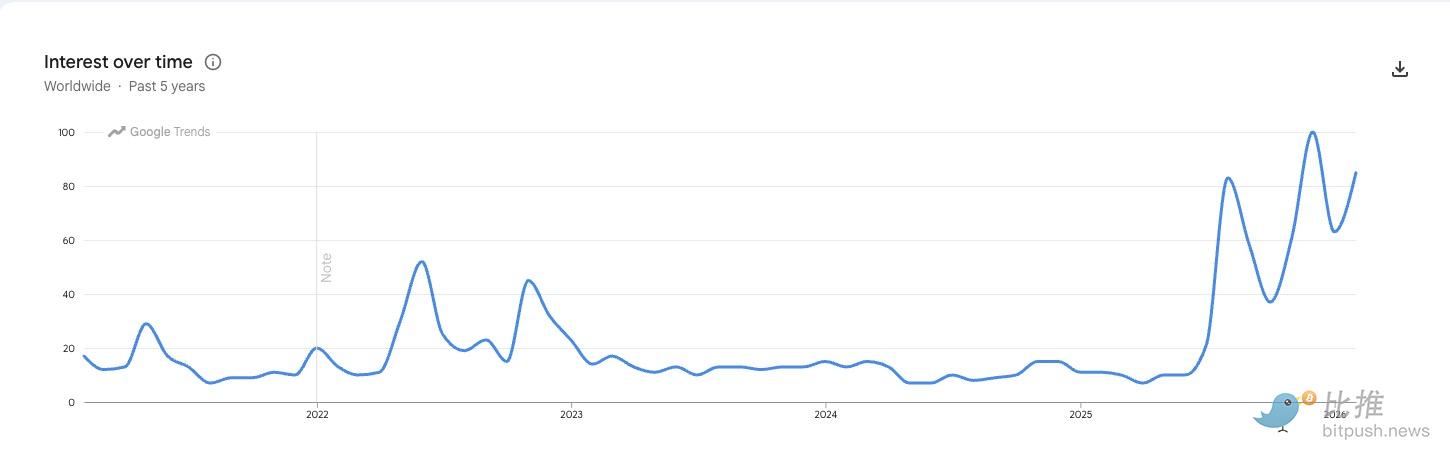
However, bulls like Arthur Hayes, Tom Lee, and Michael Saylor are still proclaiming through various channels that Bitcoin will return to or even surpass historical highs, it’s just a matter of time.
In the short term, potential variables lie in this week's macro events. Digital asset company Keyrock noted that NVIDIA will announce its earnings report on February 25, which could become the next major catalyst for the market. Given the current market's extreme sensitivity to AI narratives and the high correlation between Bitcoin and tech stocks, NVIDIA's performance guidance will directly impact the tech sector and overall market risk appetite, which will subsequently transmit to the crypto market.
In conclusion, amidst heightened macro uncertainty and liquidity drought, Bitcoin is currently in a phase of missing liquidity and weak confidence. The market’s self-repair may need to wait until the selling by long-term holders completely ends, or until new macro policy signals (like a clear easing trend from the Federal Reserve) emerge. Until then, any rebound may face heavy selling pressure.
免责声明:本文章仅代表作者个人观点,不代表本平台的立场和观点。本文章仅供信息分享,不构成对任何人的任何投资建议。用户与作者之间的任何争议,与本平台无关。如网页中刊载的文章或图片涉及侵权,请提供相关的权利证明和身份证明发送邮件到support@aicoin.com,本平台相关工作人员将会进行核查。


