Original Title: "Consensus HK Observation: What Crypto Consensus Emerged from the First Conference in 2026?"
Original Author: Joe Zhou, Foresight News
If 2024 is the "breakthrough year" for ETFs opening the doors of Wall Street, and 2025 is the "regulatory reshaping year" under Trump’s new policies, then the recently concluded Consensus HK 2026 has written a brand new script for this year.
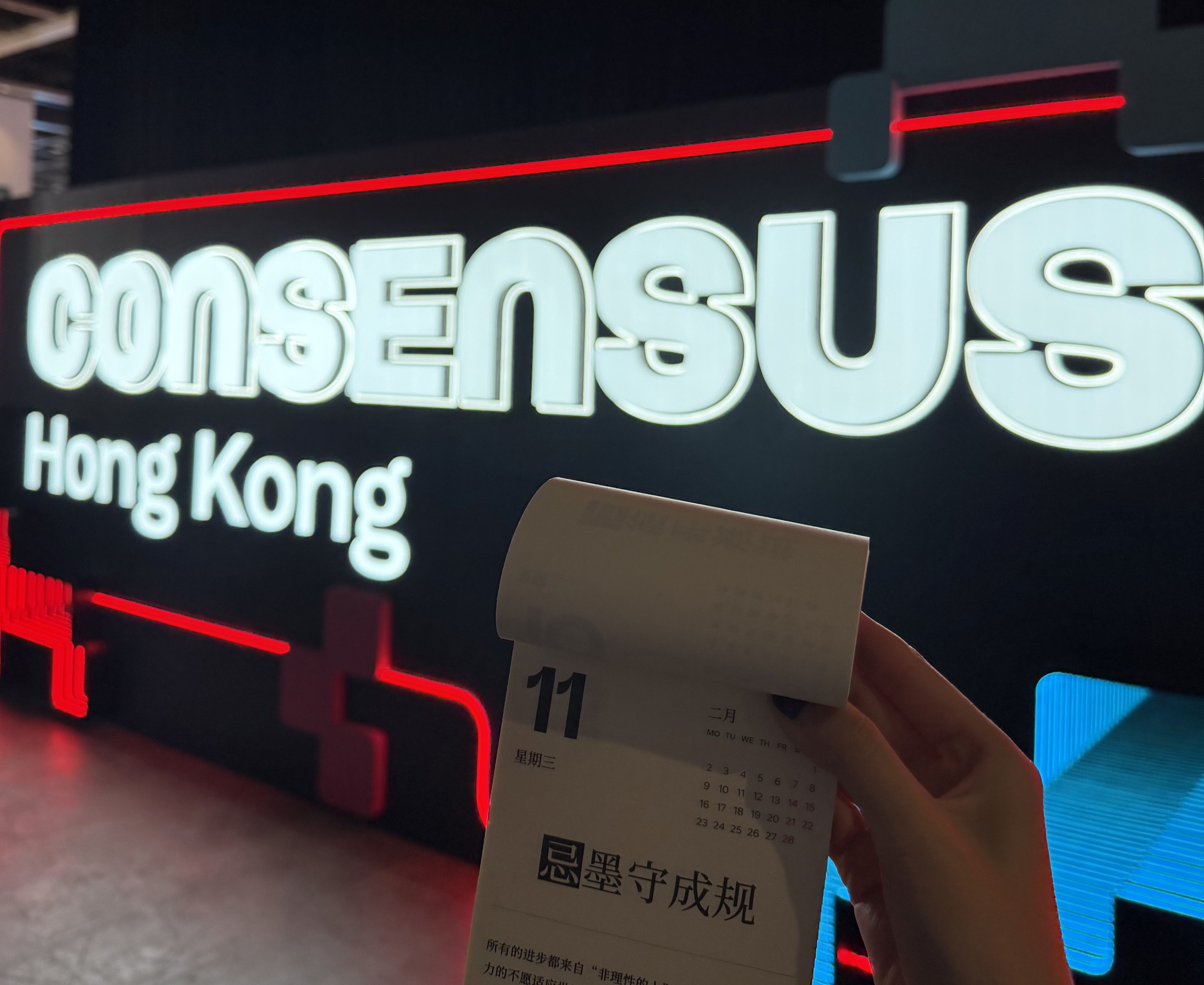
We are about to witness an explosion of "silicon-based finance," a close combat of "sovereign stablecoins," and Crypto bidding farewell to self-indulgence on-chain, moving toward invisible infiltration into the real world.
During the three days at the venue, when the Solana Foundation, Binance executives, and the suited elites from JPMorgan and BlackRock shared the stage, a strong sense of rupture and fusion simultaneously struck. The grassroots era has ended, replaced by a finely tuned financial machine driven by state power, decentralized technologies, and silicon-based life.
Through sensing the emotions of over 11,000 participants and tracking dozens of closed-door meetings, the author summarizes three major Crypto consensus at the beginning of 2026:
Consensus One: Without Economic Independence, AI Doesn't Count as True Silicon-Based Life
The definition of AGI is a topic of endless debate in the tech world. However, in this arena, a new consensus is taking shape: without independent financial sovereignty and rights to have one's own bank account, the so-called AGI is at best a sophisticated tool for humans.
The strongest shock at the conference came from an inversion of the subject-object relationship. The narrative's main axis is no longer "how humans can use AI to trade better," but rather "how AI can use Crypto to reconstruct production relations" — they are autonomously issuing coins on-chain, managing funds, and even beginning to pay real humans' salaries.

Two robots are boxing at the Consensus venue
Whether it’s the recently popular Rentahuman (AI hiring humans to run errands offline) or Ethereum's newly launched ERC-8004 protocol, cutting-edge hackers are desperately trying to close the loop on this "silicon-based financial industrial chain". Nowadays, Ethereum, Base, Solana, and even the specialized Virtuals for AI are all vying for the same throne: to become the preferred underlying settlement network for silicon-based life.
This is not just a geek fest, but has received official endorsement. In a keynote speech at the conference, Hong Kong's Financial Secretary Paul Chan rarely and precisely depicted this vision: "As AI agents can independently make and execute decisions, we will see an early form of the 'Machine Economy' — AI can hold digital assets on-chain, pay service fees, and trade with each other."
In 2026, the most active on-chain addresses will no longer be human whales, but tireless AI agents. Crypto is becoming the "native bank account" of AI, while humans are becoming AI's "physical APIs."
Consensus Two: The Stablecoin Scramble, Hong Kong Fired the First Shot of the "Onshore Counterattack"
During this on-the-ground visit to Hong Kong, I noticed a dramatic contrast: street-side crypto exchange shops (OTC) were sprouting up like mushrooms after rain, but at the most prominent counters, there was invariably a "customer expulsion order" — a complete halt on the sale of USDT and USDC and other dollar stablecoins.
This is by no means a spontaneous action by merchants but a long-planned "cleaning up." On the main stage of the Consensus conference, Financial Secretary Paul Chan revealed this puzzle: "Hong Kong plans to issue the first batch of stablecoin issuer licenses this March."
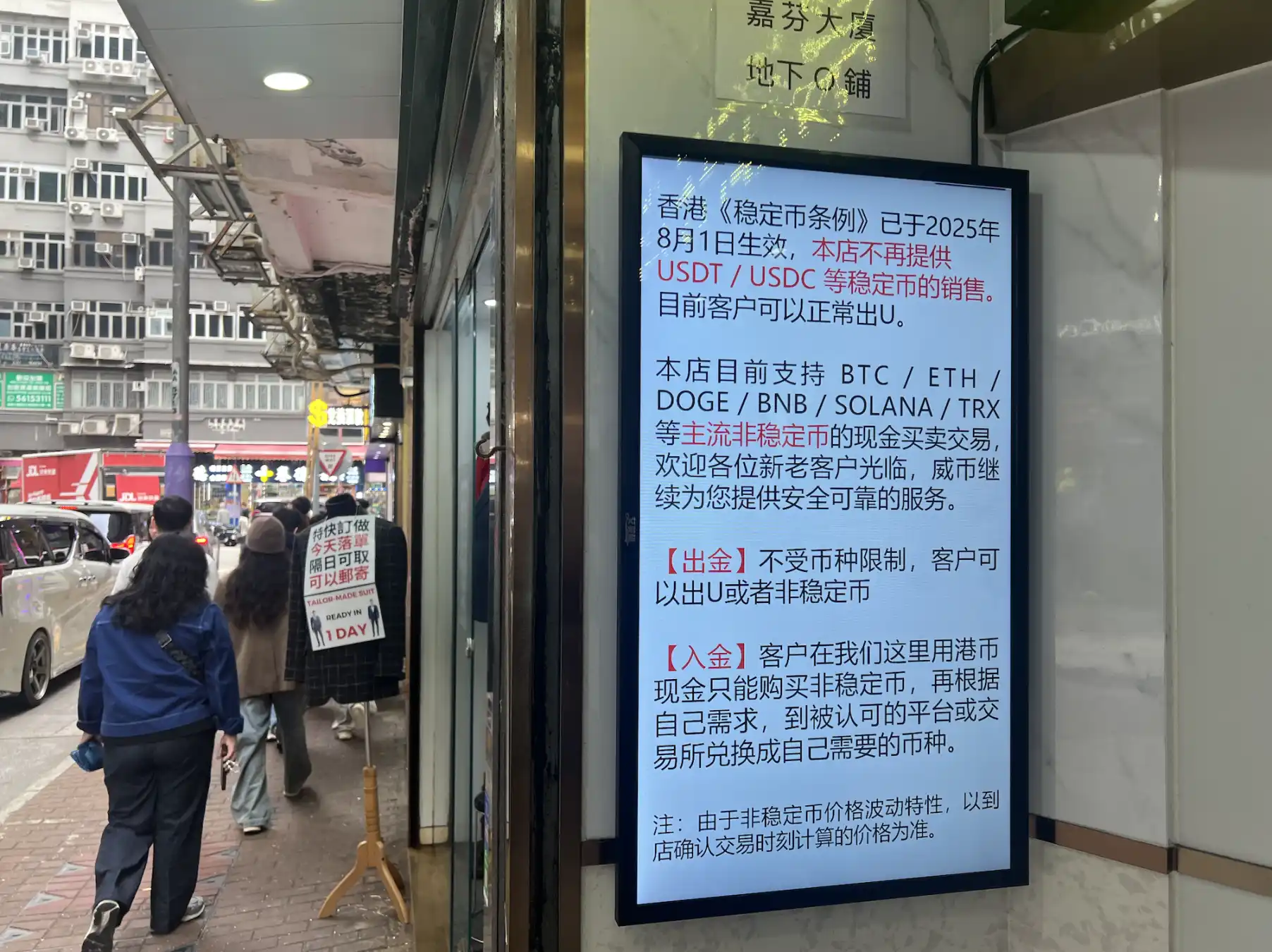
Image: Cryptocurrency exchange shop in Hong Kong
This is an extremely keen political economy signal. Just two weeks ago, the offshore king Tether had just bowed to U.S. regulators, launching the compliant US dollar stablecoin USAT, trying to seamlessly swallow Wall Street. Meanwhile, on this side of the globe, to counter the further siphoning of liquidity from Asian dollar stablecoins, Hong Kong gave the strongest response.
This is no longer simply a Crypto compliance issue, but a currency sovereignty defense battle between major nations. From the EU’s MiCA bill comprehensively blocking non-compliant dollar stablecoins to Hong Kong's "big move" set to debut in March, and the anticipated release of euro stablecoins in the second half of 2026 led by ten mainstream European banks, a clear front has been drawn.
Hong Kong is using both physical and legal means to cut off the circulation of offshore dollar stablecoins, paving the way for its "regular army" (Hong Kong dollar / onshore stablecoins). In 2026, stablecoins will no longer be chips in crypto casinos, but "digital nuclear weapons" in the financial game of major powers.
The intention is clear. While all of Asia is frantically scanning QR codes for USDT, Hong Kong has pressed the pause button in advance. This is about "cleaning the house before inviting guests," preparing for the compliance Hong Kong dollar stablecoin that will fully debut in March.
Dollar stablecoins, Hong Kong dollar stablecoins, euro stablecoins, yen stablecoins… a stablecoin scramble led by various governments is about to officially unfold in 2026.
Consensus Three: Saying Goodbye to Self-Indulgence, Real Applications Leading to Mass Adoption Become the Only Way Out
Whether it’s Solana's Lily Liu or executives from BitGo, everyone reached a rare consensus at the roundtable: the competition for TPS (transactions per second) between L1/L2 has become meaningless, and infrastructure is severely oversupplied.
The consensus for 2026 is: stop reinventing the wheel that only excites Crypto insiders. The real winners are those who can "invisibly" embed Crypto into Web2 scenarios.
A typical paradigm shift is occurring:
1. Seamless Integration: PayPal's PYUSD is not an island; its success lies in its ability to seamlessly reach millions of users through Venmo, bringing payments back to their essence.
2. Global Layout: Protocols like Aeon Pay have quietly penetrated payment networks in eight countries through on-chain QR code payments, allowing users to operate without even noticing the existence of blockchain.
This trend has also been endorsed by Vitalik Buterin. He has repeatedly emphasized that the industry should stop "buying" user attention through token incentives and focus on the actual effectiveness of applications.
Many practitioners believe that stablecoins, AI agents, prediction markets, RWA (real-world asset tokenization), and other sectors bear the early mission of Crypto towards large-scale applications — they are not isolated speculative targets but the underlying arteries connecting decentralized finance to the real world.
Closing: The 2026 Sifting of the Sands
The emotion conveyed by Consensus HK 2026 is calm yet cruel.
Crypto is entering a new stage.
This is no longer an era where one can get rich by writing a few lines of Ponzi code. As the heavy artillery of old money enters the scene and as AI agents begin to execute trading strategies 24/7, the window left for retail investors and classical independent developers is closing.
But at the same time, the grand age of "silicon-based finance" and "borderless compliant payments" has just begun.
免责声明:本文章仅代表作者个人观点,不代表本平台的立场和观点。本文章仅供信息分享,不构成对任何人的任何投资建议。用户与作者之间的任何争议,与本平台无关。如网页中刊载的文章或图片涉及侵权,请提供相关的权利证明和身份证明发送邮件到support@aicoin.com,本平台相关工作人员将会进行核查。