The Eve of Power Restructuring: Political Signals from Davos and the Industry Commitment of the Crypto Circle

CN
2 hours ago

Original Author: Sandy Carter, Forbes

Original Translation: Saoirse, Foresight News

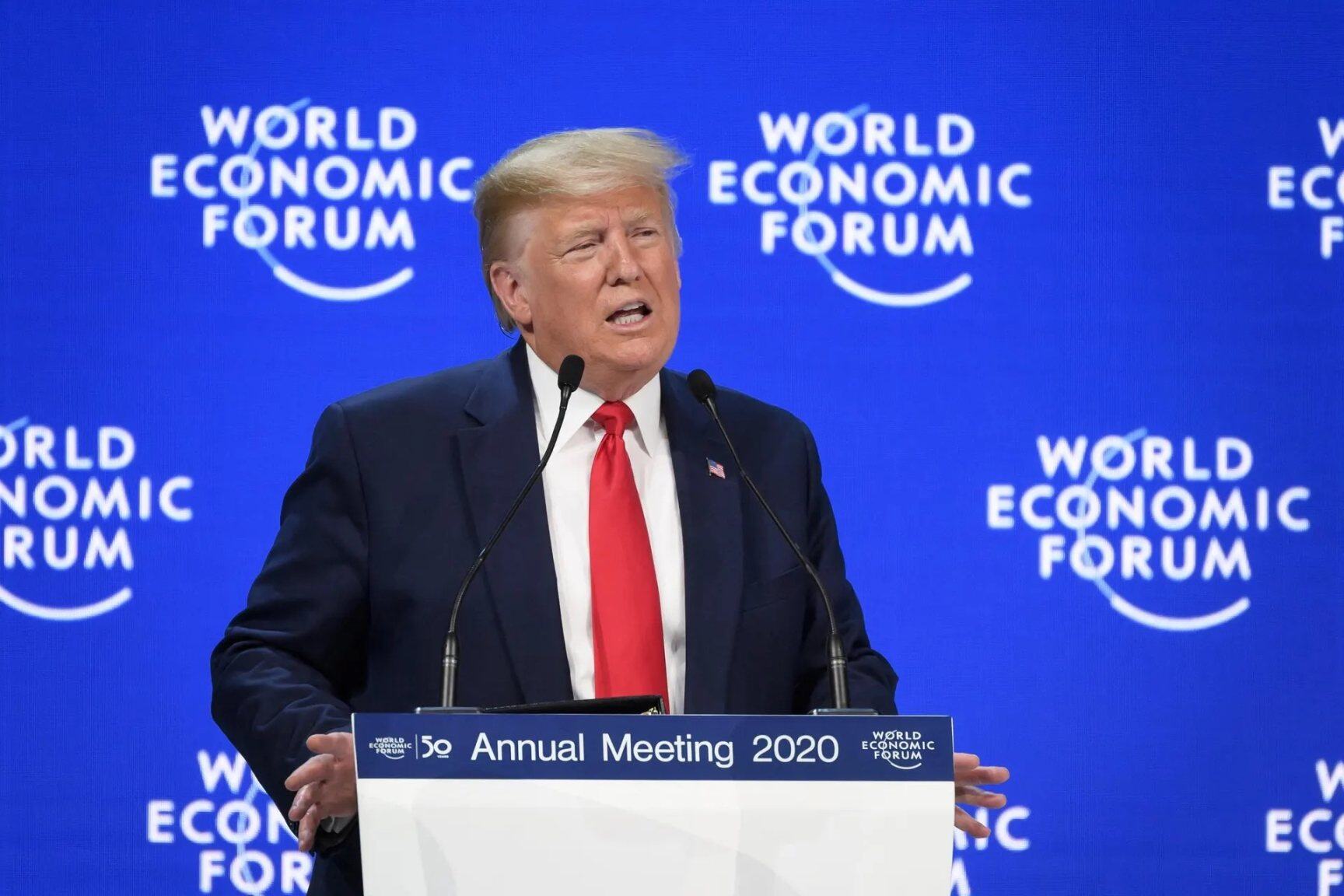
Donald Trump speaking at the 2020 World Economic Forum in Davos. Photo: Fabrice Coffrini / AFP

Donald Trump will head to Davos next week.

As the World Economic Forum convenes, technology, policy, national competitiveness, and financial infrastructure are at a critical intersection. This appearance will mark Trump's first visit to Davos in six years, and the organizers have stated that this year's forum will see the largest American delegation in history, including senior officials from the U.S. Cabinet and representatives from major American corporations.

This year, Davos will also welcome the formal return of the American Pavilion. This U.S.-focused physical space will serve as an important base for policy discussions and business exchanges in the area. I am honored to be invited to speak at the American Pavilion this year. This move clearly indicates that both the U.S. government and American businesses place a high value on the 2026 Davos Forum, viewing it as an important platform for exerting influence and exchanging core viewpoints.

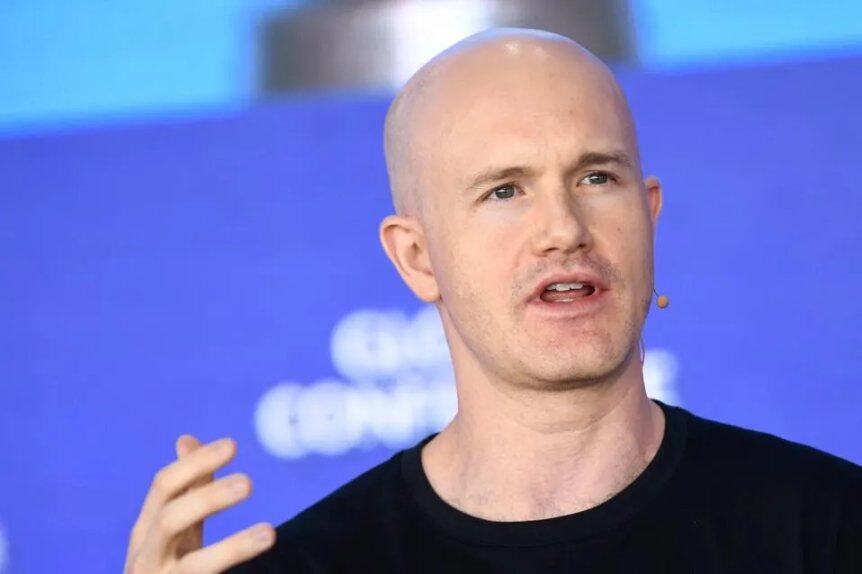
Notably, on the eve of the Davos Forum, one of the most influential executives in the cryptocurrency field, Coinbase CEO Brian Armstrong, refused to support a proposed cryptocurrency bill—despite widespread interest in pushing the bill through this year. These two events together reveal a profound shift in the interaction patterns between power, policy, technology, and cryptocurrency.

Trump's Attempt to Elevate Davos from "Ideological Discussion" to "Institutional Building"

I have attended the Davos Forum multiple times, and this year's forum feels distinctly different in tone and substance. With the attendance of heads of state, cabinet officials, and hundreds of CEOs, the core topics of the forum have shifted towards decision-making at the infrastructure level. This year's forum is expected to attract around 3,000 participants from 130 countries, with the number of political leaders and corporate CEOs reaching a historic high.

The changes in the field of artificial intelligence are particularly significant. Next week, the agenda of the "AI House" in Davos will fully reflect this shift—positioning AI as "shared infrastructure" and discussing core topics such as "power and responsibility," "large-scale governance," and "how intelligent systems should enhance rather than replace human decision-making."

Today, artificial intelligence is no longer seen as an "emerging technology," but rather as infrastructure equally important as energy, supply chains, and national competitiveness. From the agenda of the "Intelligent Agent AI Pavilion," it is evident that as intelligent technology extends from the "tool level" to the "decision system level," governance issues such as "trust, accountability, and control" raised by autonomous AI agents will become focal points of discussion. Nowadays, policymakers' discussions on "computing power and access to AI" are as heated as past concerns over "oil resources."

Discussions among corporate executives focus on "how to build a solid foundation for organizations established in different economic eras." In this context, the importance of "system durability" far exceeds "development speed," and the core question has shifted to "which systems will still play a critical role in ten years."

System Thinking Also Applies to Digital Finance

This "system thinking" is increasingly permeating the field of digital finance.

Today, the daily settlement transaction volume of stablecoins has reached billions of dollars, especially widely used in cross-border payments and fund management. Meanwhile, "tokenization" is quietly penetrating the capital markets, extending from fund products to various real-world assets.

Cryptocurrency has officially transitioned from the "experimental stage" to the "financial infrastructure domain." In 2025, the Davos Web3 Center signed the "Web3 Davos Declaration," clearly supporting four core principles: "responsible innovation, sustainable development, accountability, and trust," and will further strengthen the dissemination and implementation of this concept in 2026.

Trump's Core Signal on "Power and Digital Finance"

Trump's appearance in Davos injects political influence into this transformation process. For a long time, his economic propositions have revolved around "sovereignty, influence, and competitiveness," and cryptocurrency happens to lie at the intersection of these three dimensions.

On one hand, digital assets are expected to achieve "faster settlement speeds, new capital formation models, and efficiency improvements," aligning closely with the policy agenda of "promoting growth"; on the other hand, digital assets have also raised concerns in areas such as "sanction enforcement, financial regulation, and the long-term status of the dollar." Although Davos is not a "legislative venue," it is a key platform for "policy priority transmission"—the positioning and interpretation of cryptocurrency at the forum will have significant implications for the market and regulatory agencies.

The return of the American Pavilion further confirms this: the U.S. does not view Davos as a "neutral backdrop," but rather as a strategic platform for "shaping narratives around technology, capital, and influence."

Brian Armstrong's "Opposition Stance"

In this context, according to Reuters, Armstrong's refusal to support the cryptocurrency bill reflects that the cryptocurrency industry has matured. With the passage of the "CLARITY Act," the industry's expectations for regulation have fundamentally changed. For nearly a decade, leaders in the cryptocurrency field have argued that "any clear regulation is better than no regulation"; now, as industry risks continue to rise, this position has shifted.

Brian Armstrong clearly opposes cryptocurrency legislation. (Photo: Patrick T. Fallon / AFP)

Armstrong's concerns can be summarized into three core points:

  1. The bill will "artificially divide winners and losers": The bill clearly favors large existing enterprises and centralized intermediaries, potentially excluding startups and open networks that drive industry innovation;
  2. It increases compliance burdens without enhancing clarity: The bill does not clearly define the operational rules for cryptocurrency products, but instead adds a series of obligations that not only fail to reduce legal uncertainty but may exacerbate risks;
  3. It undermines the core advantage of "decentralization": Key provisions in the bill will push the cryptocurrency ecosystem towards "highly centralized" development, undermining the "resilient architecture" and "global interoperability" that cryptocurrencies rely on, potentially leading to the outflow of innovative resources or creating long-term market concentration risks.

Armstrong's stance is not a "simple opposition to regulation," but rather an "emphasis on the scientific and rigorous nature of regulation." As cryptocurrency becomes core infrastructure, poorly designed regulatory policies could lead to issues such as "the solidification of fragile systems," "the outflow of innovative resources," or "long-term concentration risks."

Trump, Armstrong, and the "Struggle for Economic Underlying Rules"

There is a direct connection between Trump's trip to Davos and Armstrong's refusal of the bill: Trump seeks to convey "America's competitive strategy in a technology-driven global economy" through the Davos Forum; while Armstrong resists unreasonable rules that "may prematurely lock in the future form of digital finance" through the legislative process.

Today, the core of this field is no longer "speculation or experimentation," but rather "who can control the core systems that underpin the economy." The current key issue is "how to control the underlying operational rules of the modern economy"—with Trump's trip to Davos, this struggle has fully entered the political arena.

免责声明:本文章仅代表作者个人观点,不代表本平台的立场和观点。本文章仅供信息分享,不构成对任何人的任何投资建议。用户与作者之间的任何争议,与本平台无关。如网页中刊载的文章或图片涉及侵权,请提供相关的权利证明和身份证明发送邮件到support@aicoin.com,本平台相关工作人员将会进行核查。

Share To
APP

X

Telegram

Facebook

Reddit

CopyLink