Original author: Sleepy
In the early morning of June 9, 2026, Beijing time, Apple's WWDC 2026 commenced as scheduled.
At the conference, it renamed Siri to Siri AI, announced a deep collaboration with Google, utilized the capabilities of the Gemini model to train its new generation of foundational models, and extended Private Cloud Compute for the first time to Google Cloud and Nvidia's GPUs.
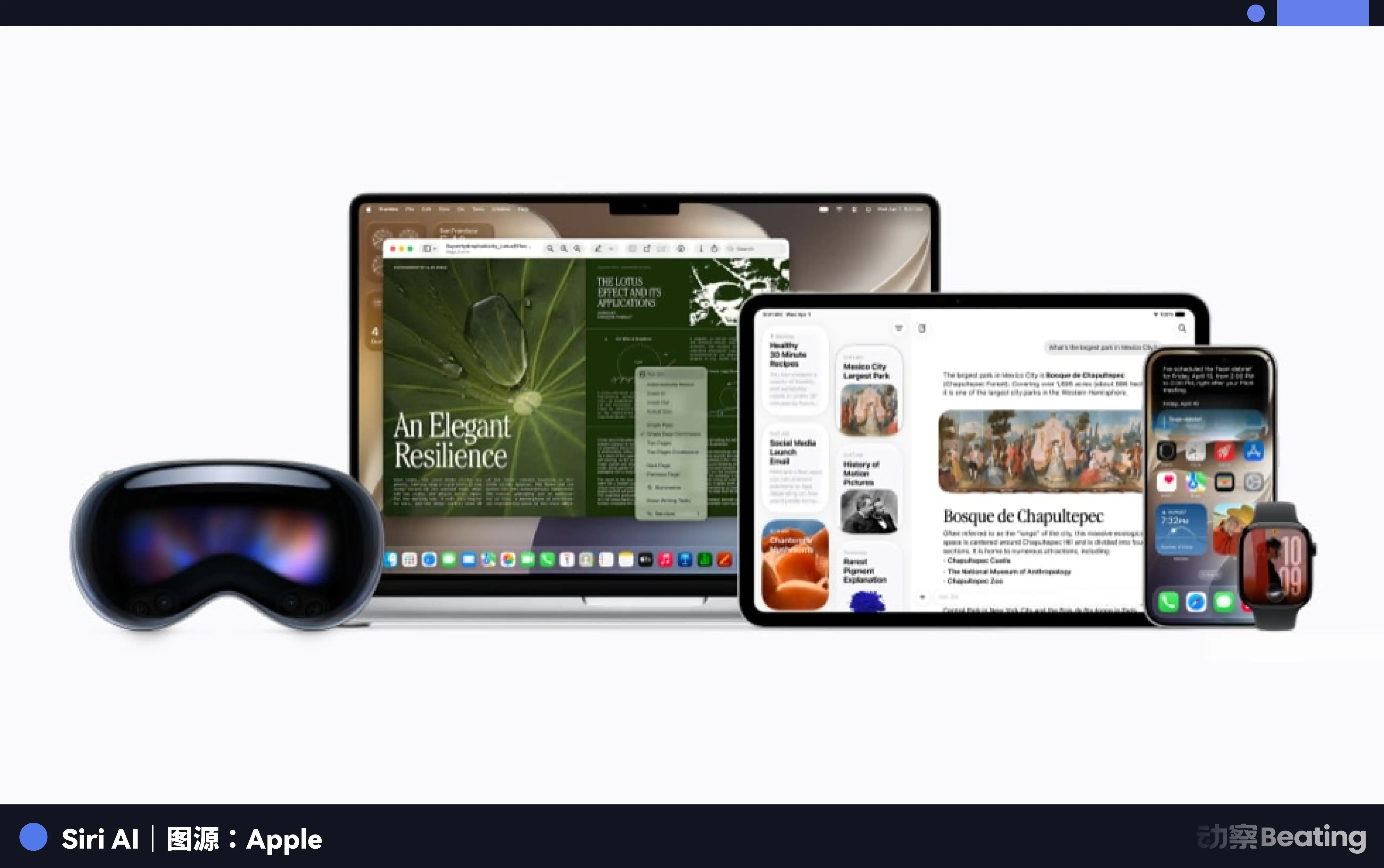
It launched five Apple Foundation Models, with a minimum of 3 billion parameters on the edge and a maximum cloud version optimized specifically for Nvidia GPUs. Almost every daily app was rewritten. Siri now has its own independent app, able to save conversations and sync across devices, possessing memory.
This was Apple's most information-rich launch event in years.
Taming a Future
Apple's AI story can be traced back to the fall of 2011, at the iPhone 4S launch event, where Siri first took the stage.
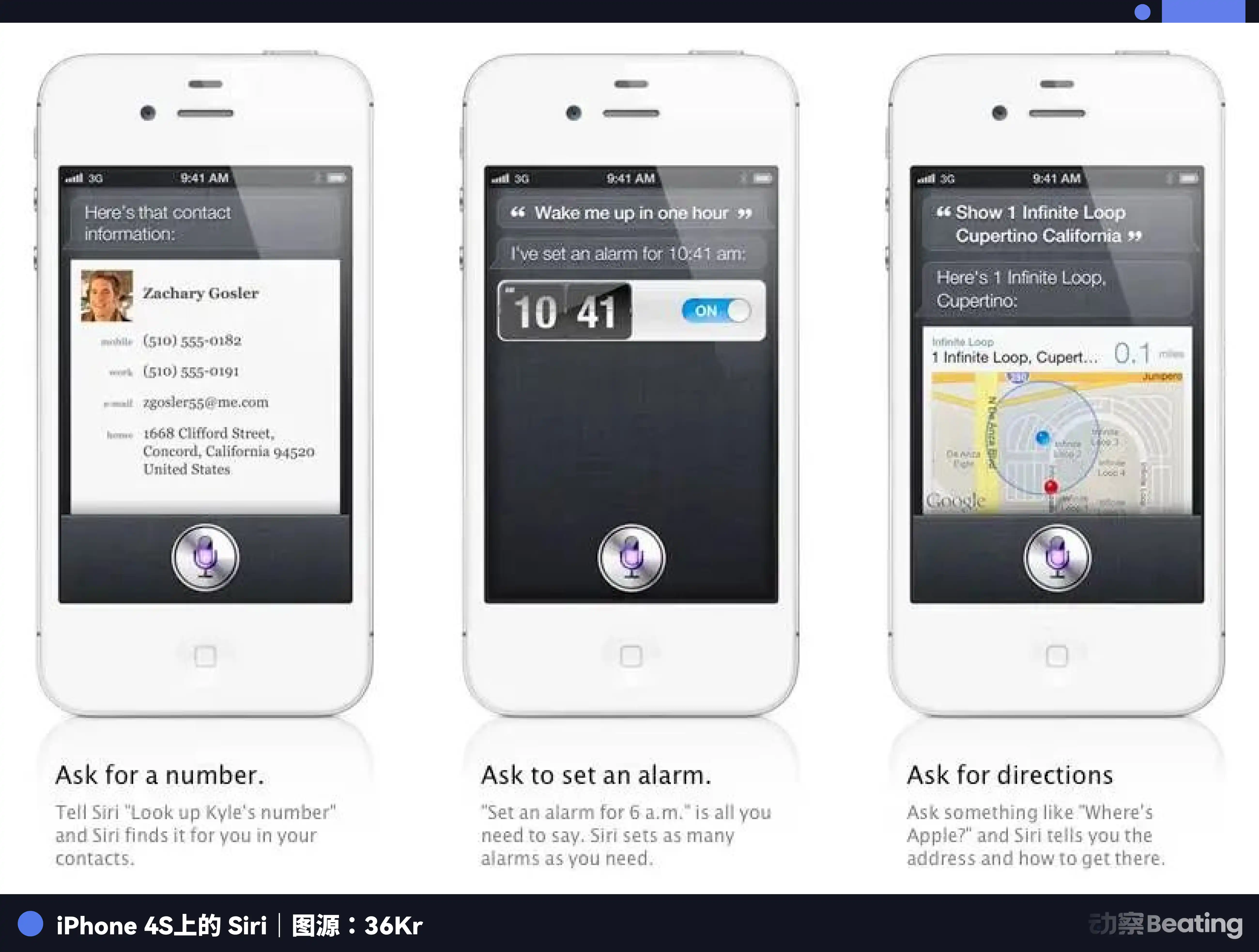
At that time, Jobs was already gravely ill, and Apple was standing at the intersection of an era. Siri appeared like a little creature out of a science fiction movie; you asked about the weather, inquired about restaurants, and called upon it to set alarms. It would respond in a slightly mechanical tone, making you feel for the first time that a phone was more than just a piece of lifeless glass.
Siri stemmed from SRI International's CALO project, initially funded by the U.S. Defense Advanced Research Projects Agency to create a military-grade AI assistant. In 2010, Apple acquired it, and according to TechCrunch, the deal could have exceeded $200 million. A year later, Siri debuted with the iPhone 4S, with Apple claiming it could understand natural language and perform tasks like a personal assistant.
In that moment, Apple gained the world's best personal intelligent gateway. Then it took over a decade of delay.
Looking back today, the earliest change Siri brought was how humans communicate with machines. In 2011, the iPhone was transforming phones from communication tools into personal computing devices, the App Store was redefining software distribution, and mobile internet was migrating from PC desktops to the palm of your hand. Siri emerged at the peak of this rise. But after entering Apple, it quickly transformed from an ambitious personal assistant into a compliant voice remote.
Apple inherently believes in closed systems and control. Yet a true personal assistant must connect to more services, understand more context, and tolerate greater uncertainty. And uncertainty means making mistakes, implies privacy risks, and exemplifies the disorder Apple is least equipped to handle.
Thus, Siri was only permitted to perform certainty tasks, like a tamed future. It had a name, a voice, and a personality facade, yet it lacked the proactivity and memory that true personality requires. Users were initially amazed by it, then joked about it, and ultimately began to use it less and less.
Apple was the first to introduce "personal assistants" into phones, yet it was also the first to lock it away.
Today, the whole industry is focused on Agents, but looking back, Siri from 2011 was almost its prototype. One could say Apple was among the earliest to create Agent prototypes, yet ultimately it became the last to realize it fully.
An AI Unlike AI
During the years Siri did not grow, did Apple’s AI stagnate?
The answer is precisely the opposite. Apple has done a lot in AI, just not enough that resembles AI.
If measured by the volume of the conference announcements, Apple seemed to suddenly begin taking AI seriously in 2024. But if one looks back along the technological trajectory, Apple has been active in this area for the past decade.
In 2015, it acquired two companies back-to-back, one focused on natural language dialogue and the other exploring running deep learning directly on mobile devices. That year's WWDC discussed Proactive Assistant, attempting to have the system provide suggestions before users even spoke. The idea was very forward-thinking, but under the technological conditions of that time, it more resembled a slogan.
The following year, SiriKit was introduced, providing limited access for developers, while also publicly discussing Differential Privacy, committing to learn from large-scale data while protecting individual privacy. In 2017, the iPhone X introduced the Neural Engine, and Face ID and the camera began to rely on on-device machine learning, while Apple launched Core ML to allow developers to run models on Apple devices and purchased Workflow, later known as Shortcuts.
This set of answers was very characteristic of Apple. It wanted AI, but it did not want to bet like Google on the cloud and vast personal data. It wanted developers but did not want Siri to turn into a chaotic mixture. Thus, Apple chose the most challenging and slowest path: focusing on on-device processing, privacy, and systems integration.
By around 2020, Apple acquired several companies working on low-power edge AI and voice understanding. The same year, the M1 chip was released, with a 16-core Neural Engine rolling out to the Mac, pushing AI processing power from pocket-sized phones to computers. The following year, Live Text and Visual Look Up were implemented, allowing text in photos to be copied directly, and the camera to recognize flowers and grass, with more voice requests being processed without going online.
In the past decade, Apple indeed did not launch a standalone AI app, but it certainly made phones smarter.
There are reasons for choosing this path. On-device AI should not just be a question-answering machine; it needs to view photos, listen to voices, understand contacts, call apps, and perceive battery levels, location, and time. Ideally, it should be able to do some tasks without an internet connection, ensuring that not every request uploads users’ lives to the cloud. Apple’s hardware control qualifies them for this path.
However, there is a deep divide between being smart in individual areas and achieving overall intelligence. Apple excels at breaking technology down into reliable components, but generative AI demands it reassemble the components into a whole.
These components are quietly embedded in the system, waiting for an opportunity.
The opportunity did not come first. ChatGPT arrived first.
When ChatGPT appeared at the end of 2022, Apple was not entirely unprepared. Tim Cook repeatedly emphasized in various settings that AI and machine learning have been core technologies of Apple products for years. Bloomberg reported in 2023 that Apple internally had the Ajax model framework and a chatbot project.
But the issue was not whether Apple had cards up its sleeve; the issue was that the rules on the table had changed.
ChatGPT shifted users' focus from "function" to "capability." Users began to expect AI on their phones and started comparing who was stronger. When ChatGPT could organize a jumble of thoughts into a coherent email, Siri was still responding with "I found this information online."
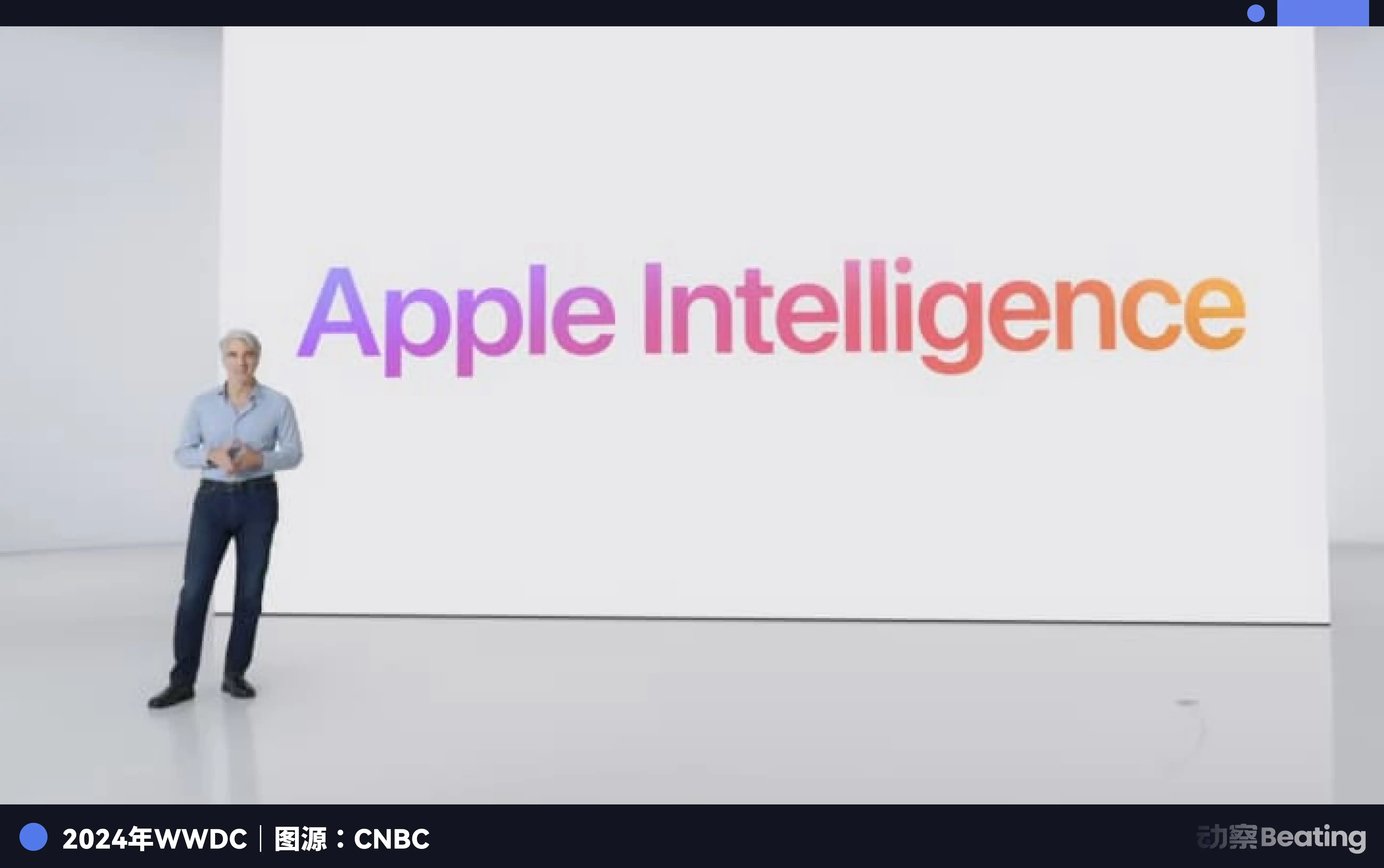
At WWDC 2024, Apple brought Apple Intelligence to the forefront. Writing tools, notification summaries, photo searches, personalized understanding of Siri, and ChatGPT integration. Apple finally admitted that relying solely on self-developed models in 2024, it could not meet users' expectations. However, the vision it painted ultimately did not land as promoted.
Please Invite Google as a Tutor
Behind the delay of Apple Intelligence lies not only the inability to keep up with technology but also the structural limitations of the entire Siri team in this AI wave.
Multiple media outlets confirmed that Apple’s former AI leader John Giannandrea stepped down, Craig Federighi took over the AI direction, and Mike Rockwell, head of Vision Pro, was assigned to lead the Siri team, with a number of Siri engineers sent for AI programming training. This was not a smooth transition; Apple had already realized that relying on the original people and pace was no longer sufficient.
In January 2026, Apple and Google issued a joint statement that Apple would leverage Gemini technology to customize Apple Intelligence features for iPhone and other products. Reports indicated Apple planned to pay Google about $1 billion annually to use a custom Gemini model at the scale of 1.2 trillion parameters to support Siri’s transformation. Apple had previously also tested models from OpenAI and Anthropic but ultimately chose Google.
This was entirely different from the 2024 ChatGPT integration. That time, ChatGPT was more like a rescue deployed by users when Siri could not respond; the brand was OpenAI’s, and the interface was popup-based. This time, Gemini ventured directly into the underlying architecture, becoming part of Apple’s new generation foundational models.
The key move was distillation. Google provided Apple with full access to Gemini, allowing Apple to generate high-quality answers and reasoning processes using large models in Google’s data centers and then use those results to train smaller, cheaper models capable of running on the iPhone.
On the eve of WWDC, Apple published a technical document packaging this cooperation as the third generation of Apple Foundation Models, collaboratively developing five models with Google. On the edge, there is the 3 billion parameter AFM 3 Core, and a 20 billion parameter sparse model AFM 3 Core Advanced, which only activates parts on request. In the cloud, there are AFM 3 Cloud and image model ADM 3 Cloud, as well as the strongest AFM 3 Cloud Pro.
The more realistic change is in computing power. Edge models, no matter how smart, cannot complete all tasks; the infrastructure of Apple’s Private Cloud Compute struggles to independently support full Gemini-level inference, with certain requests running on Google Cloud’s Nvidia GPUs. Apple later confirmed that PCC was the first to expand outside of Apple’s own data centers, with technology stacks covering Nvidia Confidential Computing, Intel TDX, and Google Titan chips. Apple emphasized that it still controls PCC software, trusting only programs approved by Apple’s encryption, with related binaries available for security researchers to inspect.
Apple has not genuinely relinquished control but has given up the facade of entirely self-developed technology.
The Bones are Borrowed
To understand Apple’s position in the AI era, one must first clarify what its core assets are.
It’s not chips, nor models, it’s devices. Within the devices are albums, emails, calendars, maps, and payment systems, carrying the fragments of countless ordinary lives. Which AI can mobilize these fragments? It becomes more than just a chat bot; it can become the true central intelligence.
Apple began paving the way for this central intelligence early on. The Workflow acquired in 2017 later turned into Shortcuts, deeply linked with Siri and system automation. The App Intents launched in 2022 allowed third-party applications to expose their capabilities to system entry points. By the time of Apple Intelligence, these interfaces became the hands and feet for AI to perform real-world actions.
With these interfaces, OpenAI can come in, and Gemini has also entered, and the Chinese market can find local partners in the future. But their way in is not through outright takeover of the iPhone; rather, they are integrated into Apple’s permission framework and privacy regulations.
What Apple fears most is not that someone else’s model is stronger. What it fears is that users start circumventing the system, handing their lives over to another entry point directly. If one day, the place users open daily isn't an app but an AI assistant that can manage everything for them, Apple risks becoming a decent shell.
Thus, from now on, the "Apple" in Apple Intelligence represents more product control rather than complete technological sovereignty. The skin is grown by itself, the clothes are tailored by itself, but the bones are borrowed. Google provides the skeleton, Nvidia supplies the joints, and what Apple must do is to dress this body in its own attire and step out.
Google gains a significant endorsement from this deal, with even Apple admitting that Gemini’s underlying capability is more reliable. Nvidia obtains another proof; even if Apple has the strongest consumer-grade chips and ambitions for self-developed servers, it still cannot bypass GPU clouds when dealing with frontier inference and complex agent tasks.
Yet the more bones borrowed, the less complete the body is. Each borrowed bone carries the commercial strategy, regulatory, and technological rhythms of the suppliers. If one day someone wishes to reclaim the bones, will Apple be able to stand firm? This question is one it presently does not have to answer, but will inevitably face.[/p]
A New Tenant in the System
Ordinary people do not care about model parameters. What they care about is whether the phone can be less bothersome.
At WWDC26, Apple stated: "There are times when you expect more from Siri."
For Apple, this is almost an apology.
Then it attempts to show you a different morning.
You wake up to twenty notifications stacked on your screen. In the past, you had to swipe each one away, but now the system has prioritized them for you; messages from your boss are at the front, while ads and promotions are condensed into one line of gray text. You open your email, and a lengthy work email has been distilled into three sentences; you decide to reply, and Siri drafts a response based on your calm tone when speaking to this person. You remember you need to call a merchant for a return this afternoon; before you’ve dialed, the system has already pulled out the order number from your emails and displayed it on the call interface.
This is the story Apple wants to tell: an intelligent layer laid beneath the system, saving you from the repetitive cognitive chores of daily life. Less reading of unnecessary junk, less searching for files, fewer interruptions from notifications.
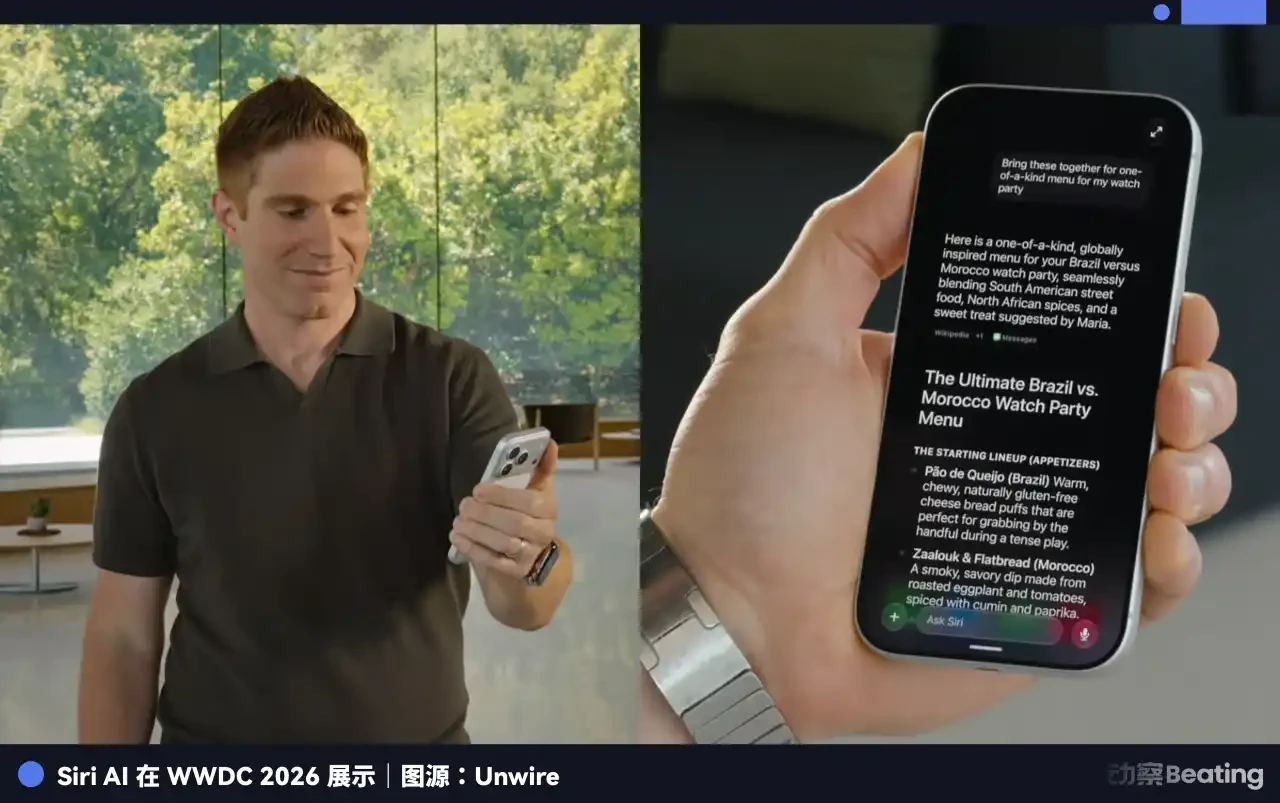
To tell this story well, Apple nearly reworked Siri’s entry. On the iPhone, it's incorporated into the Dynamic Island, allowing for instant conversations. On iPad and Mac, it integrates with Spotlight. It now has an independent app that can save and resume past conversations, and sync via iCloud across devices. Apple wants Siri to become an AI assistant living within the system, possessing memory and context, while also trying not to make it resemble ChatGPT too closely.
Visual elements have also become an important focus. The camera now includes a Siri mode that can provide nutritional information for food when photographed, and identify and search unknown objects when photographed. System-level dictation goes beyond simple speech-to-text; it will automatically add punctuation and formatting to convert spoken words into text ready for sending.
On the developer side, pathways are also being laid. Apple has opened the Core AI framework, enabling third parties to load their own models on devices. After an upgrade, App Intents allow Siri to better understand third-party applications. The Foundation Models Framework no longer only calls upon the native edge models but also supports integration with external suppliers like Claude and Gemini. Apple is paving a way for the entire ecosystem; in the future, if Siri is to work across apps, developers must hand their content and actions over for the system to comprehend.
If these plans come to fruition, Apple’s AI will no longer just be "the chatty Siri."
However, this time Apple is much more cautious than before. Siri AI will only be made available to users later this year in beta form, starting with English. And when the same Apple Intelligence reaches China, it is likely to be a different product altogether.
Chinese users view Apple AI basically as a source of amusement. The conference was lively, the features are appealing, but “not currently supported” in the Chinese region.
The Chinese market has a whole set of regulations regarding generative AI, content safety, and data localization. Apple needs to find local model partners and go through regulatory approvals. Apple Intelligence not launching in China is not just a matter of a few months’ delay; from the ground up, it might not even be the same system.
What American users see is a combination of self-developed models and Gemini; what Chinese users may see could be a version molded by Apple’s system permissions, local cloud services, local models, and regulatory requirements. They are all called Apple Intelligence, but their real capabilities and reachable boundaries may be completely different.
iCloud services in mainland China are operated by Cloud on Guizhou. The cloud drive stores files, and AI needs to understand those files; the cloud drive stores photos, and AI needs to comprehend those photos; the cloud drive syncs notes, and AI must extract your plans, habits, and relationships from the notes. These data have new uses in the AI era, and will naturally face varied levels of regulation.
A more immediate threat comes from competition. Domestic smartphone manufacturers are moving quickly with edge models, Chinese assistants, and imaging AI. For Chinese users, spending several thousand yuan on a new iPhone, only to find that the core AI functions are unusable, makes switching brands more appealing.
Daily scenarios in the Chinese market pose additional challenges for Apple. WeChat, Alipay, Meituan, Douyin, ride-sharing services, governmental services, and hospital registration are what many people handle on their phones daily. An AI assistant that cannot enter these scenarios and cannot understand group chats, receipts, verification codes, and various expressions that only locals instantly comprehend struggles to be labeled "intelligent."
Understanding a Person
Apple Intelligence has another issue: it does not cover all iPhones.
iOS 27 will support the iPhone 11 and the second-generation iPhone SE, but Apple Intelligence requires at least an iPhone 15 Pro and newer models, as well as M-series iPads and Macs. The most advanced edge models have even higher requirements, necessitating iPhone 17 Pro, iPhone Air, or M4 iPads or M3 Macs with at least 12GB of unified memory.
In recent years, the replacement cycle has lengthened significantly. With good enough screens and adequate cameras, many people no longer upgrade their phones annually. AI might become a reason for Apple to stimulate upgrades again, as edge AI indeed needs more powerful chips and larger memory, making hardware barriers unavoidable. A personal capability wrapped as “more understanding of you” ultimately becomes a price threshold.
For the past decade, Apple has continuously asked, "What comes after the iPhone?" It has tried watches, headphones, televisions, and that car project which was canceled after a decade of rumors. In 2024, some employees from the car team were transferred to the generative AI team.
AI arrives just in time; it provides Apple with a next-generation story without needing to create a new hardware category from scratch, simply transforming the devices already in the hands of over a billion users. After the iPhone, it may still be the iPhone, yet it must evolve into something else.
Future plans for hardware products led by Tim Cook’s successor Ternus hint at Apple’s next steps. He is advancing a set of unreleased AI devices, including camera-equipped glasses and wearable devices, aimed at understanding the surrounding environment through computer vision. If these products come to fruition, Apple Intelligence could spill out from phones, with new sensory hubs possibly constructed from phones, headphones, glasses, and home devices.
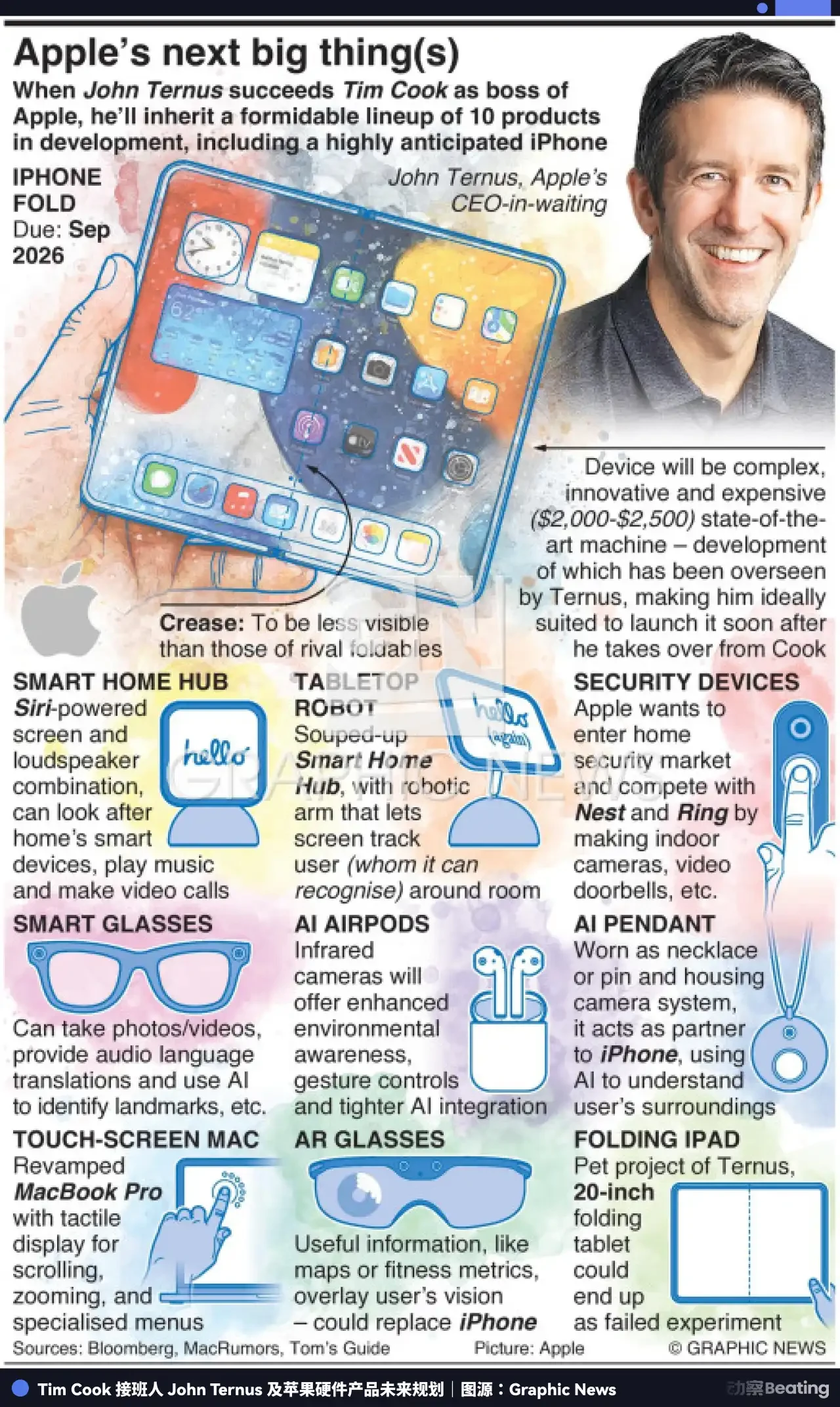
Yet, regardless of how the senses extend, the core issue remains the same.
The relationship between people and phones is not mostly about long conversations but rather interruptions in fragmented scenarios. You are rushing to catch the subway, your child is crying, your boss is hurrying you, and there are 20 notifications stacked on the screen. The most concrete significance of Apple Intelligence for ordinary people is not as an all-purpose assistant but as a help to lessen some of the cognitive burdens. Less reading of unnecessary stuff, less searching for files, fewer interruptions from notifications.
Apple has always portrayed itself as a company on the user's side. It claims that privacy is a fundamental human right, devices belong to users, and technology should serve people. In the age of AI, this set of statements will face real challenges. Because once a system begins to understand you, it is no longer merely protecting your data; it is also shaping your actions. It summarizes for you, gives you suggestions, pre-screens information, and judges what is important and what can be ignored.
The difficulty of personal intelligence has never just been about being intelligent, but also about “personal.” A person’s life is not just a database; it contains emotions, misunderstandings, embarrassing moments, and areas that one would prefer any system not to see. For AI to access these places, it must not only use efficiency as a pass.
Kazuo Ishiguro wrote about an AI companion named Clara in "Klara and the Sun." She devoted her entire existence to understanding a girl, learning to observe changes in light, reading expressions and silences, and knowing when to remain quiet.
However, the most touching part of the entire book is when Clara finally realizes that there are parts of the girl that she will never touch. She is not lacking in intelligence; she understands one thing: that understanding a person and possessing a person’s data are entirely different matters.
Apple took fifteen years to acknowledge that Siri is not good enough. On this night of WWDC, it borrowed models from Google, borrowed computing power from Nvidia, and borrowed another year of patience from users. It demonstrated a willingness to bow down, but bowing is just the beginning.
What it must learn next is what Clara has long understood: it is not about becoming smarter, but knowing when to stop after stepping into someone’s life.
免责声明:本文章仅代表作者个人观点,不代表本平台的立场和观点。本文章仅供信息分享,不构成对任何人的任何投资建议。用户与作者之间的任何争议,与本平台无关。如网页中刊载的文章或图片涉及侵权,请提供相关的权利证明和身份证明发送邮件到support@aicoin.com,本平台相关工作人员将会进行核查。


