Author | Xiaolong, Entrepreneur Group
In August 2026, as Anthropic sprinted toward an IPO with a valuation of over $2 trillion, a name that had never appeared on the company’s organizational chart was striking Wall Street's nerves with unprecedented intensity.
Cami Clark, the wife of Anthropic CEO Dario Amodei, transformed from Silicon Valley's most secretive "shadow advisor" into a global financial media headline in just a week.
The Wall Street Journal and Forbes published in-depth investigations, while The Information released a lengthy profile, laying bare her trajectory over the past decade across adult entertainment, real estate bankruptcy, a former Google CEO romance, and the power core of the hottest AI company in the world.
When the actual decision-making power of a trillion-dollar enterprise is highly concentrated in the hands of a "First Lady" with no formal position, deliberately obscured online presence, and a complex past, how much credibility remains in Silicon Valley's governance myth?
The erased digital footprint and the undeniable reality
There exists an almost absurd gap between Clark and her online presence.
According to analyses from The Wall Street Journal and insiders, information about Clark online is extremely scarce, and there were instances of someone actively deleting related records.
Her personal website is offline, her LinkedIn profile has disappeared, and her Instagram has stopped updating.
Amodei's Wikipedia page only noted his marriage in the summer of 2026, without mentioning his wife's name.
When searching for "Dario Amodei's wife" on Google, the images that often pop up are of his sister, Anthropic co-founder Daniela Amodei.
Ironically, Anthropic's own AI chatbot Claude, when asked about this, could only respond: "Dario Amodei's marital status seems not to have been clearly confirmed."
However, in the real world, Clark's presence is markedly different.
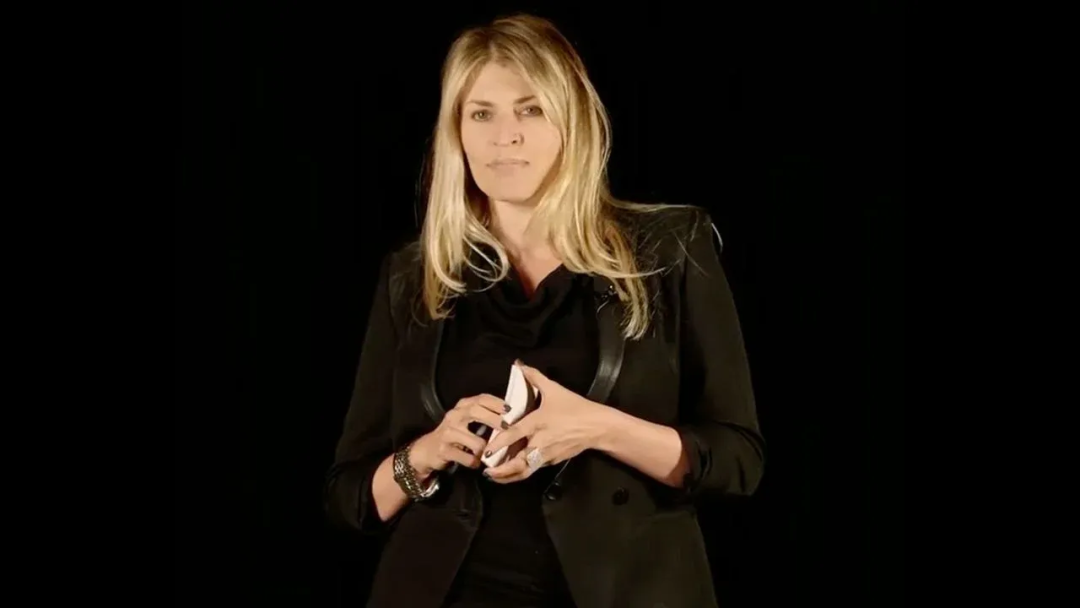
Cami Clark
Earlier this year, Indian Prime Minister Modi invited global AI leaders to meet in New Delhi, allowing each executive to bring only one companion.
Most brought colleagues, while Amodei brought Clark.
At the Davos Forum, she sat in the front row watching her husband's speech.
At the Allen & Co. annual media summit in Sun Valley, she lunched with Ivanka Trump and chatted with Jared Kushner—whom Amodei had approached for investment.
According to insiders, Clark is Amodei's most important strategic advisor and emotional support, managing the family's personal investment strategy and assisting in filtering external investment offers.
The Wall Street Journal described her as Amodei and Anthropic's "sounding board and strategic advisor." One Anthropic investor even referred to Amodei as "more of a religious leader than a CEO"—and in that extremely narrow core circle, aside from his sister Daniela and a few co-founders, Clark has been the person accompanying him the longest.
From Reno blue collar to Silicon Valley power center
Clark was born in 1979 in Reno, Nevada, raised in a blue-collar family.
At 14, she began working at her grandmother's and great-aunt's plumbers' union. After high school, she moved to the San Francisco Bay Area to study architecture at the California College of the Arts, later working in business development at high-end office furniture company Herman Miller.
In 2009, during the financial crisis sweeping the United States, Clark's life hit rock bottom—she filed for bankruptcy after her apartment in San Francisco was repossessed by the lending agency. It was also the year she started her first business.
She and business partner Michelle Capocefalo founded Eddice, a company claiming to be a "luxury porn company for women." Clark later described this company to The Wall Street Journal as aiming to create "more refined, higher-end" adult entertainment content.

Early Cami Clark (right)
However, financing in the adult content industry is extremely difficult, and PayPal even froze the company’s account. Clark had to seek funding from various sources—which led her into a relationship that would later ignite global public opinion.
Email exchanges with Epstein
In March 2011, Clark and Capocefalo were introduced to Jeffrey Epstein through literary agent John Brockman.
The following month, Clark sent Epstein four scripts or story outlines for films she planned to shoot.
According to Forbes, Clark sought investment from Epstein for her adult film company Eddice and a women's health tech company several times via email in 2011 and 2012.
She also invited Epstein to a housewarming party in July 2012, and the following year, they connected on LinkedIn.
Significantly, all this occurred after Epstein had already pleaded guilty in 2008 in Florida and was registered as a sex offender.
The disclosed records do not show that Epstein ultimately invested in any of Clark's projects, nor do they indicate that Clark participated in any of his criminal activities.
But the symbolic significance of this correspondence cannot be ignored—a member of the core circle of a $1 trillion-valued AI giant had once pitched a “luxury porn” business to a convicted sex offender.
This is the kind of "due diligence nightmare" that any company preparing for an IPO would dread in its investor relations department.
From former Google CEO Schmidt to Amodei
Eddice did not succeed.
Clark then shifted her focus to women's health, planning to open high-end clinics in New York and Los Angeles with annual fees reaching $20,000.
This time, she attracted a heavyweight investor—former Google CEO Eric Schmidt.
Even more complex is that Clark and Schmidt had a romantic relationship from 2011 to 2014.
After their relationship ended in 2014, Clark began dating Dario Amodei, who was then conducting postdoctoral research at Stanford Medical School.
The efficiency of this relationship network's transformation is noteworthy.
When Amodei left his position in December 2020 due to disagreements on power distribution with OpenAI co-founders Sam Altman and Greg Brockman, and co-founded Anthropic with his sister and five colleagues, Clark's key connections immediately came into play.
In February 2021, Clark submitted a 40-page proposal to Schmidt, planning to co-found a venture capital fund called the "Mother of AGI Fund."
The proposal aimed to "formalize" Clark's involvement in Anthropic, manage Schmidt's investments, and cover the entire AGI ecosystem, ultimately hoping to raise billions of dollars.
However, this plan faced opposition from Anthropic co-founders, including Amodei's sister Daniela, as the company worried that Clark and Amodei's relationship could lead to conflicts of interest. The "Mother of AGI Fund" ultimately failed to materialize.
But Clark's most important contribution had already been made.
It was she who brought Schmidt into Amodei's circle, and Schmidt subsequently became an early investor in Anthropic's $124 million Series A funding in May 2021.
This funding was a lifeline for Anthropic, which had been established for only half a year.
Clark's network of connections did not stop there.
She also introduced her close friend Mira Murati (former CTO of OpenAI, later founding AI startup Thinking Machines Lab and serving as CEO) to OpenAI co-founder Greg Brockman.
During the Davos Forum in January 2026, she met with French President Macron. In Sun Valley, she developed a friendship with Ivanka.
When the "shadow advisor" encounters the "formal president"
On the power chessboard of Anthropic, the tension between Daniela Amodei and Cami Clark forms a rather dramatic "family undercurrent."
Daniela is Dario's sister and the president and co-founder of Anthropic. She is responsible for the company's daily operations, funding negotiations, and public policy affairs, recognized by outsiders as the "number two" figure.
In contrast, Clark, as the "First Lady," deeply engages in strategic decisions as an informal advisor.
When two power lines—one formal, one private—function around the same core individual, friction inevitably arises.
The most direct conflict erupted in early 2021, referring to the aforementioned "Mother of AGI Fund" plan.
Clark attempted to institutionalize her influence within Anthropic through this fund and manage Schmidt's investments.
However, Daniela and several other co-founders made their opposition clear.
Their reasons were clear and sharp: Clark’s marital relationship with the CEO made the fund inevitable face unavoidable conflicts of interest—if Clark's fund invested in a competitor of Anthropic or prioritized obtaining Anthropic’s trade secrets, there would be no checks and balances within the company.
From Daniela and the governance faction's perspective, a tech company's decision-making authority should not be founded on "pillow talk."
This proposal ultimately failed. Schmidt directly invested in Anthropic, bypassing Clark's intermediary layer. But the conflict did not dissipate; it merely shifted from the front stage to behind the scenes.
Since then, the "territories" of the two in the power landscape gradually diverged yet intertwined. Daniela controls formal operations, finance, and investor relations, while Clark focuses on public image, private networks, and high-level socializing—at Davos, Sun Valley, and White House dinners, it is often Clark who takes the spotlight, not Daniela.
An investor familiar with Anthropic's internal operations described the relationship between the "sister-in-laws" as more like a "calm coexistence": they rarely publicly argue but are both cultivating their spheres of influence, with Dario acting as a balancer in between.
However, this coexistence also brings about confusion in external perceptions.
When people search for "Dario Amodei's wife" on Google, the first images that often pop up are of Daniela Amodei—because both frequently appear at Dario's public events, while Clark deliberately maintains an online invisibility.
For an Anthropic on the verge of an IPO, this murky area of internal governance poses far greater institutional risks than Clark's past emails with Epstein.
Investors are entitled to ask: when the CEO's sister and wife have conflicting opinions on corporate governance, whose "advice" will Dario ultimately heed? Has the informal influence held by Clark effectively surpassed that of any formal executive?
These questions remain unanswered in public to this day.
Governance interrogation before the trillion-dollar IPO
As Anthropic rushes towards an IPO with a valuation exceeding $2 trillion by as early as fall 2026, Clark's existence is under unprecedented scrutiny.
Clark holds no formal position at Anthropic, does not receive a salary, reports to no one, and is not constrained by any corporate governance documents.
However, she has substantial influence over the CEO's decisions, participates in strategic discussions, assists in filtering investment offers, and even engages in managing her husband's public image and personal security decisions.
When a company's actual decision-making power is concentrated in an external individual who bears no legal or fiduciary responsibilities, how do investors assess the risks? How does the board fulfill its supervisory duties? How do other executives and employees understand the rules of power operation?
These questions are particularly acute currently as Anthropic rushes toward its IPO. The company also faces ongoing confrontations with the Trump administration over Pentagon AI policies.
The Wall Street Journal cited a telling detail: Clark "actively engages with politicians and potential investors before introducing them to her husband," thereby compensating for Amodei's comparatively reserved nature.
An acquaintance of the couple noted that despite their decade-long partnership, seeing them together at recent events was "like witnessing newlyweds in their intimacy."
This may be at the core of the issue—within Silicon Valley's power games, the boundaries between personal relationships and business decisions are becoming unprecedentedly blurred.
And as this company is about to become one of the highest-valued enterprises globally, investors have the right to know: for whose benefit does the woman sitting in the front row at Davos provide "strategic advice"?
The disappearing "First Lady"
As of publication, Clark has not commented on the reports. Her digital footprint remains almost blank—website offline, LinkedIn disappeared, Instagram inactive. Anthropic's Claude still cannot confirm whether the CEO is married.
Yet in the real world, Cami Clark is no longer that 14-year-old girl working at the plumbers' union in Reno.
She is the "First Lady of Silicon Valley," who transitioned from adult film entrepreneurship to the core of AI power, the key bridge connecting Schmidt and Amodei, the most mysterious and undeniable shadow force behind Anthropic’s trillion-dollar valuation.
For Anthropic, which is set to enter the public market, Clark's presence is both a relationship asset that is difficult to appraise and a governance bomb that could explode at any moment.
Wall Street investors may need to ask a more fundamental question: when a company's "shadow CEO" cannot be recognized by Claude, can you really comprehend what you are investing in?
免责声明:本文章仅代表作者个人观点,不代表本平台的立场和观点。本文章仅供信息分享,不构成对任何人的任何投资建议。用户与作者之间的任何争议,与本平台无关。如网页中刊载的文章或图片涉及侵权,请提供相关的权利证明和身份证明发送邮件到support@aicoin.com,本平台相关工作人员将会进行核查。


