Author: Claude, Deep Tide TechFlow
Deep Tide Overview: On July 29, Uniswap launched the "Launches" token discovery aggregation page in its Web App, initially integrating launchpads such as Bankr, Pons, Long, etc., currently only supporting the Robinhood Chain. In July, over 340,000 new tokens were launched on the chain through Uniswap's launchpad, generating a trading volume of $3.6 billion. The price of UNI subsequently surged 13% to break through $4.4, compounded by the activation of the v4 fee switch (daily revenue of approximately $325,000) and Standard Chartered Bank's year-end price target of $6.5, resulting in an increase of over 60% in the past 30 days.
Uniswap is transforming itself from a trading protocol into a traffic entry point for token issuance.
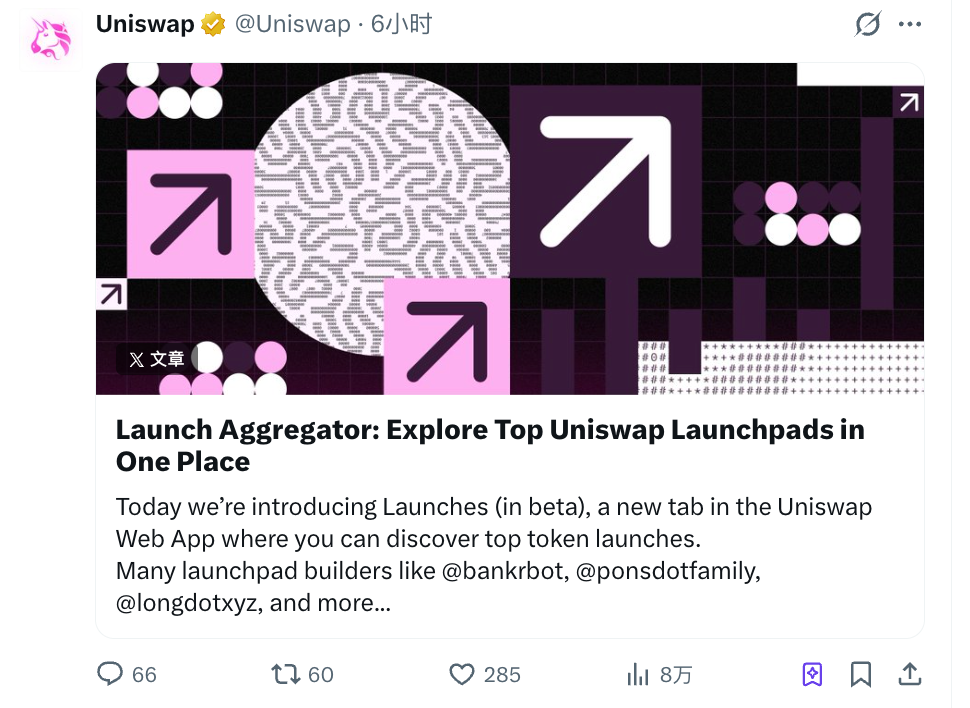
On July 29, Uniswap launched the "Launches" tab in its Web App in Beta. This new entry aggregates token issuance information from multiple launchpads on the Robinhood Chain, allowing users to directly browse, filter, and trade newly launched tokens within the Uniswap interface without switching between multiple launchpads.
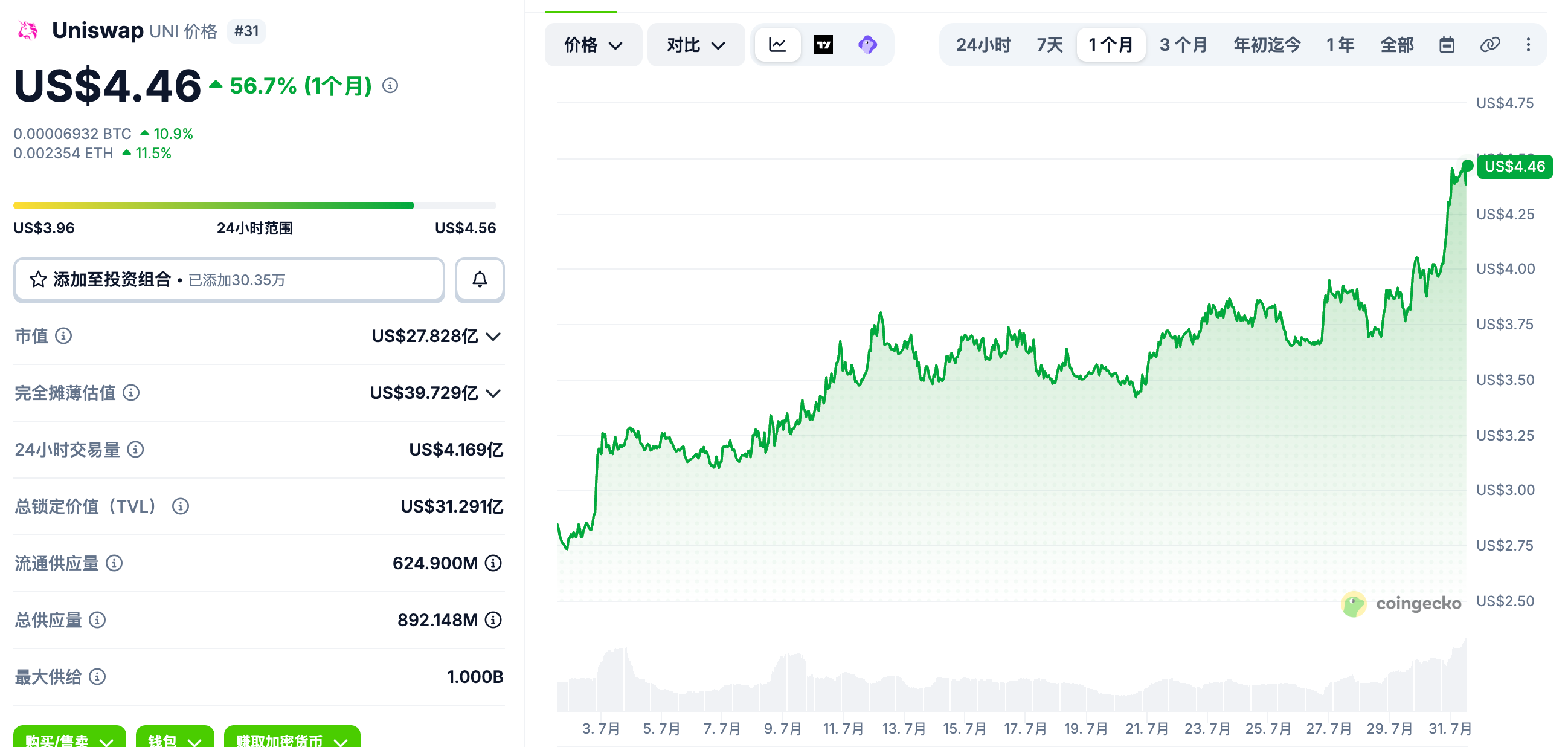
According to CoinGecko data, after the announcement, UNI rose approximately 13% within 24 hours, reaching $4.40. This marks the first stable high point for UNI since it broke through the $4 barrier in early July, with an accumulated increase of nearly 60% over the past 30 days.
340,000 new tokens, $3.6 billion trading volume, Robinhood Chain becomes the main venue for Uniswap token issuance
The first launchpads integrated into the "Launches" tab include Bankr, Pons, and Long, all choosing Uniswap as the underlying trading infrastructure. Currently, this function only supports the Robinhood Chain, and Uniswap has stated that it will expand to more chains in the future, though no specific timeline has been provided.
According to Cryptonomist reports, over 340,000 new tokens launched on Uniswap through launchpads on the Robinhood Chain in July generated a trading volume of $3.6 billion. This figure indicates that token issuance activity on the Robinhood Chain is no longer a marginal phenomenon but an important component of Uniswap's trading volume.
For token teams, after adding liquidity on supported launchpads, their projects will automatically appear on Uniswap's "Launches" page, gaining instant exposure. For traders, what previously required tracking new tokens across multiple launchpads can now be filtered by price fluctuation, launch time, and other dimensions on a single page.
Uniswap's intention is clear:
To retain the traffic of launchpads within its own interface rather than letting users go to external platforms to discover new projects.
Threefold catalysts: Robinhood Chain, fee switch, Standard Chartered target price
The current rise in UNI is not merely a reaction to the "Launches" feature, but the result of multiple positive factors being implemented in July.
The first catalyst is the Robinhood Chain.
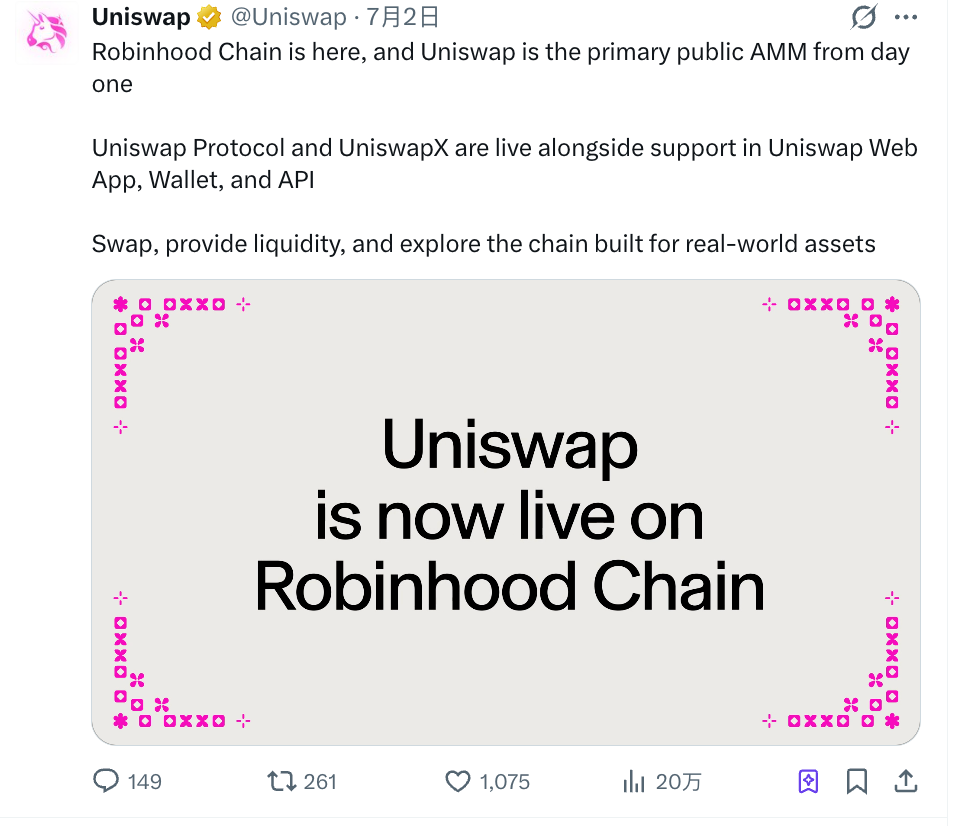
On July 1, Robinhood launched its own Ethereum L2 blockchain (based on the Arbitrum Orbit architecture), with Uniswap deployed as its core AMM (Automated Market Maker) from day one. Within 9 days, the cumulative trading volume on this chain exceeded $1 billion, with daily active traders exceeding 220,000 at one point. The Robinhood Chain's TVL (Total Value Locked) surged from $39 million in its first week to over $400 million by mid-July.
Uniswap also supports tokenized stock trading on the Robinhood Chain. Users can trade tokenized stocks of companies like Apple, Nvidia, and Google around the clock, blurring the lines between traditional brokers and DeFi.
The second catalyst is the v4 fee switch.
On July 27, Uniswap's governance proposal No. 100 passed execution, activating protocol fees in the v4 liquidity pools across 7 chains. The support rate for voting exceeded 99%, with dissenting votes accounting for less than 3% of the total votes. On the first day of activation, the protocol generated approximately $325,000 in revenue, with annualized revenue entering nine figures. Fees flow into the UNI buyback and burn mechanism through the UNIfication framework (a governance upgrade approved by the end of 2025): protocol fee revenue enters the "TokenJar" contract, where UNI tokens are permanently destroyed through the "Firepit" contract.
Uniswap founder Hayden Adams previously clarified on the X platform that protocol fees are charged in addition to LP fees, rather than deducted from LP income. For a pool with a 30-basis-point LP fee rate, traders pay a total of 35 basis points; LPs continue to earn the original 30 basis points, while the remaining 5 basis points go to the protocol. This clarification alleviated market concerns about LP yield dilution.
The third catalyst is the high-profile target price from Standard Chartered Bank.
On June 15, Standard Chartered's head of digital asset research, Geoff Kendrick, initiated coverage of UNI, providing a tiered target price of $6.5 by the end of 2026 and $100 by the end of 2030.
Kendrick's core argument is: the market has underestimated the depth of collaboration between Uniswap and Robinhood, which is not just a marketing affiliation but a deep technological integration, with Uniswap chosen as the core infrastructure of Robinhood’s chain strategy. Standard Chartered predicts that the tokenized asset market will grow from the current approximately $340 billion to around $4 trillion by 2028, with the proportion of DeFi participation rising from the current 3.5% to 30% by 2030.
UNI transitions from governance token to deflationary asset, valuation logic being rewritten
When looking at these three catalysts together, UNI is undergoing a transition in its valuation framework.
Before December 2025, UNI is essentially a pure governance token, with holders having no direct economic benefits. After the UNIfication proposal is approved, trading fees will be linked to token destruction for the first time, making UNI a deflationary asset backed by cash flow. A one-time retrospective destruction of 100 million UNI in January 2026 simulated the accrued value "if the fee switch had existed from the start."
As of now, under the UNIfication framework, protocol fees have cumulatively destroyed over $5.5 million in UNI, with an annualized destruction rate of approximately $34 million. With the full activation of the v4 fee switch, the annualized figure is expected to rise further. From a valuation perspective, a daily protocol income of $325,000 implies an annualized figure of about $119 million, corresponding to a circulating market value of approximately $2.7 billion for UNI, with a revenue multiple of about 23 times.
UNI has risen from around $2.50 in mid-June to the current $4.40, an increase of approximately 76%. However, there is still about 48% room to reach Standard Chartered's year-end target price of $6.50.
However, the holdings of UNI are highly concentrated. The top 100 wallets control about 82% of the supply, with whale-level wallets (over $1 million) holding more than 96% of the market value.
免责声明:本文章仅代表作者个人观点,不代表本平台的立场和观点。本文章仅供信息分享,不构成对任何人的任何投资建议。用户与作者之间的任何争议,与本平台无关。如网页中刊载的文章或图片涉及侵权,请提供相关的权利证明和身份证明发送邮件到support@aicoin.com,本平台相关工作人员将会进行核查。


