Key Takeaways
- Iran’s IRGC fired ballistic missiles at a U.S. base in Jordan on July 28, all intercepted, CENTCOM said.
- WTI crude jumped 3.95% to $83.08 and Brent rose 3.86% to $87.34 within hours of the strike.
- Bitcoin slipped toward $63,700 after the strike but subsequently recovered to $64,500.
CENTCOM said in a statement that Islamic Revolutionary Guard Corps forces launched multiple ballistic missiles from Iran at 5:45 p.m. ET on July 28 in an “attempted surprise attack” on U.S. forces in the Middle East, with missiles targeting American positions near Jordan’s Muwaffaq Salti Air Base. The command said Patriot air-defense batteries intercepted every incoming missile and reported no casualties.

Iran’s military claimed responsibility, calling the strike retaliation for what it called “illegal and malicious actions” by Washington against Iranian interests. The attack marked the first Iranian ballistic missile strike on a U.S. base in the region since President Trump paused offensive strikes against Iran days earlier to give diplomacy with Tehran a chance, breaking a brief calm in a war that began on February 28.
That earlier pause had already been tested given that a July 18 Iranian strike on Jordan’s Al Azraq air base killed two American service members and left a third missing, one of several flare-ups that have punctuated the five-month conflict. Jordan’s military said this time it also shot down its own share of the incoming projectiles, without reporting damage or injuries on its soil.
Financial markets reacted within hours as WTI crude climbed 3.95% to $83.08 a barrel and Brent crude, the global benchmark, gained 3.86% to $87.34. Dow Jones futures rose 63 points, or 0.12%, to 53,007, while S&P 500 futures added 26 points and Nasdaq 100 futures gained close to 133 points as traders priced in renewed Middle East risk.
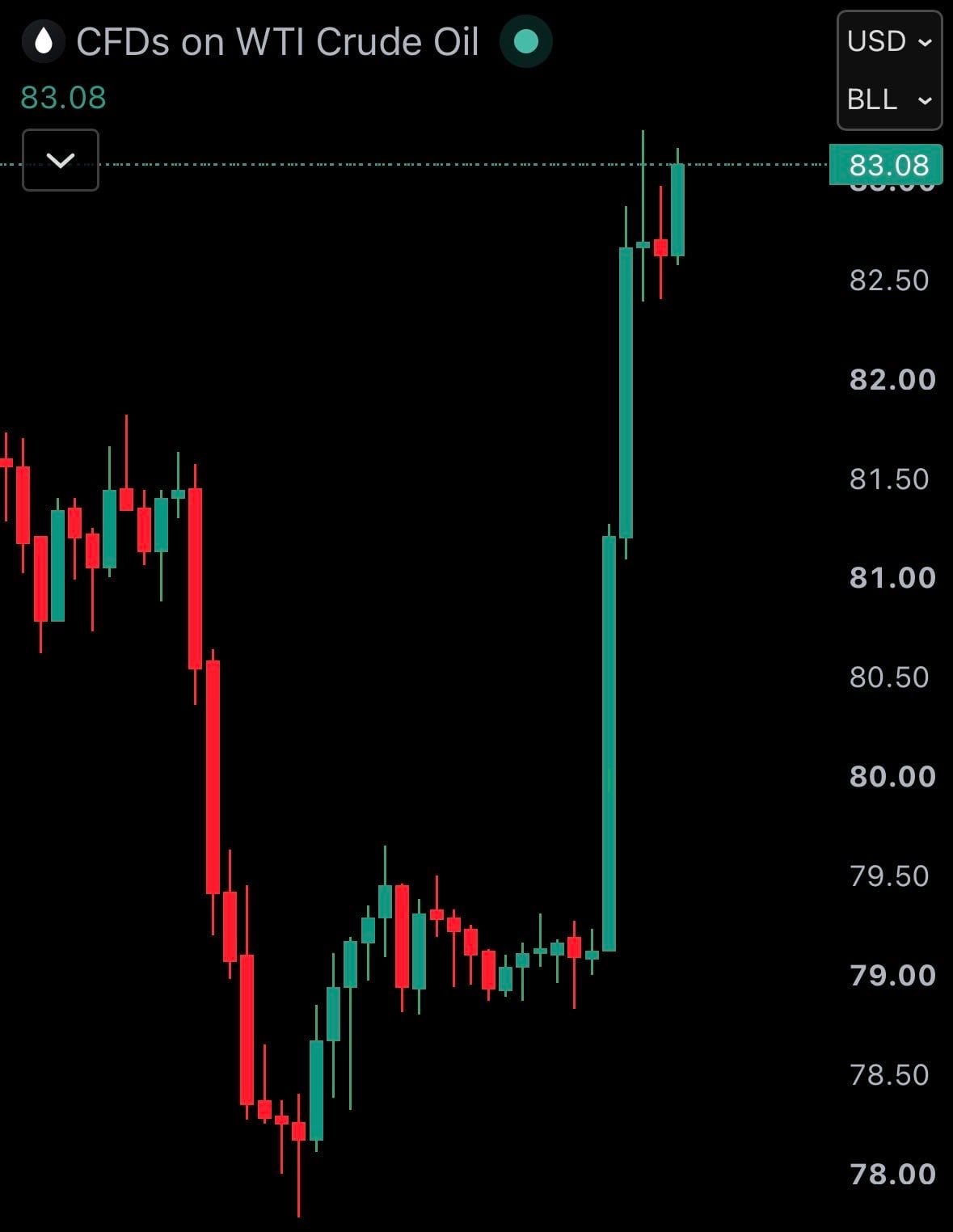
The bounce partially reversed a sharp move in the opposite direction just days earlier. Oil prices had tumbled as much as 8% after the Trump administration first signaled the pause, with Brent sliding from above $100 a barrel to around $87 as mediators pursued talks over the Strait of Hormuz. The July 28 attack erased a chunk of that relief in a matter of hours, a pattern that has become familiar to traders tracking the conflict’s start-stop rhythm since February.
Crypto markets have moved in step with the same cycle because by July 27 (with Brent tumbling toward $87), bitcoin had recovered to around $65,200, briefly touching $65,600 at the start of futures trading. That recovery gave way over the following day, with bitcoin easing back to roughly $64,000 by July 28 even before the evening’s strike, then slipping further toward the $63,600 to $63,800 range once news of the missile attack spread.
Bitcoin.com News previously reported bitcoin holding near $63,000 during an earlier July flare-up, part of a pattern in which the network has repeatedly clawed back losses within days of each escalation, only to give some of them up again at the next one.
That said, BTC has, at various points this year, shown signs of decoupling from pure risk-asset behavior during the conflict, holding support even as oil and equities swung sharply (a contrast to the sharper, more consistent selloffs seen in assets like ether during the same stretches). The July 28 strike, however, is the most direct challenge yet to the ceasefire narrative that had underpinned the past week’s calm.
免责声明:本文章仅代表作者个人观点,不代表本平台的立场和观点。本文章仅供信息分享,不构成对任何人的任何投资建议。用户与作者之间的任何争议,与本平台无关。如网页中刊载的文章或图片涉及侵权,请提供相关的权利证明和身份证明发送邮件到support@aicoin.com,本平台相关工作人员将会进行核查。


