The sharp deterioration of the Middle East situation is pushing the global energy market to the most dangerous brink it has faced in decades.
Written by: Bu Shuqing, Wall Street News
Brent crude oil is rapidly approaching the $100 per barrel mark, and the sharp deterioration of the Middle East situation is pushing the global energy market to the most dangerous brink it has faced in decades.
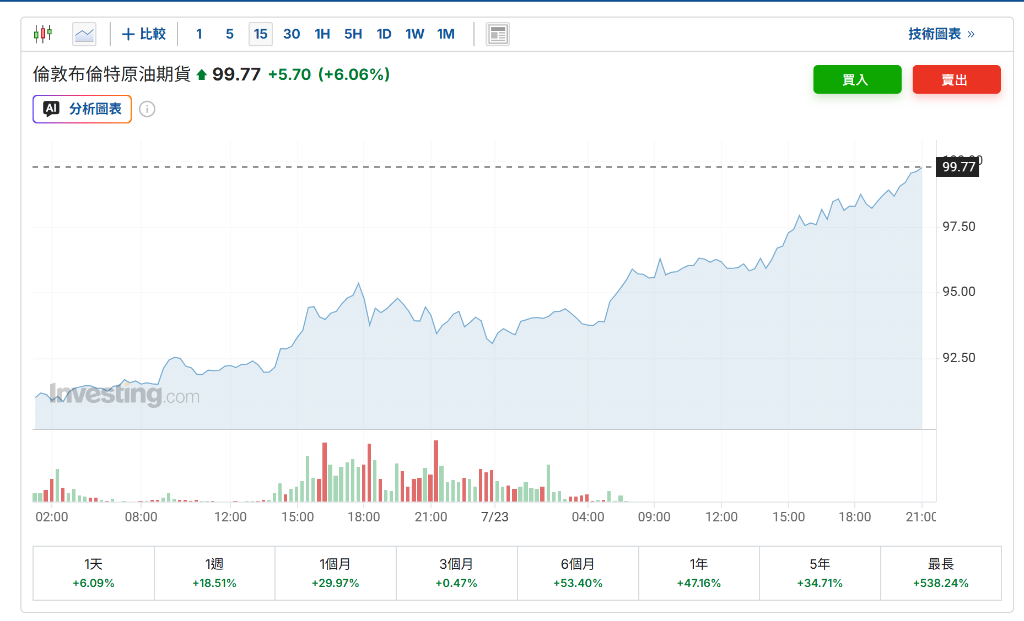
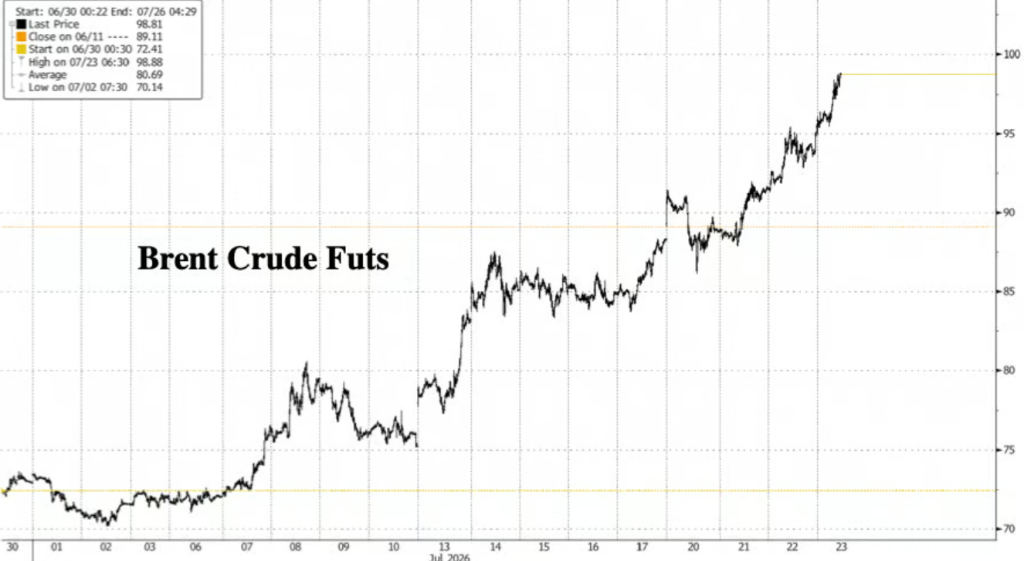
On Thursday, Brent crude futures surged nearly 5% in one day, hitting over $100 per barrel at one point. This follows the Houthi armed forces entering the conflict, threatening to blockade the critical maritime passage of the Bab el-Mandeb Strait, while the Strait of Hormuz remains partially obstructed. The simultaneous pressure on these two crucial chokepoints has led to a dramatic increase in market risk premiums.
Helima Croft, head of global commodity strategy at RBC Capital Markets, warned that "the war is entering a dangerous phase, with the Red Sea and key infrastructure at risk," and indicated that there is a possibility of oil prices breaking the 2022 high of $128 per barrel during the Russia-Ukraine conflict, and even challenging the historical peak of $146 per barrel reached in 2008.
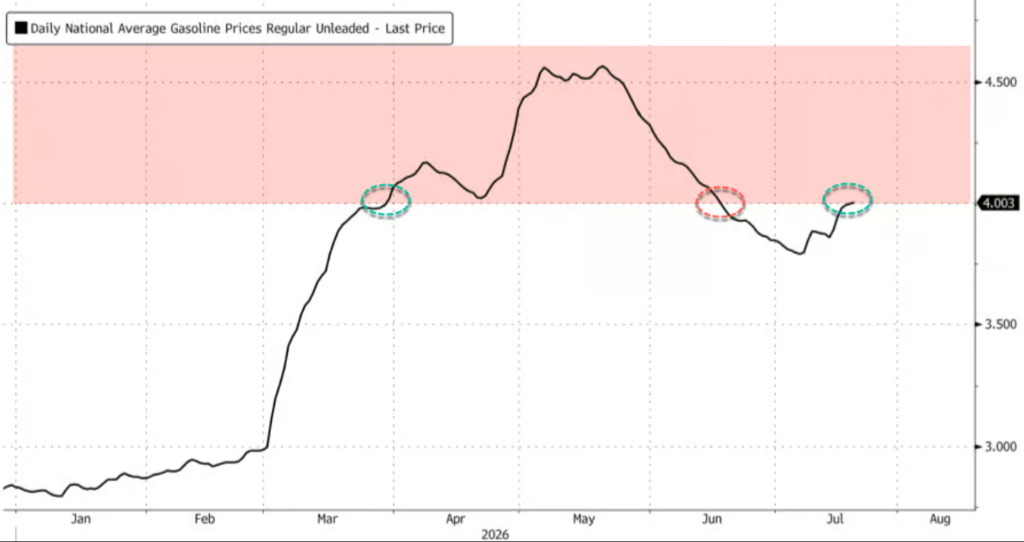
This round of soaring oil prices is occurring against the backdrop of significantly depleted global oil buffer stocks, with reports suggesting that crude oil inventories in Cushing are nearing "bottom" levels, leaving the market with little capacity to absorb sustained supply shocks. At the same time, the national average price of regular gasoline in the United States surpassed $4 per gallon on Monday, further increasing the political pressure on the Trump administration to pursue diplomatic mediation in the Gulf.
Simultaneous pressure on dual chokepoints leads to a sudden upgrade in supply risk
The immediate trigger for this surge in oil prices was the Houthi armed forces' renewed attacks on Red Sea shipping.
According to Xinhua News Agency, the Houthi armed forces announced in the early hours of the 23rd that they had attacked two Saudi oil tankers in the Red Sea, claiming that the vessels violated a recent maritime embargo announced by the organization. Following this news, Brent crude jumped above $95 in after-hours trading.
Entering Thursday, with the accumulation of war risk premiums, oil prices further rose to $98.70.
Currently, tankers have once again diverted from the southern Red Sea route, facing a new round of reversal after a brief recovery in shipping traffic following the easing of Houthi attacks in 2023. Meanwhile, the partial blockade situation in the Strait of Hormuz has not been resolved, causing both of the world's most important energy transport channels to fall into chaos, tightening market supply expectations sharply.
Saudi Arabia has issued a strong signal, stating that it will respond forcefully to any attacks on its tankers or land energy facilities, further escalating the risk of the situation worsening.
RBC: In the worst-case scenario, oil prices may exceed the 2008 historical peak
Helima Croft's report sent to clients on Thursday contained unusually strong language. She noted that, although Brent crude has risen by more than 30% since July 1, the current price still reflects "a lagging indicator of extreme pressures in the region."
Croft stated that given the escalating dangers currently occurring, there is a potential for oil prices to break the $128 per barrel high established during the 2022 Russia-Ukraine conflict, and in a worst-case scenario of a full-scale regional war, prices might even challenge the historical peak of $146 in 2008.
She specifically pointed out the far-reaching impact of the Houthi armed forces' involvement: their participation in the conflict could undermine the effectiveness of alternative routes provided by the East-West pipelines, further expanding supply losses caused by the war.
Previously, Saudi Arabia relied on the East-West pipeline, which has a daily capacity of 7 million barrels, to bypass the Strait of Hormuz for exports to the Red Sea. However, if the Bab el-Mandeb Strait is also rendered impassable, this alternative route will be meaningless, forcing tankers heading to Asia to take longer routes around the Cape of Good Hope, significantly increasing shipping costs and delaying delivery times by weeks, further tightening supply in the physical market.

Goldman Sachs also issues a warning, $120 may become a scenario in the fourth quarter
RBC is not the only institution issuing warnings.
According to reports, Goldman Sachs commodity expert Daan Struyven warned on Monday that if shipping disruptions in the Strait of Hormuz persist, Brent crude futures could surge to over $120 per barrel in the fourth quarter. He also pointed out that this is not his baseline forecast scenario.
The statements from both institutions jointly outline the risk landscape currently facing the market: the baseline scenario is already severe, while tail risks are even more extreme.
Emergency inventory along with political pressure, Trump's diplomatic mediation space narrows
What further worries the market is that this round of supply shock is occurring at a time when the global oil safety cushion has been significantly depleted. Reports suggest that crude oil inventories in Cushing are nearing "bottom" levels, leaving the market with little extra buffer to absorb a prolonged supply disruption.
On the demand side, the national average price of regular gasoline in the United States surpassed $4 per gallon on Monday, and this politically sensitive indicator's increase is intensifying internal pressure on the Trump administration. Analysts believe that once the U.S. military has inflicted sufficient damage on Iran's missiles and drone capabilities used to threaten commercial shipping, the pressure on oil prices will prompt Washington to seek diplomatic solutions again.
From the perspective of supply scale, the risks are significant. The Strait of Hormuz carries about one-fifth of the world's oil supply; while the Bab el-Mandeb Strait normally sees an oil flow of 8-9 million barrels per day. If both channels were to become paralyzed simultaneously, the global energy market would face an unprecedented test of supply pressures.
免责声明:本文章仅代表作者个人观点,不代表本平台的立场和观点。本文章仅供信息分享,不构成对任何人的任何投资建议。用户与作者之间的任何争议,与本平台无关。如网页中刊载的文章或图片涉及侵权,请提供相关的权利证明和身份证明发送邮件到support@aicoin.com,本平台相关工作人员将会进行核查。


