On May 15, 2026, Waller officially succeeded Powell, becoming the new chairman of the U.S. Federal Reserve. This economist from Wall Street, who served as a Fed Governor from 2006 to 2011 and is known as the "youngest Governor" in Fed history, managed to navigate a perilous confirmation process marked by the most partisan voting results in history.
However, what awaited him was not a smooth transition of power, but a macro battlefield under pressure from all sides.
1. The Bond Market Gave a "Cold Welcome"
On the Friday that Waller took over, the market provided an early "welcome gift."
On that day, the 30-year Treasury yield surged, breaking the 5.1% mark, reaching a nearly one-year high since May 22, 2025. The 10-year Treasury yield climbed to 4.55%, and the 2-year Treasury yield also rose to 4.06%. The dramatic fluctuations in the bond market became the most eye-catching opening remarks on Waller's first day in office.
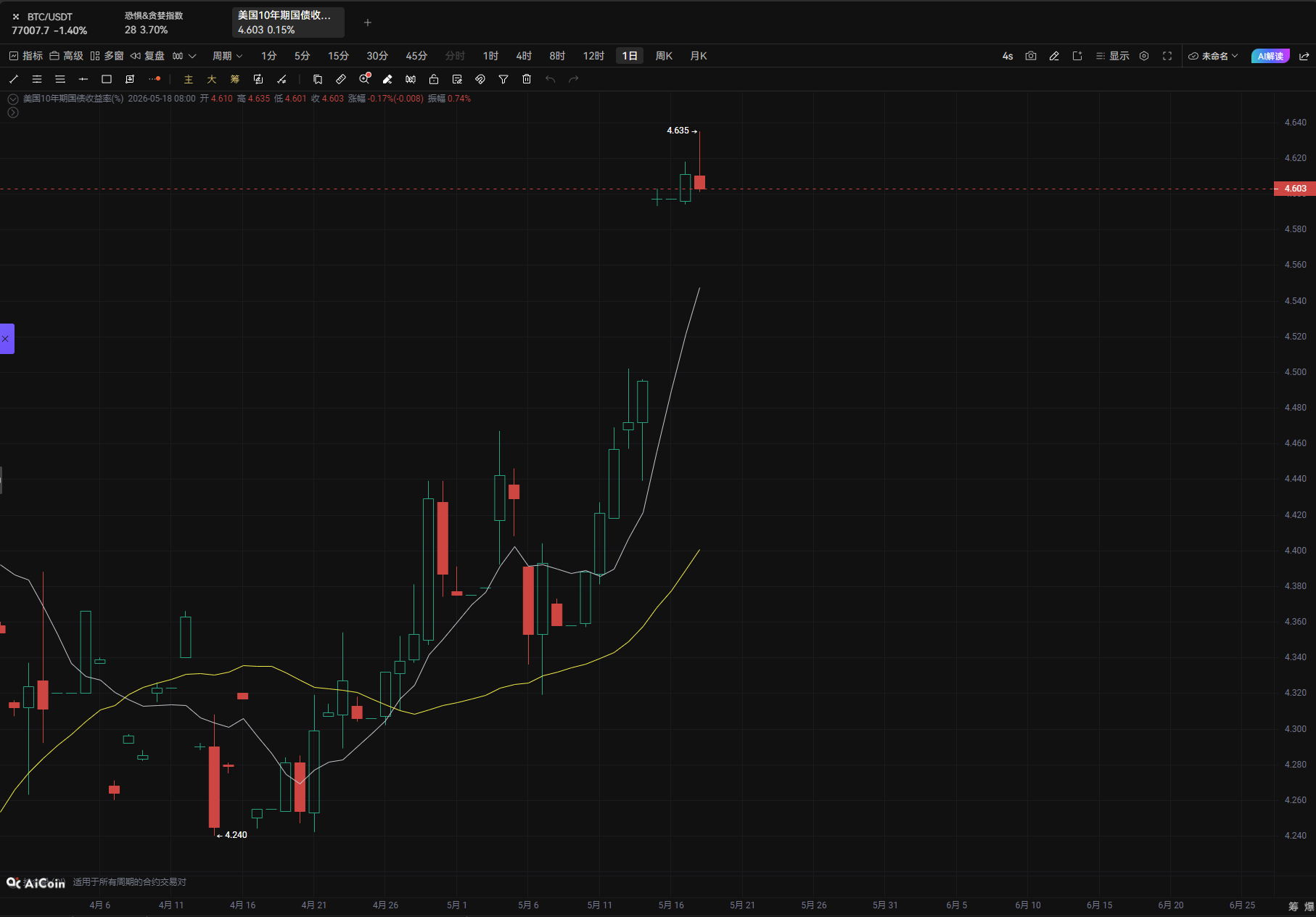
The bond market is the powder keg. This is a judgment that market analysts repeatedly emphasize. Unlike the stock market—where a 5% drop can lead financial media to shout "buy the dip"—the severe adjustments in the bond market directly transmit through the yield curve to every corner of the economy: mortgage rates remain high, corporate financing costs rise, refinancing pressures on commercial real estate intensify, and the federal government's interest expenses are also starting to swell.
This is not an isolated market fluctuation but a tightening net, affecting everyone from first-time homebuyers to corporate CFOs, from private equity funds to the Treasury Department.
2. Inflation, Oil Prices, Debt: Triple Pressures Arrive Simultaneously
The macro environment facing Waller reveals little optimism.
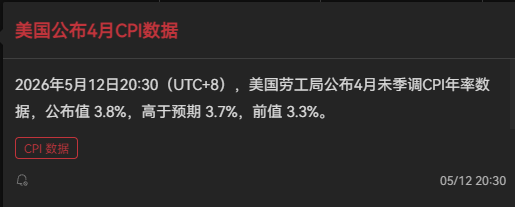
Inflation remains stubborn. The latest data shows that the Consumer Price Index (CPI) in the U.S. increased by 3.8% year-on-year in April, marking the highest level since 2023. Excluding food and energy, the core CPI rose by 2.8%, the highest since September 2025. Even more concerning for the market is the wholesale price index (PPI), which is a leading indicator for the CPI, surging by 6% year-on-year, with core PPI growth reaching 5.2%, well above market expectations of 4.9% and 4.3%.
Oil prices surpass $100. Geopolitical conflicts continue to impact the energy market. WTI crude oil futures exceeded $105 per barrel on May 15 and have remained above $102. The rise in energy prices directly boosts transportation and production costs, serving as the most direct driver of the current inflation rebound.
Debt pressures accumulate. American consumers are facing dual pressures: on one side, real wages are eroded by inflation, while on the other, the burden of debt continues to grow. The scale of auto loans has reached a record high of $1.68 trillion, surpassing the total credit card debt, with an average monthly payment of $735. The vehicle repossession default rate has also reached a 30-year high, nearing the levels seen during the 2008 financial crisis.
"Since 2020, the price of cars has increased by more than 35%." This means that an increasing number of American families are using long-term loans of 7 to 10 years to purchase everyday transportation tools, while the soaring default rate indicates that this debt chain is approaching its limit.
At a time when both the traditional bond market and stock market are under pressure, and consumer debt is nearing a critical point, many savvy investors have begun to shift their focus to crypto assets to diversify against the systemic risks brought on by the macro predicament. The world-leading crypto trading platform Gate.io has recently launched substantial benefits for new users: simply complete registration, KYC verification, make an initial deposit, and engage in a certain amount of trading to unlock a new user package worth over $10,000, including multiple rewards such as trial funds.
Register with one click:
https://jump.do/zh-Hans/xlink-proxy?id=5
This design greatly lowers the entry threshold, enabling ordinary investors to quickly allocate digital assets in a highly uncertain environment. Faced with the reality that the monetary policy space under Waller's leadership of the Fed is limited and yields are continuously rising, the crypto market's independent pricing mechanism and global liquidity may provide a relatively flexible channel for funds seeking to hedge. Of course, any asset allocation must match one's own risk appetite, but Gate's move undoubtedly opens a convenient door for investors looking to capture opportunities in a chaotic situation.
3. "Wallerism": A Clash Between Ideals and Reality
Waller is not without his own beliefs. On the contrary, he may be one of the most distinctly positioned candidates for Fed Chairman in recent years.
According to analysis, Waller's policy framework primarily includes several core directions: to strip away non-core issues like climate and inclusivity, allowing the Fed to return to its traditional functions of "price stability + lender of last resort"; to downplay the role of core PCE in decision-making and focus more on nominal GDP and wage growth; to accelerate the reduction of the current asset balance sheet worth about $6.6 trillion to $7.5 trillion; and to promote AI technology to enhance productivity, creating conditions for earlier rate cuts.
The bottom line of this framework is clear: the Fed should not overly intervene in financial markets, should not act as the "permanent safety net for the market," and should return to traditional monetary policy tools, allowing the market to "stand on its own."
But the question is, when the bond market begins to "throw furniture," long-term yields continue to rise, and all corners of the economy come under pressure, can this framework withstand the pressure of reality?
U.S. Treasury Secretary Scott Bencet publicly campaigned before Waller took office, insisting that inflation would soon fall back, with the reasoning being that "the inflation spike caused by energy prices may reverse as the U.S. continues to produce oil." However, he also had to admit that one or two "hot" inflation data points would still appear in the near term.
The market's divisions are more severe than officials' statements. Major global investment banks' expectations for the Fed's policy path in 2026 have split into two camps: institutions like Citigroup and Goldman Sachs estimate there could still be one to three rate cuts this year; while institutions such as Morgan Stanley, Deutsche Bank, and JPMorgan predict no rate cuts for the entire year of 2026; Macquarie is even more hawkish, anticipating a possible rate hike in the first half of 2027.
This opposition between "slight easing" and "no rate cuts for the entire year" means that the market will be extremely sensitive to any fluctuations in inflation or employment data.
Waller faces three difficult paths: allowing yields to rise, which would lead to market repricing and widespread defaults; cutting rates or restarting bond purchases, which would mean personally overturning his own beliefs and adding fuel to the overheating inflation; or standing still, which cedes initiative to the bond market.
This is an extreme test; Waller has obtained a new title, but also caught a ticking time bomb.
4. The Real Test of the "New Official In Charge"
While everyone is focused on NVIDIA's 4% drop one day, Waller's real battlefield is in the bond market.
The Weekly Securities Market quoted predictions from Invesco that the overall federal interest rate will remain in a "high for longer" state, meaning high rates will persist for a longer duration. Invesco's baseline scenario predicts that the Fed may not cut rates this year, or at most cut rates once.
This means that the core issue facing Waller has never been "whether to cut rates", but rather how to find a feasible middle ground between ideals and reality.
He experienced the financial crisis firsthand during his tenure as a Fed Governor from 2006 to 2011, witnessing extreme pressure in the market. But this time, he is no longer a bystander or participant, but the final decision-maker.
The "Waller era" has begun. How it will be written depends on the coming months—when the market truly begins to test the new chairman's bottom line, will he choose to adhere to his ideals, or bow to reality?
As one market analyst said: "It's easy to give a speech about 'moral hazard' when the stock market is soaring and volatility is low."
Waller's answer may soon be revealed.
Join our community, let's discuss and grow stronger together!
Official Telegram community:
AiCoin Chinese Twitter:
Gate benefits group:
https://aicoin.com/link/chat?cid=de0QGAe7W
免责声明:本文章仅代表作者个人观点,不代表本平台的立场和观点。本文章仅供信息分享,不构成对任何人的任何投资建议。用户与作者之间的任何争议,与本平台无关。如网页中刊载的文章或图片涉及侵权,请提供相关的权利证明和身份证明发送邮件到support@aicoin.com,本平台相关工作人员将会进行核查。