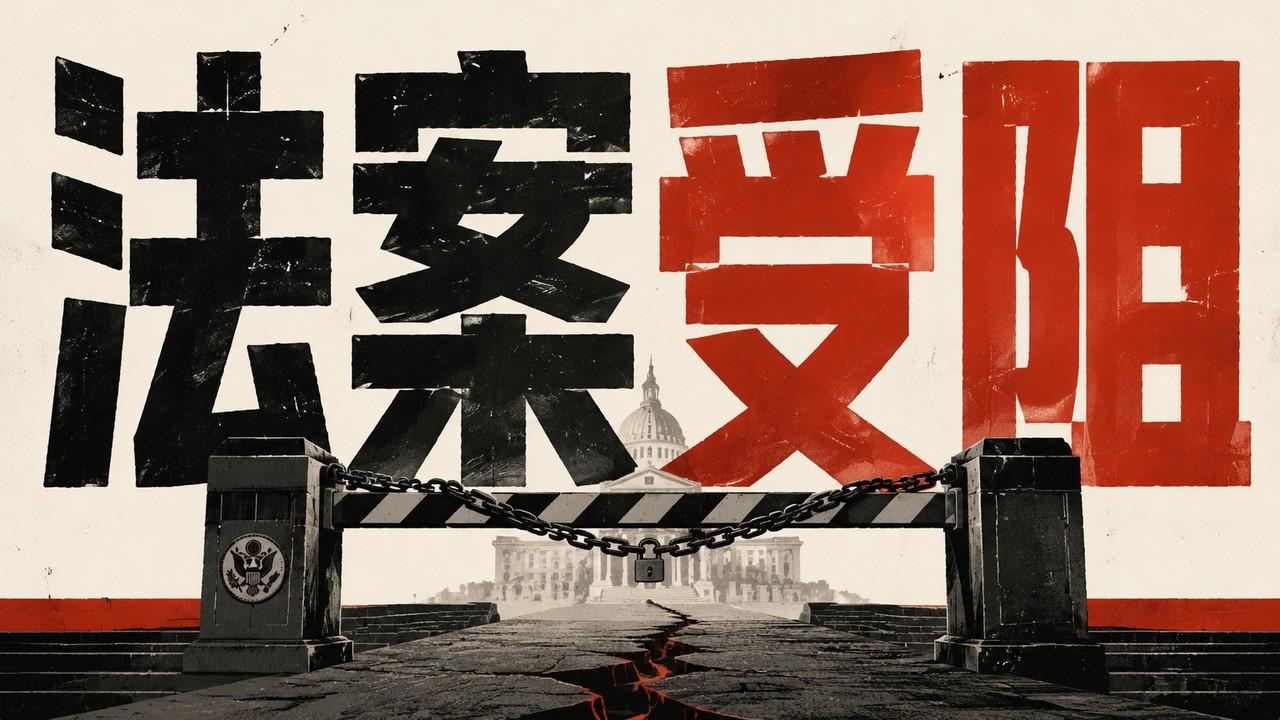
On May 14, 2026, the U.S. Senate Banking Committee voted on the "Cryptocurrency Market Structure Act" (CLARITY Act), pushing the bill into the next stage with 15 votes in favor and 9 against. This marks the first substantial progress for the bill, which aims to establish a legal framework for digital assets in the U.S., at the congressional level. Notably, the voting lineup included 13 Republican members and 2 Democratic members supporting the bill, indicating limited bipartisan cooperation driven by political calculations. According to public disclosures, the cross-party supporters from the Democratic side included Mark Warner and Angela Alsobrooks, with the latter quickly stating after the vote that her "yes" in the committee stage was to show goodwill and push for negotiations, but it does not mean she would hold the same position during the full Senate vote. Alongside the bill, there are tightening details: Senator Cynthia Lummis's amendment passed in the same review round, extending the existing insider trading prohibition securities laws to apply to "ancillary assets" under the context of the bill. These cryptocurrency assets, which are related to securities but not fully recognized as such, will be treated with reference to traditional securities rules in future regulatory practice. At this moment, with regulatory outlines becoming clearer yet the prospects still uncertain, CoinList, which has focused on compliant issuance since 2017, announced the launch of its on-chain capital market infrastructure, Passage, positioning itself as an "access layer" for tokenized stocks, funds, yield products, and pre-IPO assets, timing its release to coincide approximately with CLARITY's committee approval, which many observers see as a forward-looking bet in line with regulatory expectations.
15 to 9: Fragile Bipartisan Cooperation
When the vote count board in the committee meeting room locked in at 15 to 9, the CLARITY Act finally took its first step at the congressional level: 13 Republican members collectively voted in favor, and two Democrats, Mark Warner and Angela Alsobrooks, chose to stand on the same side, achieving this delicate majority. On the surface, this was a rare instance of cross-party cooperation; in reality, it resembled a bridge held up by temporary supports, with one side representing the Republican party's overall bet on digital asset legislation and the other side projecting negotiation signals from a minority of Democrats, rather than an unreserved endorsement.
After the vote, Alsobrooks quickly clarified that her vote in the committee stage was to "advance negotiations in goodwill" and did not pre-commit her support for the bill during the full Senate vote. This statement exposed the temporary nature of the bridge. The committee's approval was merely a starting point for CLARITY to enter the full voting process, and the specific procedures and timetable for what comes next have not been disclosed. Each arrangement, text amendment negotiation, and public statement could change the makeup of the current 15 votes, meaning that so-called bipartisan cooperation is more akin to a tactical alliance that could be rearranged at any time rather than a solidified strategic consensus.
Democratic Fractures and Alsobrooks' Reserved Vote
Among these 15 votes, what truly revealed the fractures within the Democratic party was not the apparent "limited bipartisan cooperation," but rather the rhetoric behind the votes. Among the two Democratic senators who voted in favor from across the aisle, Mark Warner chose to take a stand through action rather than words, while Angela Alsobrooks split her position in two: she voted yes in the committee stage, which she defined as a gesture to "advance negotiations in goodwill," but also publicly stated that this vote does not imply she would repeat the same choice during the full Senate vote. Compared to another segment of Democrats who explicitly voted against the bill, the emergence of these three distinct positions from within the Democratic camp makes it difficult for external observers to view the party as a unified entity on cryptocurrency regulatory issues.
Alsobrooks' "goodwill vote" appears to be more of a negotiation chip placed on the table rather than a final endorsement of the CLARITY Act's content. On one hand, she exchanged her yes vote for a qualification to continue modifying the text and participating in negotiations, sending a "negotiable" signal to the bill's promoters; on the other hand, her retention of the space to reverse her decision during the full vote serves as a reminder that every clause could influence the direction of this vote. For subsequent agendas, this stance of "advancing the procedure while retaining veto power" means that the apparent bipartisan passage of the bill does not equate to a locked-in result, and the true path forward will depend on how these divided positions within the Democratic party are reassembled in detail exchanges.
Lummis' Amendment Targets Insider Trading
In these repeatedly weighed details, the sharpest cut comes from Cynthia Lummis. The amendment she pushed through in the committee stage extends existing laws prohibiting insider trading to encompass the newly created "ancillary assets" category in the bill, bringing rules originally applying only to stocks and bonds into the realm of certain cryptocurrency assets. The so-called "ancillary assets," in the context of CLARITY, are a class of crypto tokens closely related to securities but not fully recognized as such—existing around a project, protocol, or yield rights, but legally set apart by establishing this intermediate zone. The passage of Lummis' amendment essentially clarifies that as long as an asset falls within the definition of "ancillary assets," even if not formally traditional securities, it must still be subject to insider trading regulations based on securities rules.
For project teams, core members, and early investors, once this line is drawn, their behavioral expectations must adjust. Many teams have previously adjusted their token positions and managed assets in sync with announcement rhythms during periods of information asymmetry; now, once their tokens are classified as "ancillary assets," off-market transactions, early sell-offs, and discreet transfers based on undisclosed critical information could all be scrutinized under the same measures as securities insider trading. Even though the final text of CLARITY has yet to be finalized by the full Senate, this amendment has strategically seized the initiative in the process, preemptively incorporating certain cryptocurrency assets from the "gray area" into the existing framework, thereby concretizing the formerly vague compliance boundaries into direct constraints on daily trading decisions for teams and early funding.
CoinList Launches Passage to Bet on Compliance
At the very moment "ancillary assets" were pulled back into the existing securities law framework, longtime issuance platform CoinList provided its answer on another dimension. Having participated in the early distribution of cryptocurrency assets since 2017, CoinList announced the launch of on-chain capital market infrastructure Passage, redefining itself as an "access layer"—not a singular product, but a unified entry point reserved for various traditional financial assets to connect on-chain, allowing project parties, issuers, and qualified participants to interface within the same pipeline.
The design focus of Passage emphasizes support for diverse asset forms: tokenized stocks, fund shares, on-chain yield products, and pre-IPO assets have all been included within the scope of future distribution, with CoinList providing the infrastructure required from issuance and compliance routing to secondary circulation. The timing of the Passage announcement coincided roughly with the passing of the CLARITY Act in the Senate Banking Committee, and this "back-to-back" seems more like a bet: as regulatory expectations transition from complete ambiguity to predictability, establishing the entry point for on-chain capital markets with standard frameworks aims to interface with the soon-to-be-formed rules, rather than waiting for specific details to be implemented before making passive adjustments.
What to Watch Next in the Compliance Track
From the Senate Banking Committee passing the CLARITY Act with 15 votes to 9, to Lummis' amendment incorporating "ancillary assets" into insider trading regulations, and to the launch of on-chain capital market infrastructure like Passage, three threads weave together a single narrative: the regulatory contours are just beginning to emerge, and the industry has already started to align product frameworks to the potential upcoming regulatory framework. But this far from constitutes a final conclusion. The bill has only passed at the committee level; the path and timetable for entering the full chamber's process have not been disclosed, and bargaining between the two parties and even among different factions within the party over revenue provisions, SEC/CFTC jurisdiction, and regulatory boundaries for DeFi and yield products remain fraught with uncertainty; the position shifts of key Democrats like Angela Alsobrooks in subsequent votes will directly affect whether limited bipartisan cooperation can continue. What truly warrants attention going forward are the extent to which the bill's details are publicly revealed and stabilized, any new compromise signals on revenue-related provisions, as well as whether on-chain infrastructures like Passage, betting on compliance routes, can retain sufficient technical and regulatory flexibility during this window period before final regulations are fully established, allowing them to adjust when the ultimate regulatory framework crystallizes.
Join our community to discuss together and grow stronger!
Official Telegram group: https://t.me/aicoincn
AiCoin Chinese Twitter: https://x.com/AiCoinzh
AiCoin On-chain: https://aicoin.com/hyperliquid
AiCoin Exclusive Hyperliquid Benefits: https://app.hyperliquid.xyz/join/AICOIN88
AiCoin Exclusive Aster Benefits: https://www.asterdex.com/zh-CN/referral/9C50e2
免责声明:本文章仅代表作者个人观点,不代表本平台的立场和观点。本文章仅供信息分享,不构成对任何人的任何投资建议。用户与作者之间的任何争议,与本平台无关。如网页中刊载的文章或图片涉及侵权,请提供相关的权利证明和身份证明发送邮件到support@aicoin.com,本平台相关工作人员将会进行核查。