- The S&P 500 gained 0.4% Monday but remains 4% below pre-conflict levels as Iran tensions persist.
- Trump’s Tuesday deadline for Iran to reopen the Strait of Hormuz keeps oil near $103 a barrel (WTI).
- JPMorgan Chase CEO Jamie Dimon flagged inflation risks ahead of Friday’s March CPI report.
The Dow Jones Industrial Average climbed 137 points, or 0.3%, while the S&P 500 gained 0.4% and the Nasdaq Composite added 0.5%. The S&P 500 extended its fourth consecutive day of gains but remains roughly 4% below levels seen before the U.S.-Iran conflict escalated.
Mediators from Egypt, Pakistan and Turkey floated truce proposals over the weekend, including a 45-day ceasefire framework and a plan to reopen the Strait of Hormuz. Conflicting reports say Iran signaled willingness to negotiate access through the waterway, which handles about one-fifth of global oil and liquefied natural gas trade. Other reports note ceasefire talks have been rejected.
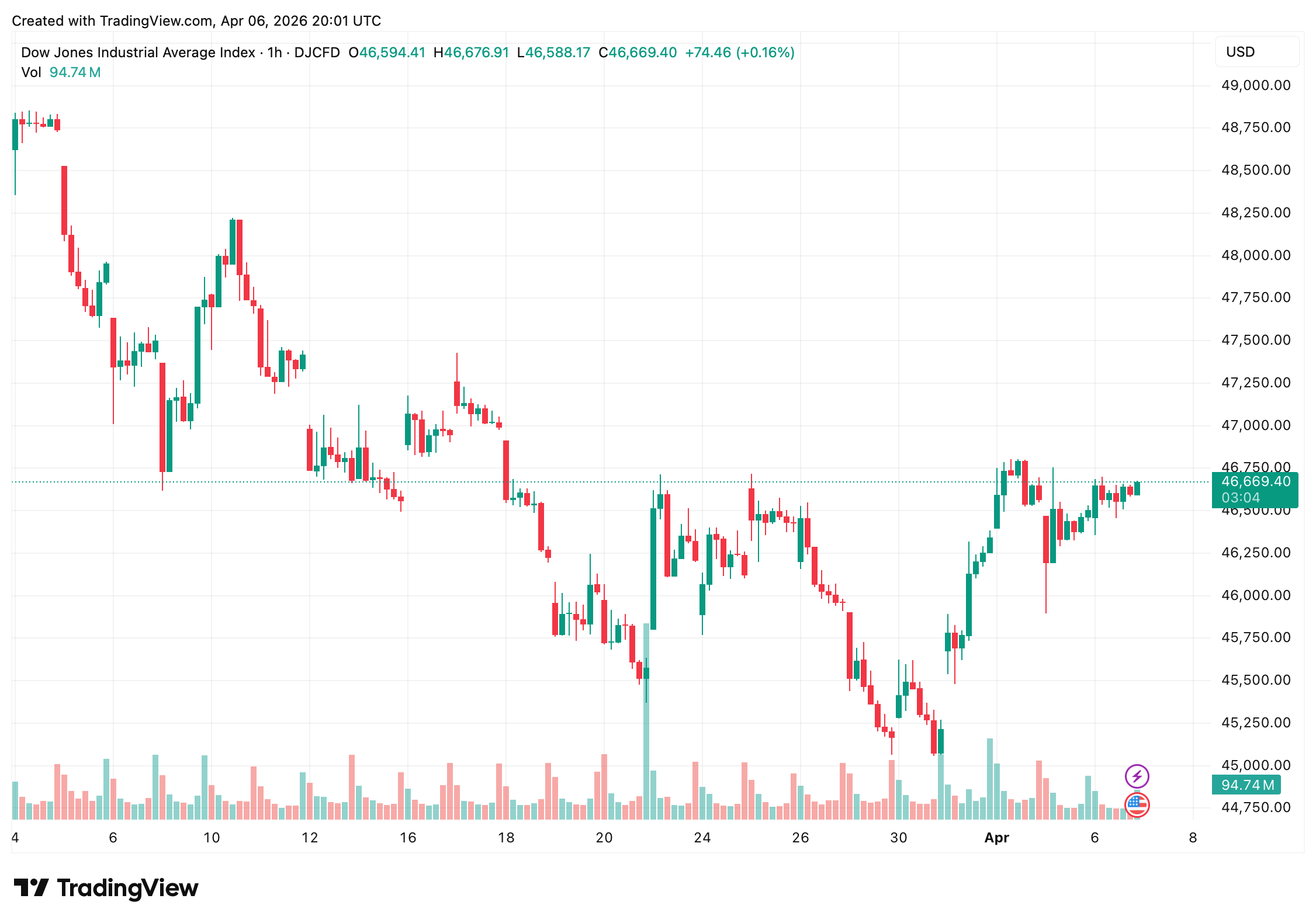
Dow Jones Industrial Average (DJI) on April 6, 2026 at market close.
Trump called Iran “an active, willing participant” in talks but said its counterproposal fell short. He repeated threats Monday that the U.S. could strike Iranian infrastructure and warned the country could be taken out “in one night” if the strait remained closed past his deadline.
West Texas Intermediate crude settled near $103 a barrel and Brent crude near $109. Oil prices swung through the session before closing with modest gains as traders weighed supply disruption risks against any prospect of de-escalation.
Technology and consumer staples led sector gains. Ciena Corp., Lumentum, Seagate Technology and Netflix all posted advances. Utilities including CMS Energy and Entergy touched new 52-week highs. Energy shares moved higher on ongoing supply disruption concerns. Consumer discretionary lagged, and Keurig Dr Pepper hit a 52-week low.
The CBOE Volatility Index held above 24, signaling that traders were not ready to fully price out downside risk.
The Institute for Supply Management’s services PMI for March fell to 54.0 from 56.1 in February, missing the economist consensus of 55.4. The prices-paid index climbed to 70.7, its highest reading since October 2022. The employment component dropped to 45.2, its weakest level since December 2023.
No Federal Reserve news and other high-impact data were on the calendar to start the week. The focus remained squarely on the Middle East. At the same time, JPMorgan Chase CEO Jamie Dimon warned of broader inflation risks tied to the conflict.
Other analysts pointed to strong hiring numbers from the March jobs report and productivity gains from the technology sector as potential offsets. Investors will watch Trump‘s Tuesday deadline closely. Any escalation that keeps oil prices at current levels could complicate the Federal Reserve’s rate path ahead of Friday’s March consumer price index report.
The Federal Open Market Committee (FOMC) releases minutes from its March meeting Wednesday. Delta Air Lines and Constellation Brands are among companies scheduled to report earnings later in the week, marking an early test of how corporate America is absorbing higher energy costs.
Markets remain reactive rather than conviction-driven. Until the Strait of Hormuz situation resolves or inflation data shifts expectations, the near-term direction hinges on factors outside corporate fundamentals.
免责声明:本文章仅代表作者个人观点,不代表本平台的立场和观点。本文章仅供信息分享,不构成对任何人的任何投资建议。用户与作者之间的任何争议,与本平台无关。如网页中刊载的文章或图片涉及侵权,请提供相关的权利证明和身份证明发送邮件到support@aicoin.com,本平台相关工作人员将会进行核查。


