TL;DR
Understanding OpenClaw: OpenClaw is a working lobster that evolves the capabilities of AI from "talking" to "acting,"
Operational Mechanism: Users send natural language commands, and OpenClaw automatically understands the intent, writes executable code, and self-corrects until the task is completed.
Cryptographic Applications: An "Information + Execution" fully automated quantitative assistant that can monitor and place orders 24 hours a day.
Risks and Limitations: Security vulnerabilities and malicious plugin attacks | Hardware thresholds and API costs | Centralized dependencies and compliance risks.
Outlook and Summary: OpenClaw is reshaping the investment paradigm, but strict security defenses are necessary.
1. Understanding OpenClaw: A Working Lobster
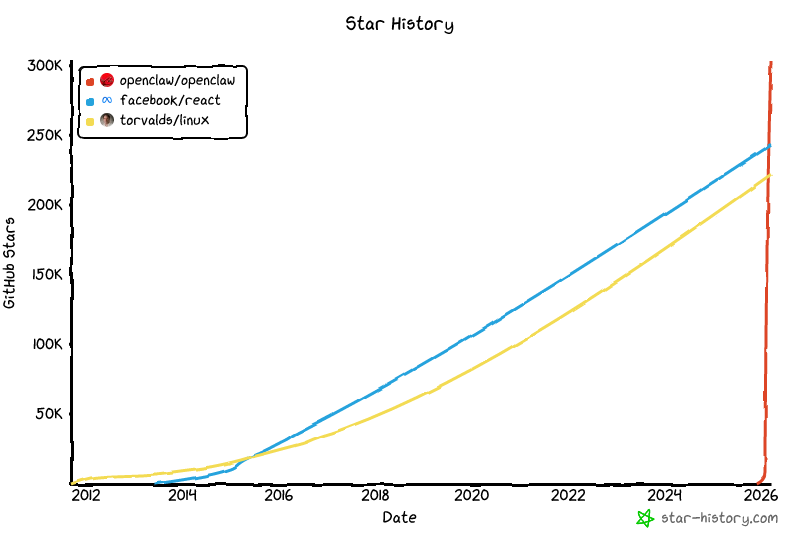
Since early 2026, the hottest topic in the AI field has undoubtedly been OpenClaw, with "raising lobsters" quickly becoming a trend that has sparked intense FOMO. In less than four months since its launch, OpenClaw surpassed React, Linux, and other industry foundational projects that have been in place for over a decade with more than 300,000 GitHub stars, becoming the star champion among executable software projects in GitHub history. The trading agent based on OpenClaw, Senpi AI, has generated over $185 million in trading volume on Hyperliquid. Related meme coins such as $Lobster, $CLAWD, and $OPENCLAW have also triggered a surge in the market. While ordinary people are still sleeping, AI agents are already placing bets on Polymarket and opening perpetual contracts on Hyperliquid. This is no longer the plot of a science fiction novel; it is a reality that is happening.
OpenClaw is a completely locally operated open-source AI agent framework. Its founder, Austrian developer Peter Steinberger, was frustrated by ChatGPT's limitations of "only chatting and not working," and decided to personally develop this "working lobster," focusing on evolving AI capabilities from simply "talking" to "acting" based on the concept of vibe coding.
OpenClaw Development Timeline
From its release in November 2025 to its explosive launch in early 2026, the development speed of OpenClaw has been unprecedented in open-source history. React accumulated 243,000 stars over 13 years, Linux accumulated 218,000 stars over more than 30 years, while OpenClaw broke through 300,000 stars in less than 4 months.
Source: https://www.star-history.com/
The development process of OpenClaw can be summarized in four main stages:
Project Start and Early Setbacks (November 2025) OpenClaw was initially launched as ClawdBot by Austrian developer Peter Steinberger as a weekend project, officially starting on November 25, 2025. Its initial version was named in honor of Anthropic's AI model Claude and chose "lobster" (a homophone and imagery of Claw) as its mascot.
Explosive Growth and Rename Controversy (January 2026) By mid-January 2026, the project experienced unprecedented explosive growth. However, due to the initial name being too similar to Claude, the team received a trademark warning from Anthropic on January 27 and was forced to rename the project to Moltbot (meaning lobster molting). Just days later, on January 30, to further emphasize the project's open-source nature while retaining the cultural theme of the lobster, the project was formally renamed to OpenClaw. During this high-heat period, related meme tokens were also launched and experienced a short-term price surge.
Facing Security Crisis and Team Restructuring (February 2026) Accompanying the popularity were severe security challenges. In early February, OpenClaw was found to have a high-risk RCE vulnerability, and at the same time, a ClawHavoc supply chain attack broke out, leading to about 12% of skills in the ClawHub plugin community being identified as malicious code. Additionally, there was a large-scale ban of OpenClaw user accounts by Google, causing community upheaval. To respond to the crisis, on February 7, the official team partnered with the security agency VirusTotal to initiate security scans of the skill packages. After a series of turmoil, founder Peter announced in mid-February that he would join OpenAI, and the project was subsequently handed over to an open-source foundation for operation, sponsored by OpenAI but maintaining its independence.
Reaching the Top of GitHub and Ecological Explosion (March 2026) In March, OpenClaw reached new heights in both technology and commercial ecology. On March 2, Crypto.com officially launched a custom Agent Key function for OpenClaw, with GitHub stars exceeding 250,000, officially surpassing React to become the world's largest software project. Following that, from March 7 to 8, the project welcomed an "epic update" featuring native support for the GPT-5.4 model, with stars approaching 280,000. The AI social platform Moltbook, an important extension of the OpenClaw ecology, was also announced to be acquired by social giant Meta on March 10.
Advantages of OpenClaw
For ordinary users and investors, OpenClaw possesses several highly attractive features:
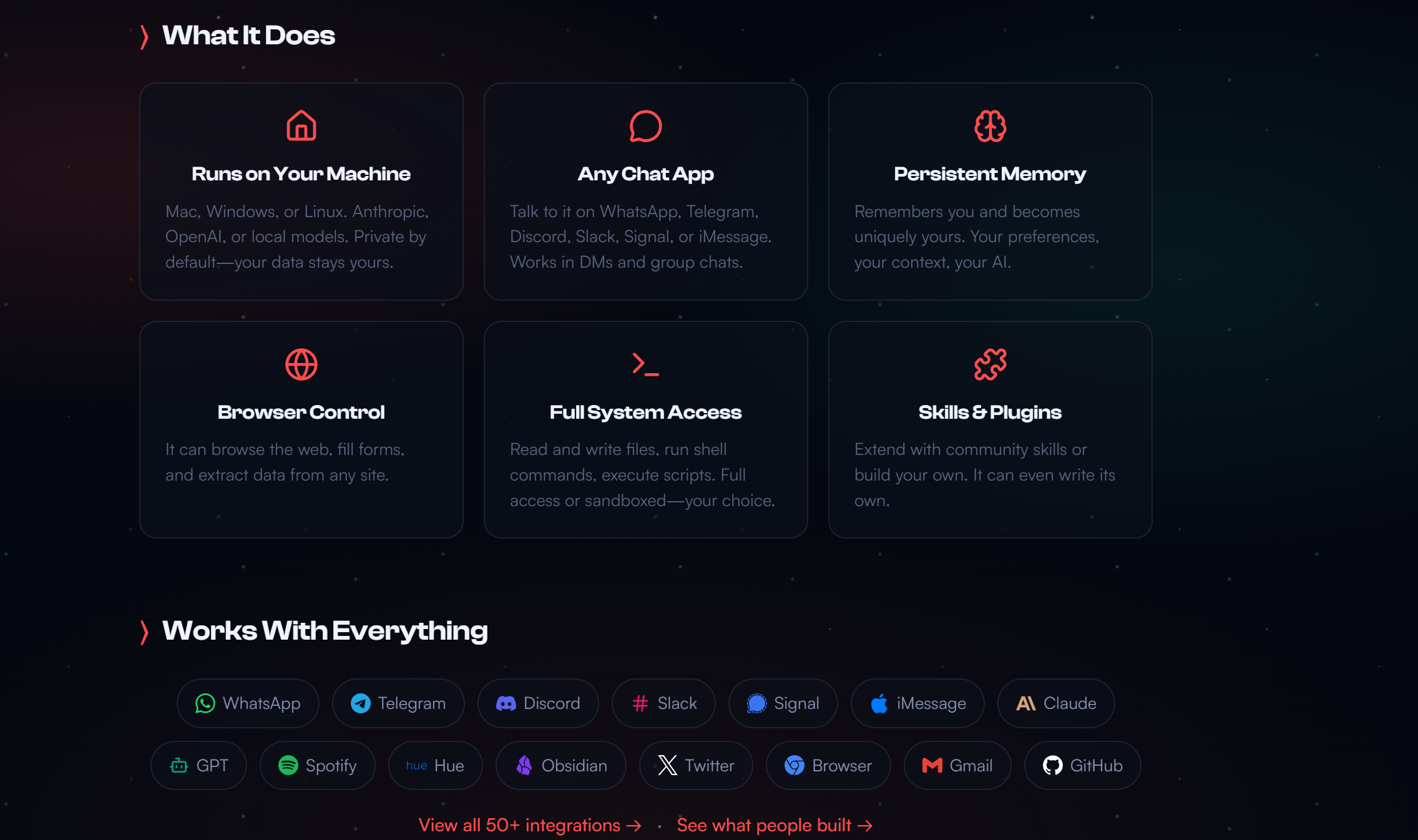
Better Privacy Protection: The software runs on your own computer, Mac, or VPS server. Data is not uploaded to the cloud at all, providing maximum privacy protection.
Seamless Chat Interaction: Users can give commands directly through everyday chat applications such as Telegram, WhatsApp, and Discord.
Powerful Skill Extensions: It features a system known as Skills, similar to a mobile App Store. A Skill is an independent capability package. The community's ClawHub has accumulated up to more than 5,400 skills. These skills cover browser automation, on-chain trading execution, and even lightning network payments.
Why is the crypto circle so enthusiastic about OpenClaw? Because the essence of crypto investment is a game of "information + execution." In the past, investors had to constantly monitor charts, write code, and manually confirm each transaction. Now, you just need to input in Chinese in the chat box: "Help me check Trump's win probability on Polymarket; if it's over 60%, buy $500." The AI agent will automatically query data, analyze, and place the order. This completely automates the "execution" phase, becoming the "easy earning tool" that ordinary investors dream of.
2. OpenClaw Operational Mechanism: A Fully Automated Closed Loop from "Perception" to "Error Correction"
From the user's perspective, the workflow of OpenClaw can be summarized as follows: Users only need to send natural language commands in commonly used chat software (such as Telegram or Discord), and OpenClaw will automatically understand the intent like a personal assistant, write and execute code, and self-correct in case of errors until the task is completed.
How OpenClaw Works
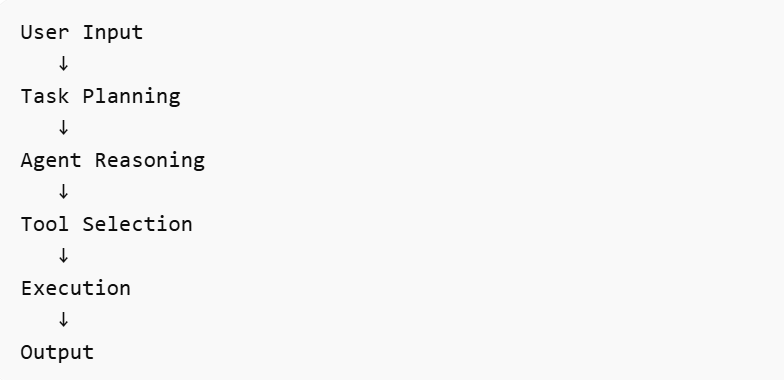
The core of OpenClaw is a set of self-hosted gateway software. Users run a Node.js process on their PC or server to connect various chat channels. When users send messages through authorized channels such as WhatsApp, Telegram, or Discord, the gateway forwards the messages to the configured AI agent model (such as Claude, GPT, Gemini, etc.). After the AI model interprets the commands, it can execute Shell commands, call Web APIs, read and write files, send emails, and even invoke browser controls.
The system employs a "multi-agent routing" design that not only supports various AI models but also effectively isolates different sessions and roles. The gateway itself is responsible for session management, routing, and security policies, while the AI agent execution engine processes core logic, and the ClawHub skill module provides encapsulated tool calls. Users can decide on data storage methods and permission settings (such as setting whitelists, Bot identity binding, etc.), supporting distributed deployment in the cloud or locally. In addition, the official team has released iOS/macOS clients that support voiceprint wake-up and push notifications. Android nodes are also in development, and in the future, it may even be able to invoke device cameras, GPS, or local storage for richer application scenarios.
OpenClaw's Operational Logic
The operational logic of OpenClaw can be greatly simplified to a dynamic loop of "Perception - Thought - Execution - Error Correction":
Core Task Loop (The Loop)
Intent Parsing: Analyze the user's needs through a large language model (LLM) to clarify "what to do."
Solution Generation: Automatically write the required Python scripts or Shell commands to achieve the goal.
Action Execution: Directly run the generated code in the local environment, operating files, systems, or APIs.
Result Validation: Read the terminal output after execution to determine whether the current task is successful.
Self-Repair: If an error occurs, the AI will analyze the error log. It will then automatically rewrite the code and try again.
Event Trigger Mechanism (Tick System)
Wake-Up: The system can be awakened by users' instant messages or triggered by preset scheduled tasks (Cron).
Queueing: Tasks will enter a "lane queue" to ensure tasks are executed one by one to avoid system conflicts.
Sleeping: After completing the current task and saving the state, the system will enter a low-power standby mode.
Memory and Management (Lifecycle)
Identity Loading: On startup, it reads
SOUL.mdandTOOLS.mdfiles to determine the AI's "persona" and its skills.Memory Compression: When the conversation history becomes too long, the system will automatically summarize the history to free up memory and prevent the model from "blacking out."
Autonomous Feedback: Supports offline mode. For example, while you sleep, it can modify bugs, and when you wake up, it will submit a work summary to you.
In simple terms, it is like a 24-hour standby programmer assistant that, upon receiving a task, writes code, runs tests, reports errors, and fixes them until the task is thoroughly completed.
3. OpenClaw Cryptographic Applications: An "Information + Execution" Fully Automated Quantitative Assistant
In the cryptocurrency industry and financial field, OpenClaw plays the role of an "Information + Execution" quantitative assistant, greatly automating many repetitive tasks that require adaptive judgment. Its core value lies in the automation of processes and time-saving, rather than providing new financial products.
Source: https://openclaw.ai/
DeFi and Data Automation Operations
By searching for "crypto," "defi," or "trading" on ClawHub, you can find hundreds of ready-made skills.
On-Chain Operations and Management: General on-chain Skills support Aave deposits, Jupiter token swaps, and wallet management.
Token Issuance and Profit Sharing: The BankrBot Skill supports one-click token issuance, automatic earning of transaction fees, and funding agent wallets. Platforms inclined toward meme coin speculation such as Clawnch and ClawPump have emerged in the ecosystem for "AI issuance/trading."
Data Analysis: Data platform Skills can pull on-chain data in real-time and perform Dune dashboard analysis.
Liquidity and Yield Farming: The agent can monitor the yield rates of different pools and automatically deploy and harvest. For example, users can set commands to deploy funds to the highest APY USDC pool on the Base chain and reinvest daily, with agents regularly fetching DeFiLlama data to execute strategies.
Exchange Integration and Automated Trading
Mainstream exchanges have begun to follow suit, significantly lowering the barrier for user access.
Crypto.com: On March 2, 2026, Crypto.com launched a custom Agent Key function for OpenClaw in the app. Users provide a budget-controlled key to OpenClaw, allowing it to execute trading operations such as "convert 1000 USDT to BTC" via Telegram. This interface has implemented high security mechanisms, including an absolute weekly trading budget that does not exceed limits, balance viewing only without allowing withdrawals, and requiring chat confirmations for each trade. Users can send "stop all trading" to pause all trading with one click.
Bitget: Bitget upgraded the Agent Hub, adding two new modules: Skills + CLI, optimized specifically for OpenClaw. Users can complete configuration in three minutes, supporting spot, futures, leverage, conditional orders, and batch orders. AI can monitor the market 24/7, automatically following elite traders upon identifying trends.
Hyperliquid: Although official native integration has yet to be announced, the third-party platform Senpi.ai launched a "personal trading agent" with 31 tools specifically designed for Hyperliquid in February 2026. It supports one-click deployment and the agent securely manages private keys, offering a completely autonomous mode or co-pilot mode (Telegram chat confirmation). The community's open-source Skill HyperLiquid-Claw has also made following high-leverage trends in perpetual contracts extremely simple.
Prediction Market: AI Player in the Probability Casino
The prediction market is one of the most mature application scenarios for OpenClaw. PolyClaw, developed by Chainstacklabs, has become a community standard, allowing for automatic market scanning, odds analysis, seeking arbitrage opportunities, calculating implied probabilities, and hedging platforms.
Kalshi also has a mature Skill, with some developers even designing a "dual-layer proxy system": one layer is dedicated to analyzing news sentiment, while the other layer is responsible for executing bets. In 2026, the weekly trading volume on Polymarket surpassed that of Kalshi, and the AI agent played a crucial role in this.
Social Media and Portfolio Management
Social Media Analysis: The AI agent can perform sentiment analysis by scraping group information from Twitter/X, Reddit, or Telegram. It can score data using NLP libraries after capturing public data, detecting rise and fall signals in advance.
Portfolio Management: Users can set rules for dynamic evaluation and rebalancing of holdings. The agent connects to the RPC interface to read address balances and uses mathematical tools (like Pandas) to calculate the optimal trading sequence, generating Sharpe ratio reports to assist in investment decisions.
AI Agent Social Platform: Moltbook, designed as a social platform for AI agents, allows AI-driven robots to communicate code and gossip about their human owners. This platform started as an experimental project in late January and became a large-scale experimental field for AI transitioning from tools to "social existence," later announced to be acquired by Meta on March 10. OpenAI CEO Sam Altman believes that, while the website may just be a momentary trend, its underlying technology offers a glimpse into the future.
4. Dark Forest: Risks and Limitations Not to Be Ignored
Despite the significant efficiency improvements brought by OpenClaw, authorizing AI agents for high-sensitivity operations is akin to traversing a dark forest.
Risks and Limitations of OpenClaw
1) Security Vulnerabilities and Malicious Attacks
OpenClaw runs within a single Node.js process with "root privileges," which CrowdStrike and Bitdefender have warned poses extremely high risks.
The core security risks stem from "AI fraud" and overreach, including prompt injection, tool abuse, and identity spoofing.
Research shows that there were 71 malicious plugins disguised as trading tools on ClawHub that could steal private keys and transfer funds to hacker wallets.
Malicious websites can exploit the ClawJacked vulnerability to hijack local proxies via WebSocket. Cisco's security team also discovered unauthorized skills that secretly encoded and sent users' Discord chat records to external sources.
2) Hardware Thresholds and API Costs
OpenClaw is not plug-and-play software; it has a high technical threshold, with users even complaining that “it can't run smoothly even after a few days of deployment.”
OpenClaw has a memory requirement of several hundred MB, making it unsuitable for low-end hardware, thus limiting its scalable deployment. Its massive size results in extremely high maintenance costs.
Calling advanced large-language models (like GPT-5) incurs high API costs. Reports indicate that even a simple interaction could exceed $10, which presents a challenge for small to medium teams. Feedback from users is also heavily focused on configuration difficulties and high costs.
3) Centralized Dependency and Compliance Risks
Although the framework itself is open-source, its core AI inference capabilities heavily rely on large model APIs (like OpenAI, Anthropic). The founder's join with OpenAI may signal a deep future binding to specific platforms, and changes in API policies will impact ecological stability.
In terms of regulation, while local deployments meet certain data privacy needs, in the event of a plugin security incident leading to data leaks, regulatory and legal responsibilities remain unclear. Using agents for financial transactions must comply with the regulations of the respective jurisdiction, and future compliance-oriented frameworks will likely issue stricter guidelines for such products. Completely autonomous modes may touch the gray areas of regulation.
If using third-party platforms (like Senpi) for asset operations, there is a significant risk of the platform running away.
Official Responses and Protection Recommendations
In response to these risks, the founding team and community have introduced control measures such as permission whitelisting, user pairing codes, and skill review mechanisms.
The official team has now partnered with VirusTotal to automatically scan skills in ClawHub, marking and prohibiting abnormal codes.
However, since these are mostly passive responses, the community and experts strongly advise users: never give AI your complete private keys. Always use API keys with budget limits and enforce manual confirmation.
Users should view it as "not fully trusted" software and deploy it in isolated environments such as virtual machines.
5. Outlook and Summary: A Revolutionary Tool Reshaping Investment Paradigms
OpenClaw has successfully transformed AI from providing information to being a tool capable of deep, actionable tasks. It can complete complex automation tasks in the backend of chat interfaces, possessing epoch-making innovative significance.
Forecasts indicate that AI execution assistants will accelerate their adoption in 2026, enter ordinary households in 2027, become regular tools by 2028, and transform into social infrastructure by 2030.
In terms of ecological infrastructure, standards such as ERC-8004 and x402, as well as dedicated "smart wallets," are being developed to facilitate seamless payments and contract interactions through AI, promoting the standardization of economic interactions among agents.
However, the actual adoption level still requires time for validation, as the current "AI agent + crypto" ecology remains in the infrastructure stage. Most of the current trading volume is primarily from speculative tokens, while deep DeFi applications await further development.
The real turning point will come when agents can safely and autonomously complete complex financial tasks, even being able to "hire other agents" through lending to assist operations. In this process, OpenClaw and its derivatives will play a pioneering role, fostering more mature ecological standards.
Conclusion
OpenClaw is a revolutionary tool that arms ordinary people with "information advantages + execution efficiency." Ordinary investors no longer need to become programmers who understand code; all they need to learn is how to "command the lobster," allowing AI assistants to tirelessly monitor, place orders, and arbitrage around the clock. Risks will always coexist with opportunities, but the tools to the future are already prepared.
About Us
Hotcoin Research, as the core research institution of Hotcoin Exchange, is dedicated to turning professional analysis into practical tools for you. Through our "Weekly Insights" and "In-Depth Reports," we analyze market trends for you; leveraging our exclusive column "Hotcoin Selection" (dual screening by AI + experts), we identify potential assets to reduce trial and error costs. Each week, our researchers will also engage with you face-to-face through live broadcasts, interpreting hotspots and predicting trends. We believe that warm companionship and professional guidance can help more investors navigate cycles and seize the value opportunities of Web3.
Risk Warning
The cryptocurrency market is highly volatile, and investment itself carries risks. We strongly recommend that investors invest only after fully understanding these risks and within a strict risk management framework to ensure fund safety.
Website: https://www.hotcoin.com/zh_CN/learn/index/
Mail: labs@hotcoin.com
免责声明:本文章仅代表作者个人观点,不代表本平台的立场和观点。本文章仅供信息分享,不构成对任何人的任何投资建议。用户与作者之间的任何争议,与本平台无关。如网页中刊载的文章或图片涉及侵权,请提供相关的权利证明和身份证明发送邮件到support@aicoin.com,本平台相关工作人员将会进行核查。