Written by: Kyle Saunders
Translated by: Chopper, Foresight News
Most studies on cryptocurrencies revolve around a simple question: Who holds it? Who does not hold it?
Indeed, this is a reasonable starting point for research. Holding behavior is an observable, quantifiable action. But for a market valued at trillions of dollars, this may not be the most central question.
If you are concerned about market developments, regulatory policies, political opinions, or the future trends of crypto assets, there is one question that may be more relevant: Who is considering getting into cryptocurrencies?
Because the acceptance and popularization of an asset have never been a binary choice, but a gradual process.
If you only study the final stages of this process, you will miss the entire conversion pathway.
Rejection → Consideration → Holding: The Three Stages of Cryptocurrency Acceptance
I recently collaborated with Erin Fitz to publish a new paper, in which we did not view the acceptance of cryptocurrency as a black-and-white result but rather defined it as a gradual process.
From late 2024 to 2025, we conducted three independent representative sampling surveys among American adults. Based on the survey results, we classified respondents into three groups:
- Not holding, and not intending to hold cryptocurrencies
- Not holding, but considering holding cryptocurrencies
- Currently holding cryptocurrencies
Our first conclusion is straightforward yet crucial: about one-fifth of Americans do not hold cryptocurrencies but are considering getting into them.
This group is by no means an insignificant minority, nor is it a statistical error, let alone a "destined to hold" potential group. They are a distinctly segmented group with unique psychological characteristics and behavioral patterns, which makes them critically important.
Why is the "Potential Holders" group so crucial?
If the research perspective is limited to a binary comparison of "holders" vs "non-holders," it essentially assumes that all individuals outside the market are a homogeneous group.
But real-world behavioral choices are never like that.
A classic theory in social psychology, the Theory of Planned Behavior, states that human behavior evolves through a series of precursor stages: beliefs, attitudes, perceived control, and behavioral intentions. First "considering," then "intending to act"; first having "behavioral intentions," then taking action. Yet every stage does not necessarily transition to the next.
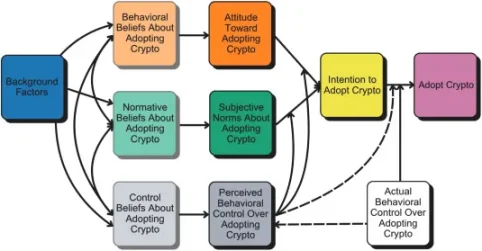
In other words, all holders were once potential holders; but not all potential holders will ultimately become actual holders.
When we view people's participation in cryptocurrencies as an orderly, incremental process rather than a binary trait, an interesting conclusion emerges: the factors influencing "considering holding" are not entirely the same as those driving "actual holding."
Within this conversion pathway, there exists a layered filtering mechanism.
What factors influence "considering to hold"? What drives "actual holding"?
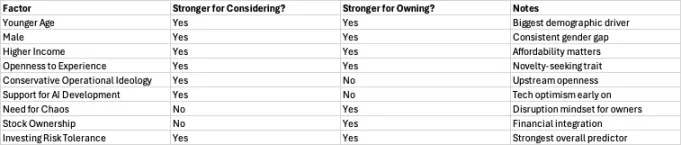
Some common influencing factors align with expectations: younger individuals, males, those who are more open to new experiences, and those who are more accepting of financial risks find it easier to cross the thresholds of "rejection → consideration" and "consideration → holding."
However, there are two groups of significantly different patterns that deserve special attention.
Factors more strongly associated with "considering to hold":
- A more conservative pragmatic ideology
- Support for research and development of artificial intelligence technologies
The influences of these factors are reflected in the early stages of cryptocurrency acceptance and can explain why individuals may hold an open attitude toward cryptocurrencies but may not be motivated to take the final step toward "actual holding."
Factors more strongly associated with "actual holding":
- Already holding stocks
- Desire for chaos
Risk tolerance is the most significant overall influencing factor: moving from the lowest to the highest levels, respondents' likelihood of choices dramatically changes, with the probability of rejecting cryptocurrency decreasing by 32 percentage points and the probability of actually holding cryptocurrencies increasing by 27 percentage points.
Here is a brief summary of the core differences:
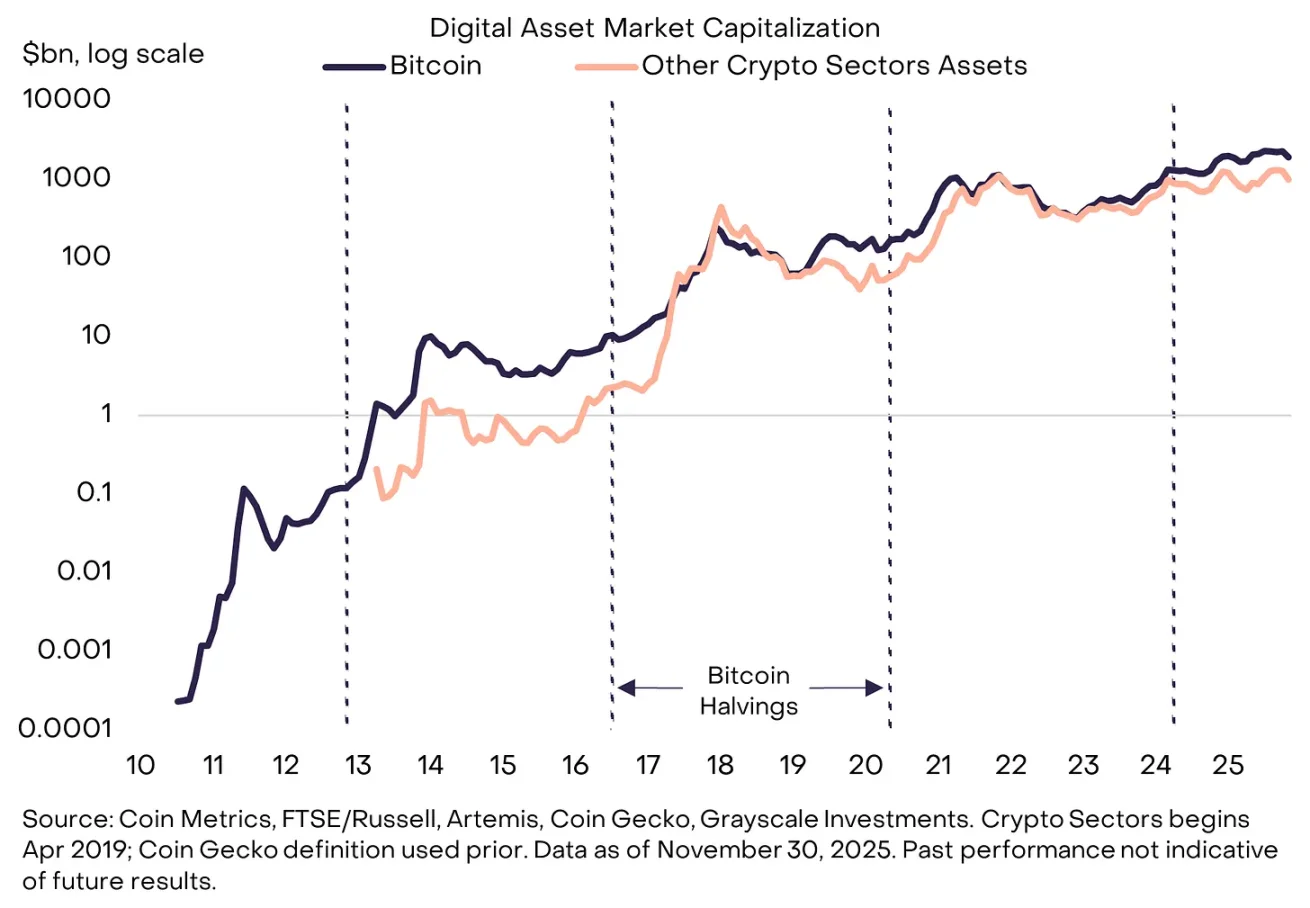
Our survey data also aligns highly with the actual landscape of the cryptocurrency market: Bitcoin dominates both the "potential holders" and "actual holders" groups (Ethereum is a close second), and many people are willing to engage with various cryptocurrencies. The market itself also corroborates this conclusion.
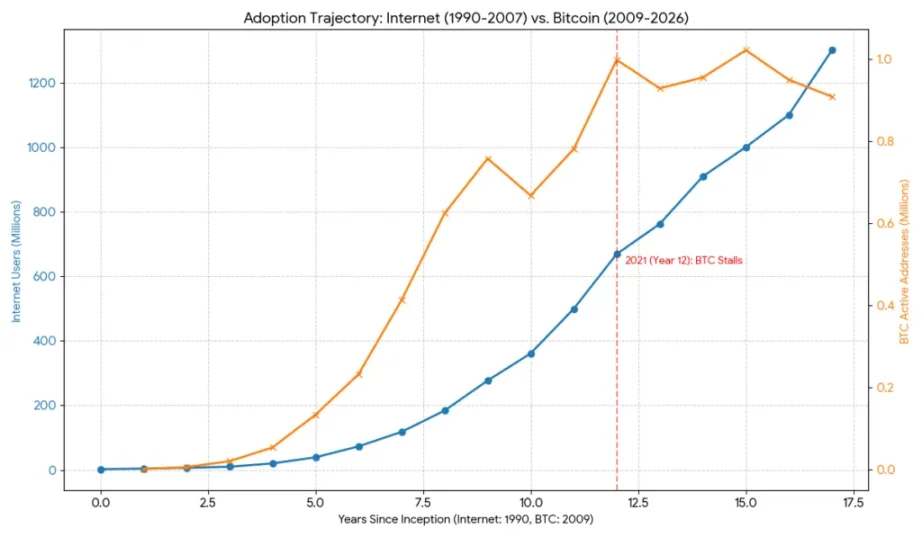
To understand how this pattern fits into a broader technological diffusion curve (and why the "potential holders" phase will determine whether cryptocurrency development stagnates or expands), one can compare Bitcoin's adoption trajectory to that of the early internet as a reference. Survey data indicates that the acceptance of artificial intelligence technology in the U.S. will reach approximately 55% by 2026.
Moreover, this chart in the paper displays how the acceptance of cryptocurrency aligns with Rogers' innovation diffusion curve:
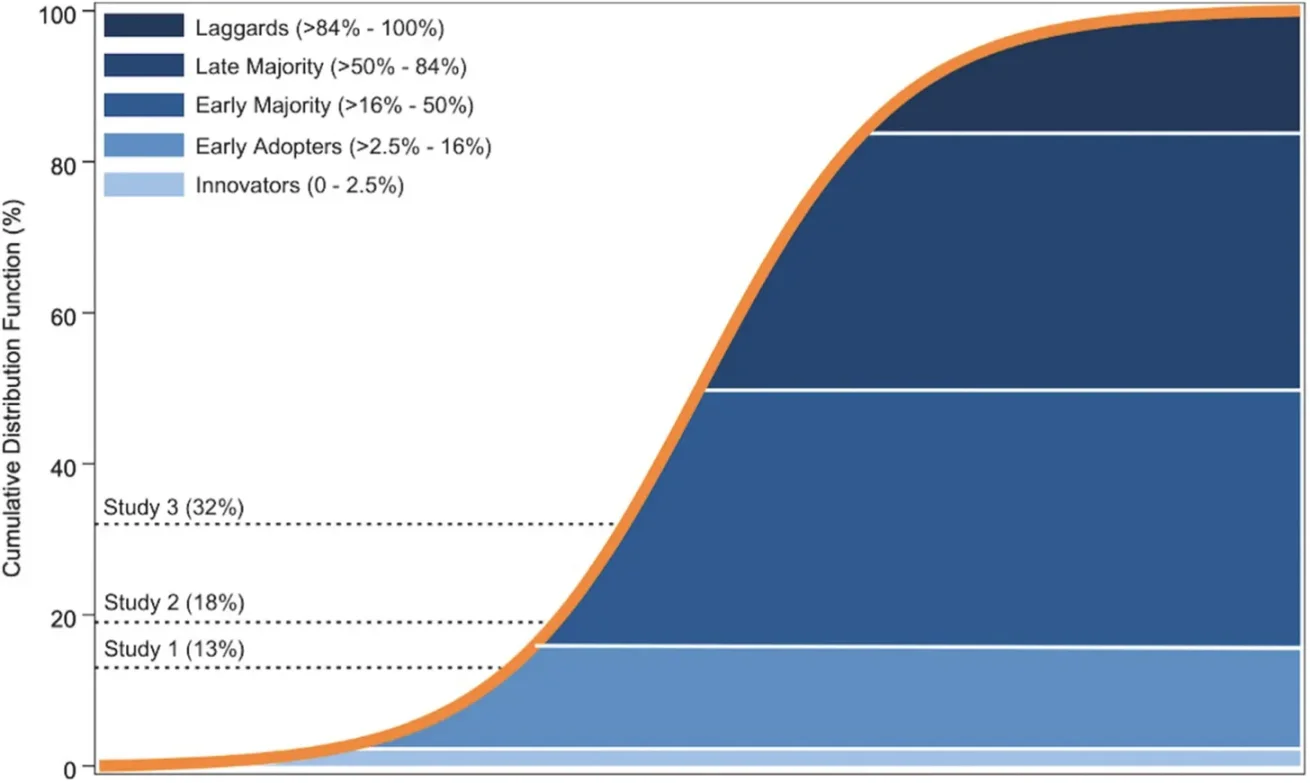
This is a revised diagram of the innovation diffusion curve proposed by Rogers in 2003, with the orange solid line representing the S-curve (i.e., the cumulative distribution function, with the left side of the vertical axis being the scale). The blue area under the curve represents the probability distribution of five adopter groups in Rogers' model, divided based on standard deviations from the mean in a normal distribution. In a normal distribution, these areas represent the probability proportions of each group within the overall population: Innovators (2.5%, 0 to mean minus 2 standard deviations), Early Adopters (13.5%, mean minus 2 standard deviations to mean minus 1 standard deviation), Early Majority (34%, mean minus 1 standard deviation to mean), Late Majority (34%, mean to mean plus 1 standard deviation), and Laggards (16%, mean plus 1 standard deviation to 100%). The black dashed line represents the self-reported cryptocurrency holding rates from our three studies (Study 1: 13%, Study 2: 18%, Study 3: 32%).
The significance of this research conclusion extends beyond the cryptocurrency field
You can interpret these results narrowly as market segmentation, but they have broader implications.
For Market Growth
The expansion potential in the cryptocurrency market lies not in converting steadfast "rejectors" into holders but in understanding what hinders potential holders from becoming actual holders. This barrier may not be ideological but could stem from individuals' perceptions of their own behavioral control, their concerns over market volatility, or issues related to asset liquidity.
For Regulatory Policies
If policymakers only view cryptocurrency holders as the only politically influential group, they may misjudge the market landscape. The policy trajectory in the digital asset space is likely to be determined by these potential holders, who hold an open attitude but have yet to make up their minds. Their preferences, risk profiles, and trust in institutions all significantly impact the situation, especially against the backdrop of the gradual formation of regulatory frameworks for cryptocurrencies by 2026.
For Social Opinions
Discussions online often fall into polarization: one either supports cryptocurrencies or opposes them. However, our survey data shows that there exists a large, uniquely characterized middle group in reality. From historical experience, it has never been the early adopters but this middle group that determines whether an innovation will achieve wide adoption, stagnate, or provoke a backlash in public opinion.
Acceptance and popularization are inherently a gradual process.
The core insight of this research is not just applicable to the cryptocurrency field but also hinges on a shift in research methodology and cognitive perspective.
When we simplify complex behaviors into binary choices, we risk confusing behavioral patterns across different stages. The factors that elicit an open attitude toward a new phenomenon may not necessarily drive people to take actual action.
This applies not only to cryptocurrencies but also to the acceptance of artificial intelligence technologies, political participation, trust in institutions, and many other behavioral choices I have discussed in this column.
The often-overlooked intermediate stages frequently contain the most worthwhile behavioral patterns to explore.
The acceptance and popularization of cryptocurrencies are never just a matter of personality traits or ideological signals but rather a sequential behavioral process.
If you overlook this intermediate "potential holders" stage, you may misjudge both the true trajectory of the market and the underlying political and social logic.
免责声明:本文章仅代表作者个人观点,不代表本平台的立场和观点。本文章仅供信息分享,不构成对任何人的任何投资建议。用户与作者之间的任何争议,与本平台无关。如网页中刊载的文章或图片涉及侵权,请提供相关的权利证明和身份证明发送邮件到support@aicoin.com,本平台相关工作人员将会进行核查。


