This week, the Strait of Hormuz put the digital gold narrative under pressure again.
The Strait is 21 miles wide at its narrowest point. A third of all seaborne crude passes through it.
This is the moment BTC is supposed to thrive in, but instead gold took its place.
Higher oil prices push up energy costs. Bitcoin mining is deeply energy intensive, so when those costs rise, miners tend to sell to cover rather than hold.
Macro shocks tighten dollar liquidity too, and BTC has grown increasingly correlated with that cycle. Institutional participation through spot ETFs has only amplified the sensitivity.
The digital gold thesis may not be wrong long term, but the problem is timing.
Gold has decades of institutional precedent behind it. In a crisis, capital flows toward the asset class that institutions are already comfortable with.
This is playing out now with the Supreme Court tariff rollback and the Iran situation pulling in opposite directions.
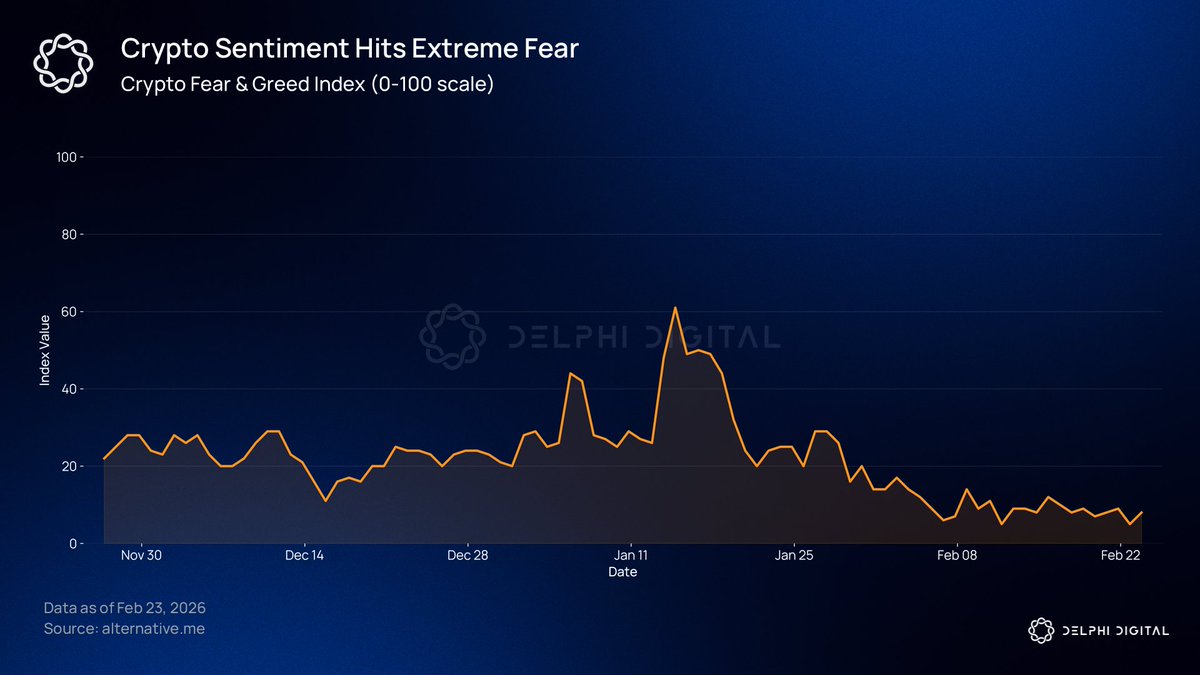
The fear and greed index has sat in fear territory most of the month while BTC consolidates sideways.
And when the dollar rallies off the back of a geopolitical shock, crypto tends to end up on the wrong side of both trades. That could change as the investor base deepens and correlation with high beta equities weakens.
Bitcoin isn't there yet.
免责声明:本文章仅代表作者个人观点,不代表本平台的立场和观点。本文章仅供信息分享,不构成对任何人的任何投资建议。用户与作者之间的任何争议,与本平台无关。如网页中刊载的文章或图片涉及侵权,请提供相关的权利证明和身份证明发送邮件到support@aicoin.com,本平台相关工作人员将会进行核查。


