Digital Setback
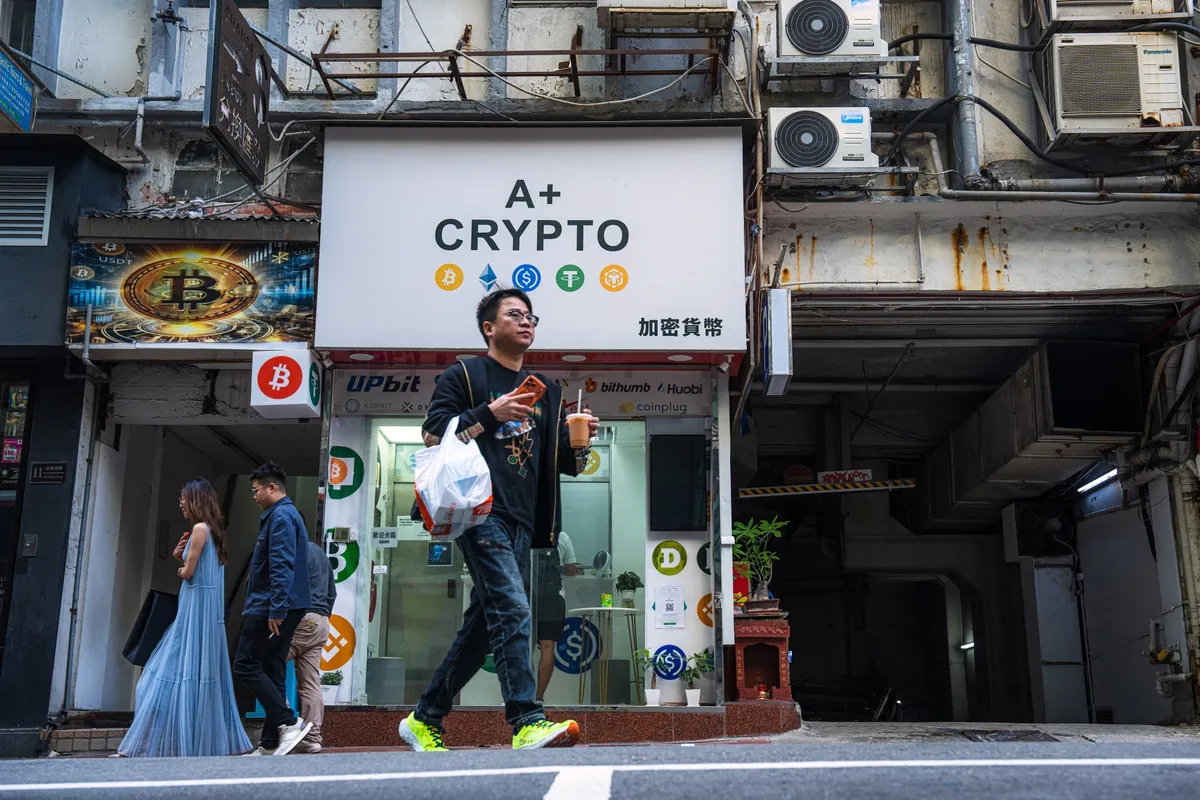
Last year, more and more cryptocurrency commentators believed that China might be turning a corner on digital assets.
Since the People's Bank of China (PBOC) Governor Pan Gongsheng outlined the vision of the RMB potentially challenging the dollar's hegemony, the word "warming" has been repeatedly mentioned.
However, on February 7, the music stopped.
During the latest round of cryptocurrency crash, China tightened restrictions on cryptocurrencies and real-world asset tokenization (RWA), prohibiting domestic entities from issuing digital tokens overseas, and banning unapproved issuance of RMB-pegged stablecoins abroad, citing threats to monetary sovereignty.()
Angela Ang, head of Asia-Pacific policy and strategic partnerships at blockchain intelligence firm TRM Labs, stated: “China's considerations regarding stablecoins have been at best tentative, and this attitude has become increasingly cold in recent months.”
Ang noted that the PBOC's statement “clearly ended any hope of issuing offshore RMB stablecoins in the near future — certainly not in Hong Kong, and likely not elsewhere.”
This is a significant setback for Hong Kong, which is committed to building a digital asset hub and has made efforts in this regard for years. Last June, Christopher Hui, the Secretary for Financial Services and the Treasury in Hong Kong, had refused to rule out the possibility of pegging the city’s stablecoin to the RMB according to regulatory requirements. But it can be speculated that he will certainly close that door now.
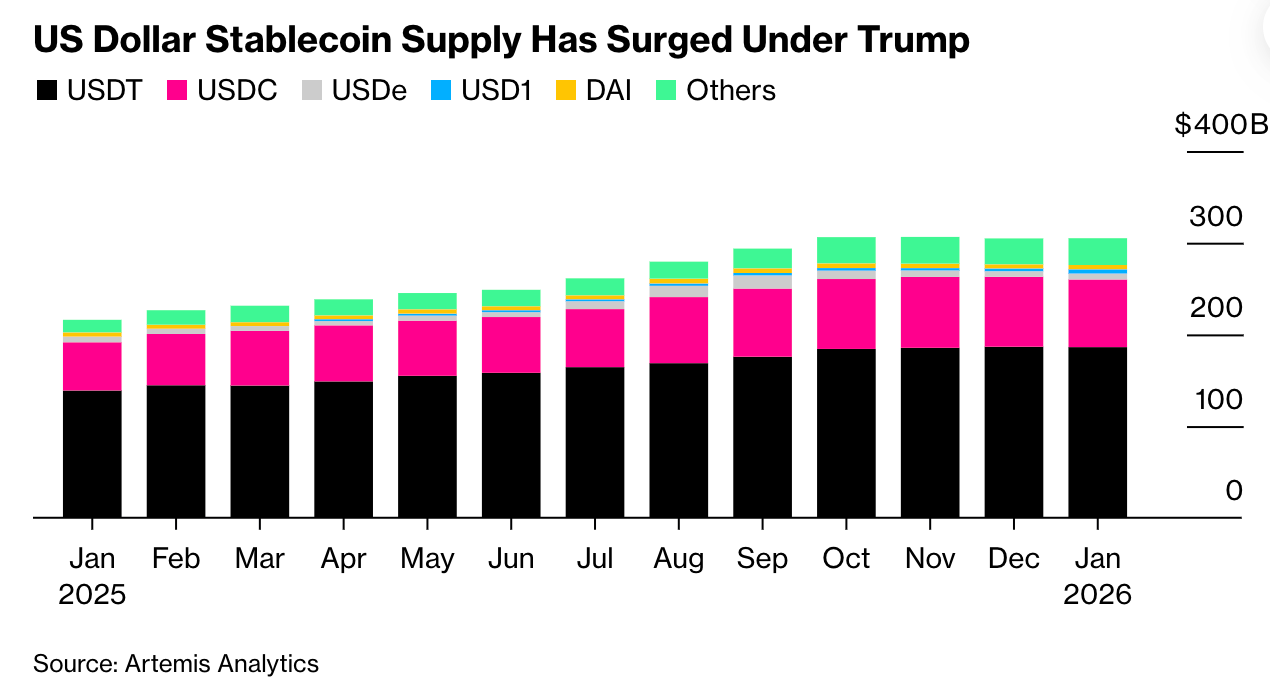
Source: Artemis Analytics
As Ang mentioned, there had been signs of this all along. As early as last August, China had informed local brokers and other institutions to stop publishing research reports and hosting seminars promoting stablecoins in an effort to curb market enthusiasm.
Patrick Tan, legal counsel at blockchain intelligence firm ChainArgos, stated that last week's announcement “eliminated the market's uncertainty regarding the issuance of privately issued RMB-pegged stablecoins.” He added: “Issuers now clearly understand where the red line is.”
Companies applying for licenses must now compromise and pursue stablecoins pegged to the Hong Kong dollar (HKD).
Bloomberg News previously reported that as many as 50 companies planned to apply for stablecoin licenses in Hong Kong last year. According to a Financial Times report in October, this included tech giants Ant Group and JD.com, but after intervention from Beijing, they had to suspend their stablecoin plans.
Both Ant Group and JD.com did not respond to requests for comment.
As of Tuesday, Hong Kong has granted licenses to 11 cryptocurrency exchanges and allowed 62 companies to trade digital assets for clients. The list includes institutions with Chinese backgrounds such as CMB International Securities Ltd., Guotai Junan Securities (Hong Kong), and Tianfeng International Securities (TFI Securities and Futures Ltd.).
But concerns remain that if access to RMB is not possible, all these efforts may ultimately be in vain.
Tan said: “The issue has never been with Hong Kong's regulatory framework, but whether China will tolerate the circulation of RMB-denominated instruments outside its control. Capital controls and the freedom of stablecoins are fundamentally incompatible.”
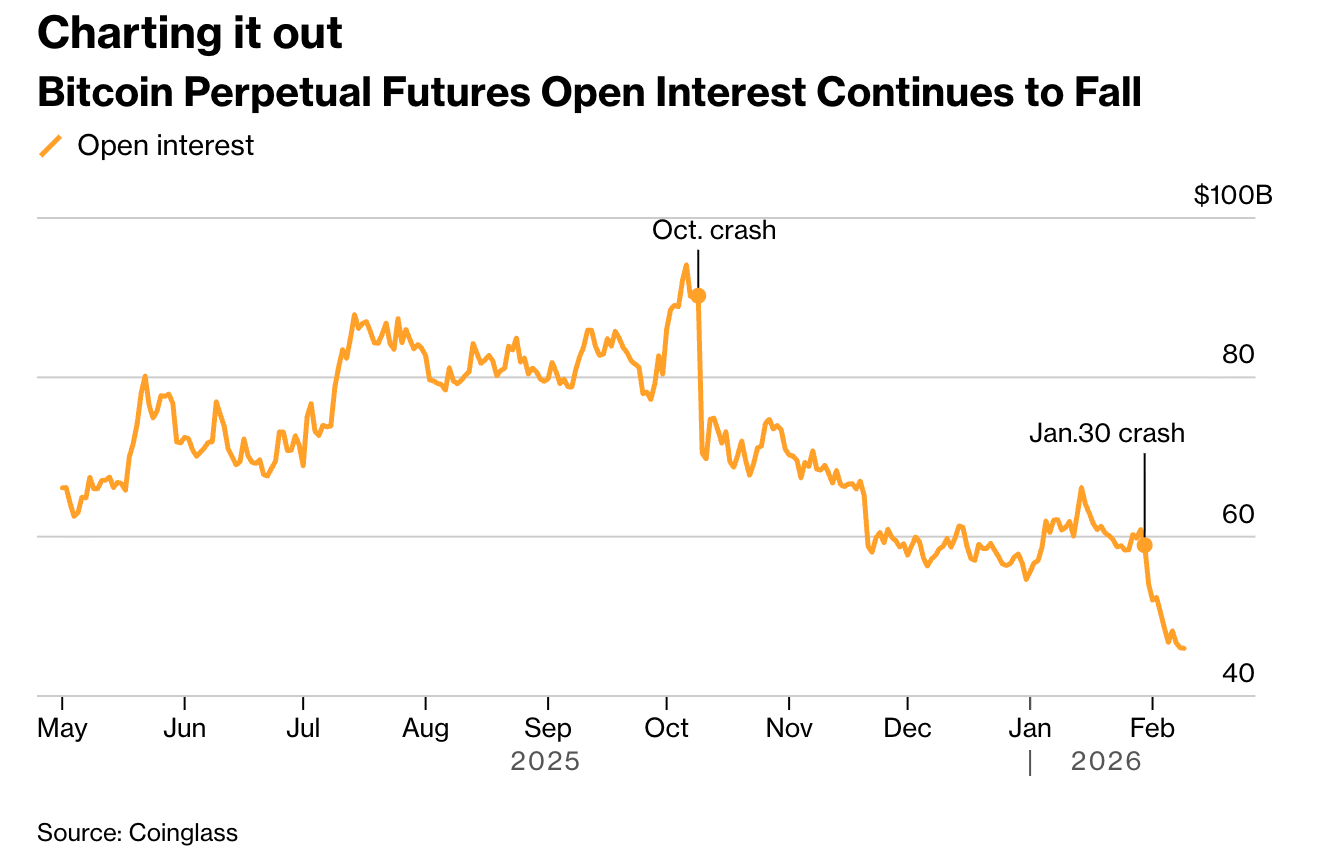
Source: Coinglass
The open interest in Bitcoin perpetual futures has failed to recover from the downward trend that began in October, highlighting a lack of confidence behind the recent recovery. Coinglass data shows that current open interest has dropped by about 50% from the peak in October.
Core Data: $3.3 Billion
According to data compiled by Bloomberg Intelligence, investors have withdrawn about $3.3 billion from US Ethereum spot ETFs since the crash in early October, with outflows exceeding $500 million this year. The data shows that the asset size of Ethereum ETFs is now below $13 billion, the lowest level since July of last year.
Industry Perspective
“The market is consolidating around something ‘truly effective’. Even crypto-native venture capital holding large amounts of dry powder is strongly shifting toward fintech, stablecoin applications, and prediction markets. Everything else is struggling to gain attention.”
—— Santiago Roel Santos, founder and CEO of the crypto private equity firm Inversion.
Crypto-native venture capital firms are shifting their focus to better-performing areas, such as stablecoin infrastructure and on-chain prediction markets, and expanding into adjacent industries.
免责声明:本文章仅代表作者个人观点,不代表本平台的立场和观点。本文章仅供信息分享,不构成对任何人的任何投资建议。用户与作者之间的任何争议,与本平台无关。如网页中刊载的文章或图片涉及侵权,请提供相关的权利证明和身份证明发送邮件到support@aicoin.com,本平台相关工作人员将会进行核查。


