Original Title: ABG CMO is eating the world.
Original Author: @0xJuliechen, Content Creator
Original Translation: Lila, Richie, BlockBeats
"If your startup is not a B2B SaaS + GPT shell company funded by YC, and you haven't hired ABG as your Chief Marketing Officer, you're basically done for."
Rhythm Note:
· YC: Full name Y Combinator, widely regarded as the world's top startup incubator
· B2B SaaS: Cloud software sold to businesses on a subscription basis
· ABG = Asian Baby Girl
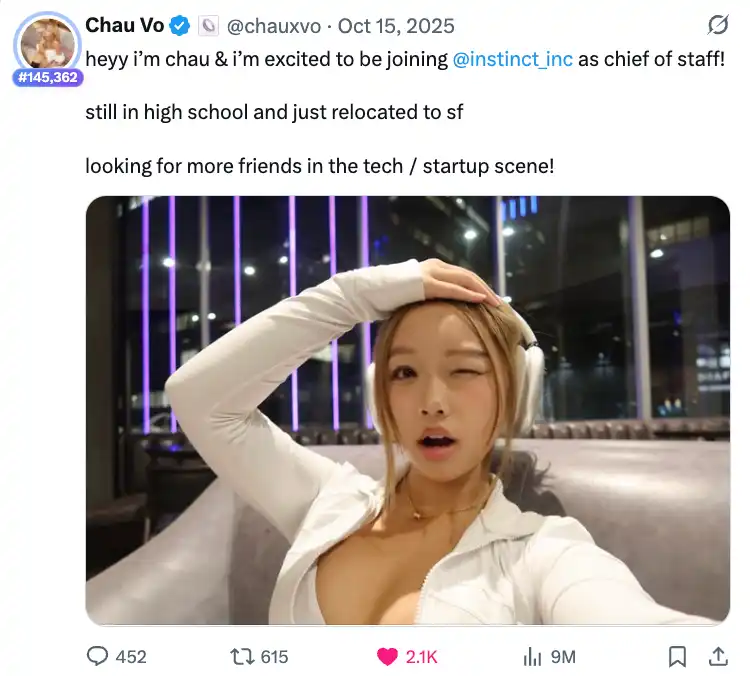
I've heard similar statements from countless AI company founders, each dreaming of finding the next Cluely: a company that can easily garner millions of views and stay in the spotlight. (Rhythm Note: Cluely is a highly controversial AI startup that has initiated a new paradigm of "viral marketing," which will be detailed later.)
ABG = Asian Baby Girl. In Silicon Valley, it has become synonymous with young Asian women who are adept at social media marketing. They excel at creating eye-catching content, publishing viral articles, and marketing in distinctive ways. Suddenly, all AI startups are scrambling to hire them as Chief Marketing Officers.
Why? Because a viral post is far more effective than a $50,000 advertising campaign.
The "thought leader" persona painstakingly cultivated over months on LinkedIn pales in comparison to a "sharp comment" or a selfie posted on X that can garner more attention and interaction.
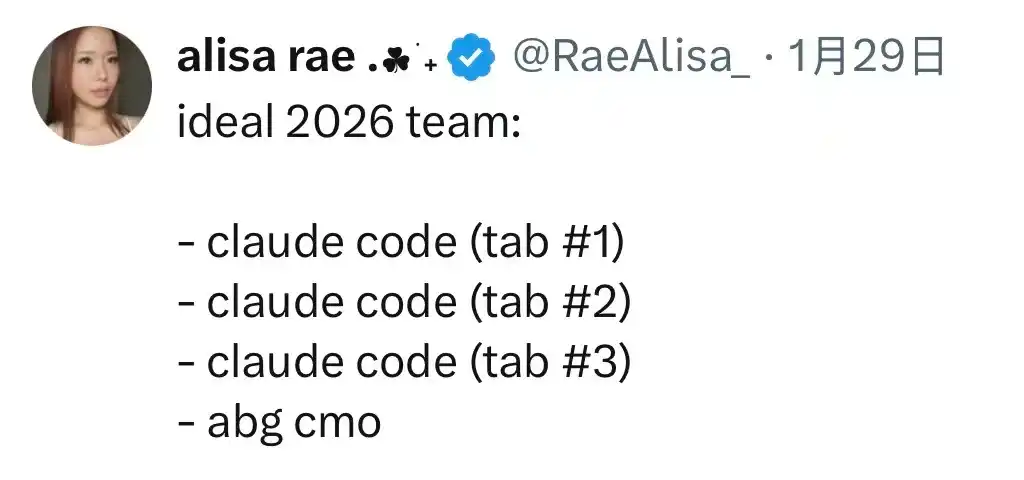
Are Asians naturally good at marketing?
Not at all, let me clarify: this has nothing to do with race (people of every race are equally capable). It reveals some deeper issues in the evolution of the startup market.
The Feedback Loop of the Tech Market
From past viral success stories (like @cluely), we can see that VCs chasing "traffic signals" have outpaced traditional financial metrics, leading to more funding flowing into more personality-driven, socially prioritized projects.
Now, more college students are choosing to become content creators rather than taking a $200,000 job at a big company, so more startups are hiring "ABGs" for marketing, raising the overall standards of tech marketing, and creators are thus gaining access to better market resources.
Social media interaction data has become the sole standard for marketing effectiveness.
And this feedback loop is accelerating: more attention means more funding, leading to higher barriers, attracting more talent until a stronger attention monopoly is formed.
Likes, views, and shares are no longer just vanity metrics; they have become new standards for investment due diligence.
The core is not ABG, but the attention economy.
How to capture hearts? Cluely delivered the perfect answer
· Narrative: "Cheat on Everything" — perfectly aligns with the story of founder @imroylee (expelled from Columbia University/Harvard University). This is not just a slogan, but a carefully packaged origin story.
From "a complete failure" to "cheating with AI, making it into big companies, YC, and A16Z." This kind of comeback narrative often ignites both longing and anger in people's hearts.
· Industrial-grade viral dissemination machine: They recruited over 700 "editors" — mostly small creators on TikTok/Instagram. The model is: pay for performance. $1 per thousand views. Zero upfront costs.
· Content formula: Nonsense tweets + eye-catching visuals + lifestyle flaunting. Party videos (like the infamous "1.5 million dollar party night"), the "genius intern" persona of founder Roy Lee, flaunting wealth, and disdain for traditional education. This marketing makes you feel, "I really want to join this cool group of kids."
· Cross-platform dominance: X is responsible for creating the thought leader persona (150,000+ followers), TikTok/Instagram is the main battlefield, while LinkedIn/Reddit is used to generate native controversies.
What are the results? Daily views of over 10 million, achieving 1 billion views in 3 months, with costs far lower than traditional advertising. The traditional CPM (cost per thousand impressions) is $4, while they only need around $1.
But the fatal flaw is: the marketing investment far exceeds the product; they actually haven't developed a decent, marketable product. Viral dissemination is not a byproduct, but their only product.
When Cluely pivoted to become an "AI note-taking tool," the entire internet mocked them. People wondered where all that money went.
Some even suggested: since you're so good, why not directly do marketing for other AI companies?
But the most incredible thing is: they did capture some kind of truth. In an age of scarce attention, "bad fame is still fame."
It's ironic: everyone mocks Cluely, yet everyone wants to be Cluely.
(If you hate me but still follow my updates, then you are my fan.)
What is the truth?
Attention is winning the world.
Capital is flowing to companies that occupy consumers' minds rather than just market share. Nowadays, the best products do not necessarily stand out; only products with the best stories can win.
Every founder must also serve as CMO and create their own IP. While the product is important, if you do not prioritize marketing, your product will go unnoticed.
The next wave of successful startups will not be built by the best engineers. They will be created by those who "understand code and can market."
Welcome to the new game.
免责声明:本文章仅代表作者个人观点,不代表本平台的立场和观点。本文章仅供信息分享,不构成对任何人的任何投资建议。用户与作者之间的任何争议,与本平台无关。如网页中刊载的文章或图片涉及侵权,请提供相关的权利证明和身份证明发送邮件到support@aicoin.com,本平台相关工作人员将会进行核查。