Original Title: "Just Spent $250 Million to Buy a Company, Then Laid Off 30% of Staff: Polygon is Changing Its Approach"
Original Author: David, Deep Tide TechFlow
Today I saw a piece of news: Polygon laid off about 30% of its employees.
Although Polygon has not made an official announcement, CEO Marc Boiron admitted to the layoffs in an interview, stating that the total headcount would remain stable due to the addition of new teams from acquisitions.
There are also posts from laid-off employees on social media, indirectly confirming this fact.

But in the same week, Polygon announced it spent $250 million to acquire two companies. Is it a bit strange to lay off staff while spending big money?
If it were simply a contraction, they wouldn't simultaneously spend $250 million on acquisitions. If it were an expansion, they wouldn't cut 30% of the staff. Looking at both actions together, it seems more like a blood transfusion.
The laid-off employees were from existing business lines, and the positions were freed up for the newly acquired teams.
$250 Million for Licenses and Payment Channels
The two companies acquired are called Coinme and Sequence.
Coinme is an older company founded in 2014, providing a bridge between fiat and cryptocurrency, operating crypto ATMs at over 50,000 retail locations in the U.S. Its most valuable asset is its licenses, holding money transfer licenses in 48 states. This is hard to obtain in the U.S.; companies like PayPal and Stripe took many years to gather them.
Sequence provides wallet infrastructure and cross-chain routing. Simply put, it allows users to transfer across chains without dealing with bridging or gas fees, enabling one-click cross-chain transactions. Its clients include Polygon, Immutable, and Arbitrum, and it has a distribution partnership with Google Cloud.
The two acquisitions total $250 million. Polygon has named this suite "Open Money Stack," positioning it as middleware for stablecoin payments, aiming to sell to banks, payment companies, and remittance firms as B2B clients.
My understanding of the logic is as follows:
Coinme provides compliant fiat on/off ramps, Sequence offers user-friendly wallets and cross-chain capabilities, and Polygon's own chain provides the settlement layer. Together, these three components form a complete stablecoin payment infrastructure.
The question is, why is Polygon doing this?
The L2 Path is Becoming Difficult for Polygon
The situation in 2025 is clear: Base has won.
Coinbase's L2 has grown from $3.1 billion in TVL at the beginning of last year to $5.6 billion, capturing 50% of the entire L2 market. Arbitrum has maintained 30% but has seen little growth. The remaining dozens of L2s have mostly become unused after their airdrops.
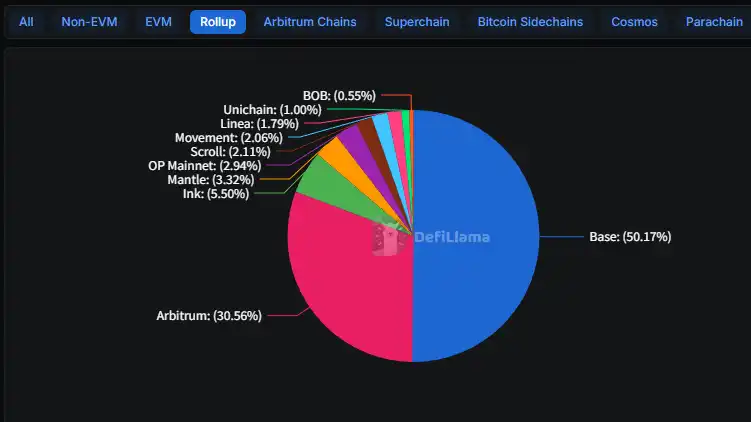
Why did Base win? Coinbase has over 100 million registered users, so any product feature launched naturally attracts users.
For example, the Morpho lending protocol's deposits on Base have grown from $354 million at the beginning of last year to $2 billion now, primarily because it was integrated into the Coinbase app. Users can use it without needing to know what L2 or Morpho is.
Polygon does not have this kind of entry point. It also laid off staff in 2024, cutting 20% at that time, which was a contraction during a bear market when everyone was cutting jobs.
This time is different; they are choosing to change direction while having money in the bank.
I remember in the past, Polygon's narrative was about enterprise adoption, such as working with Disney on an accelerator, Starbucks' NFT membership program, Meta's Instagram minting, Reddit avatars, and so on.
Four years later, most of those collaborations have gone silent. Starbucks' Odyssey program was also shut down last year.
Continuing to compete directly with Base in the L2 space, Polygon has little chance of winning. The technological gap can be closed, but the user entry point cannot. Rather than wasting time on a battlefield they cannot win, it is better to seek new opportunities.
Stablecoin payments are a good direction, but the market is crowded.
Stablecoin payments are indeed a growing market.
By 2025, the total market cap of stablecoins will exceed $300 billion, a 45% increase from the previous year. Their use is also changing, expanding from primarily moving assets between trading platforms to scenarios like cross-border payments, corporate finance, and payroll.
However, this market is already very crowded.
Stripe spent $1.1 billion last year to acquire the stablecoin infrastructure company Bridge and recently secured the issuance rights for the USDH stablecoin on Hyperliquid. PayPal's PYUSD has already captured 7% of the stablecoin market on Solana.
Circle is promoting its Payments Network. Major banks like JPMorgan, Wells Fargo, and Bank of America are forming alliances to launch their own stablecoins.
Polygon's founder Sandeep Nailwal stated in an interview with Fortune that this acquisition puts Polygon in competition with Stripe.
Honestly, that statement is a bit overstated.
Stripe's acquisition cost $1.1 billion, while Polygon spent $250 million. Stripe has millions of merchants, while Polygon's clients are primarily developers. Most importantly, Stripe has accumulated payment licenses and banking relationships over more than a decade.
In a head-to-head competition, they are not on the same level.
However, Polygon may be betting on a different approach. Stripe wants to integrate stablecoins into its closed loop, allowing merchants to continue using Stripe, but with stablecoins as the settlement layer for faster and cheaper transactions.
Polygon aims to create an open infrastructure that allows any bank or payment company to build their own business on top of it.
One is vertically integrated, while the other is horizontally entering. These two models may not directly compete, but they are vying for the same customers' attention.
Changing its approach, the future is uncertain.
In conclusion, layoffs in the crypto industry over the past two years are not surprising.
OpenSea cut 50%, Yuga Labs and Chainalysis are also shrinking. ConsenSys laid off 20% last year and is cutting again this year. Most of these are passive contractions, as they run out of money and focus on survival.
Polygon is different. They have money in the bank and can spend $250 million on acquisitions, yet they still choose to lay off 30% of their staff.
A blood transfusion and a change in approach, but there are risks.
The Coinme that Polygon acquired has its core business in crypto ATMs, deploying machines at over 50,000 retail locations across the U.S., allowing users to buy coins with cash and exchange coins for cash.

The trouble is, this business faced issues last year.
California regulators fined Coinme $300,000 for allowing users to withdraw more than the daily limit of $1,000 at ATMs. Washington state was even harsher, issuing a ban that was only lifted last December.
Polygon's CEO has stated that Coinme's compliance situation "exceeds requirements." However, regulatory penalties are documented, and pretty words cannot change that.
Relating these issues to the token, the narrative around the $POL token has also changed.
Previously, the more the chain was used, the more valuable POL became. After the acquisition, Coinme takes a commission on every transaction, which is real revenue, not just token narrative. The official estimate is that it could exceed $100 million annually.
If they can achieve that, Polygon could transition from a "protocol" to a "company," with revenue, profits, and valuation anchors. This is a rare species in the crypto industry.
However, the pace at which traditional finance is entering the space is clearly accelerating, and the window for crypto-native companies is narrowing.
There is a saying in the industry: build during the bear market, harvest during the bull market.
Polygon's current problem is that it is still building, but the harvesters of the bull market may no longer be it.
免责声明:本文章仅代表作者个人观点,不代表本平台的立场和观点。本文章仅供信息分享,不构成对任何人的任何投资建议。用户与作者之间的任何争议,与本平台无关。如网页中刊载的文章或图片涉及侵权,请提供相关的权利证明和身份证明发送邮件到support@aicoin.com,本平台相关工作人员将会进行核查。


