Japan Tightens Again, Markets Act as if the Shift Is Already Priced In

CN
9 hours ago

The BOJ’s rate hike matters to global markets because it shakes one of finance’s longest-running fixtures: Japan as the planet’s cheapest source of capital. The unanimous decision to lift rates signals a clear break from decades of ultra-low and negative settings as the central bank inches closer to a more normal monetary policy footing.

Japan got here after more than two decades of wrestling with deflation and soft growth, rolling from zero rates in the late 1990s to quantitative easing, yield curve control, and finally negative rates. The playbook aimed to spark demand and steady inflation, but flat prices kept policy loose well after other central banks had turned the page.

Japan Tightens Again, Markets Act as if the Shift Is Already Priced In

The shift took shape after the pandemic, as a softer yen, higher import bills, and steady wage gains kept inflation above the BOJ’s 2% target long enough to convince policymakers it wasn’t a fleeting blip, clearing the way to step back from emergency-era monetary settings.

The reform push came from inside the BOJ under Governor Kazuo Ueda, who took office in 2023 and slowly guided the bank away from the ultra-loose playbook left by Haruhiko Kuroda. An academic economist by training, Ueda stressed reclaiming policy flexibility and easing long-running distortions from yield curve control and negative rates once inflation and wage gains proved they had staying power.

So far, the Bank of Japan has raised interest rates four times under Governor Kazuo Ueda’s normalization cycle — culminating in the Dec. 19, 2025, hike to 0.75%. Traders typically grimace at BOJ rate hikes because they threaten one of the market’s favorite cash machines: the yen carry trade.

Higher Japanese rates hike funding costs, jolt currency markets, and lift the risk of forced unwinds across stocks, bonds, and derivatives. Even gentle tightening from Japan can pinch leverage and shake strategies built on years of dirt-cheap yen, yet U.S. equities barely flinched, at least for now.

The BOJ move was heavily telegraphed, and with no surprise factor or tough talk, traders filed it away as a tidy overseas adjustment rather than a hit to U.S. liquidity. Solid domestic momentum, expectations for U.S. rate cuts next year, and year-end positioning did the heavy lifting, letting stocks keep inching higher despite Japan’s policy pivot.

Crypto also mostly brushed off the BOJ move, as the hike was fully priced in and did little to alter near-term global liquidity conditions. Data showed the crypto economy climbed 3.7% over the past 24 hours, with bitcoin (BTC) up 3.2% on Friday. Altcoins outpaced the leading crypto asset, as ETH added 5.5%, XRP gained 6.6%, SOL climbed 6%, and DOGE led the top ten pack with an 8% jump.

For now, the message is straightforward: Japan is easing away from a decades-old policy era, and markets aren’t losing sleep over it yet. It’s a sharp contrast to the doom-and-gloom forecasts that piled up ahead of the decision, and it’s likely some traders used that anxiety as an excuse to sell the panic rather than the policy. With the BOJ moving deliberately and investors well prepared, the shift looks more like a controlled adjustment than a liquidity scare.

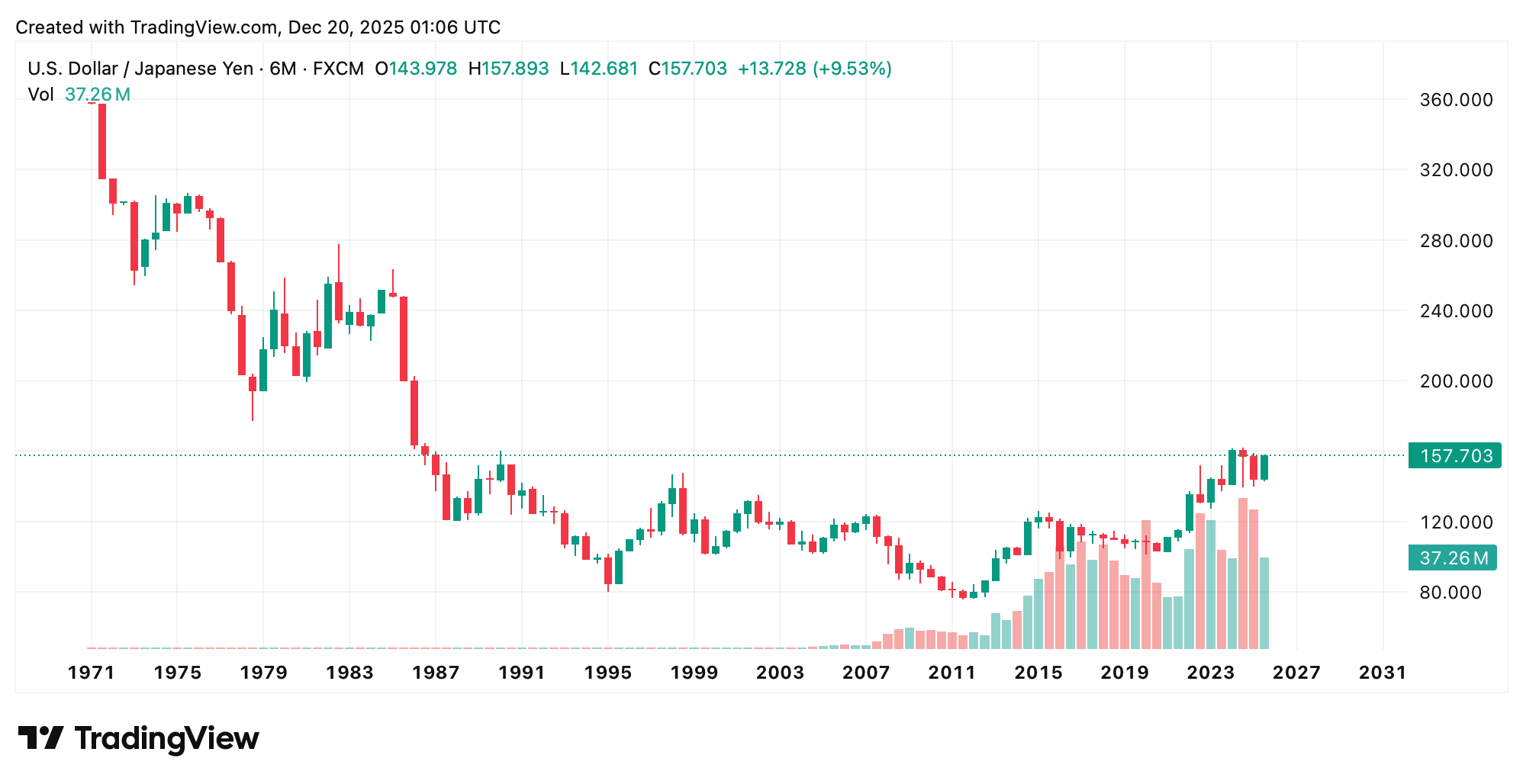
That calm comes with an asterisk. As Japan keeps dialing back ultra-cheap money, pressure will build on trades that lived off easy yen funding. The yen is down about a percentage point against the greenback over the past five days and roughly 7.4% against the U.S. dollar over the last six months, while JGB yields have ripped to record highs.

The BOJ may be moving cautiously, but Japan’s long run as the world’s easiest source of free capital is winding down — and markets won’t be able to look past that indefinitely.

  • Why did the Bank of Japan raise interest rates?
    The BOJ lifted rates after inflation stayed above its 2% target alongside steady wage growth, allowing it to keep stepping away from emergency-era policy.
  • Why does the BOJ rate hike matter to global markets?
    Higher Japanese rates make yen funding more expensive, affecting carry trades and global liquidity conditions.
  • How did U.S. markets react to the BOJ decision?
    U.S. equities largely shrugged it off as the move was well anticipated and lacked any policy shock.
  • How did crypto markets respond to the BOJ rate hike?
    Bitcoin and major altcoins continued higher as the hike was fully priced in and did not change near-term liquidity.

免责声明:本文章仅代表作者个人观点,不代表本平台的立场和观点。本文章仅供信息分享,不构成对任何人的任何投资建议。用户与作者之间的任何争议,与本平台无关。如网页中刊载的文章或图片涉及侵权,请提供相关的权利证明和身份证明发送邮件到support@aicoin.com,本平台相关工作人员将会进行核查。

Share To
APP

X

Telegram

Facebook

Reddit

CopyLink